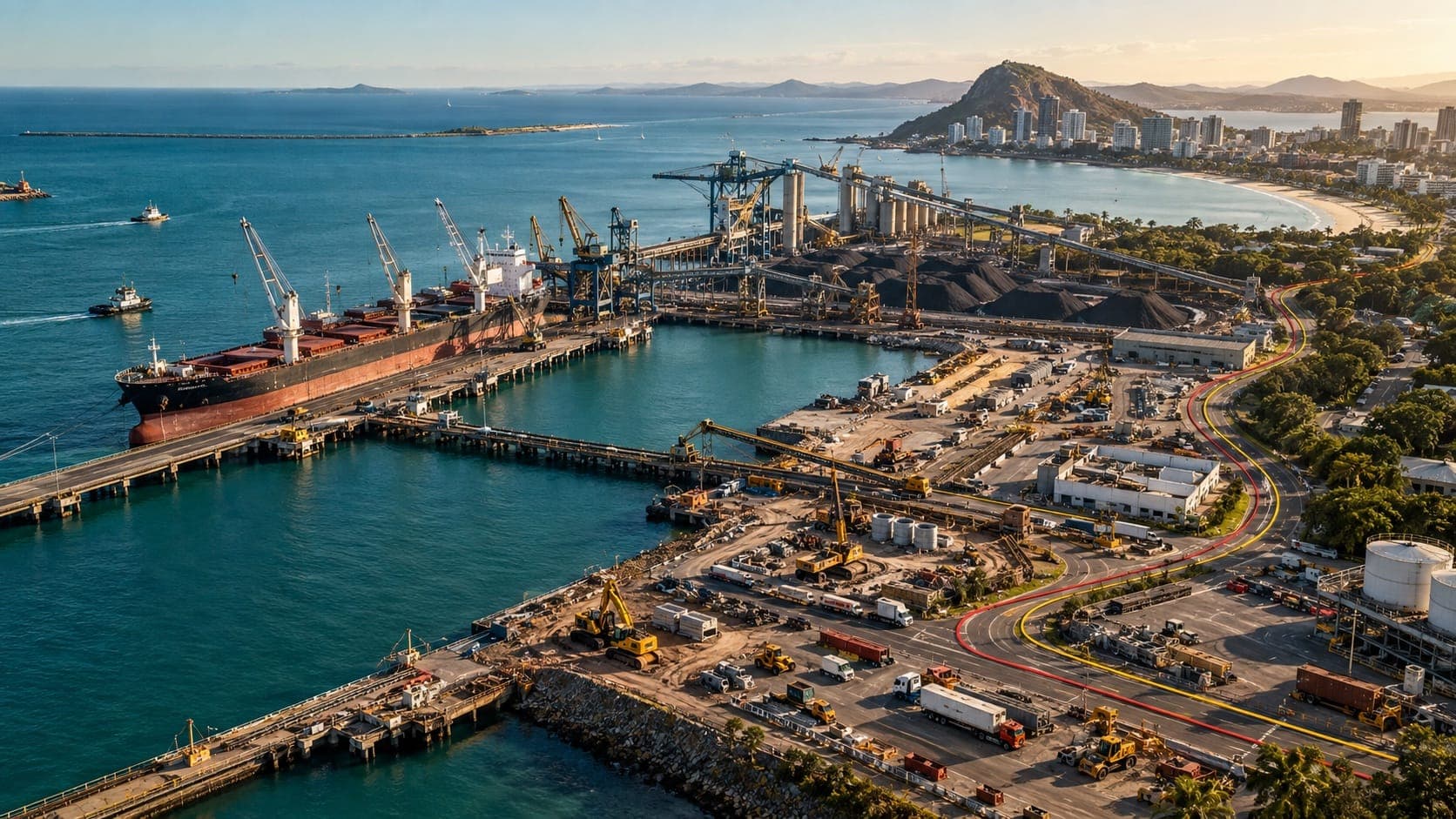
Working inside an operating refinery, smelter, port, food plant or processing facility means fitting into someone else's safety system. Site entry standards, permits to work, isolations and exclusion zones decide which machines can come through the gate long before output or hire rate enter the conversation.
01 / Site entry standards come first
Most operating industrial sites publish their own mobile plant standard, and it is often stricter than what a typical construction project requires. Depending on the facility, it may call for engine shutdown valves, spark arrestors, fire suppression systems, specific beacon colours, reversing cameras, seatbelt interlocks, isolation switches or proximity detection. Request the site standard at the enquiry stage and send it to every supplier you approach, because only part of a general hire fleet may comply.
Many sites also require a pre-entry inspection by their own personnel, supported by documents such as service history, a current plant risk assessment, registration where applicable, and evidence of any required design or item registration. Inspections can reveal oil leaks, damaged guards or missing decals that send a machine back to the yard. Build inspection time into the program, and ask the supplier to inspect against the site checklist before dispatch rather than discovering problems at the gate.
02 / Permits, isolation and exclusion zones
Live sites generally control work through a permit-to-work system covering activities such as excavation, hot work, confined space entry, work near live services and lifting over plant. Operators of hired machines need to understand which permits govern their task, what the isolations are, and when they must stop. Before an excavator breaks ground near buried cabling or process pipework, isolations should be confirmed and services located, often by non-destructive methods.
Exclusion zones separate machines from process equipment, pipe racks and people. They need to be physically marked, not just drawn on a plan, and they need someone responsible for enforcing them. Machines with slew and height limiting, rated capacity indicators and good all-round visibility make it easier to stay within the zone. Discuss with suppliers which units can be configured with these systems and whether the limits can be set and locked for your task.
03 / Compact, electric and specialist machines
Space inside operating plants is usually tight, with narrow roadways, low pipe bridges and congested laydown areas. Mini and midi excavators, compact track loaders, compact telehandlers and tracked carriers are common choices. Battery-electric excavators, loaders and access equipment are increasingly offered by hire companies and can suit enclosed buildings or sites with strict emissions and noise limits. Ask about charging requirements, runtime per shift and whether the site can supply suitable power.
Vacuum excavation trucks are widely used on live sites because they expose buried services with far less risk of damage than a bucket. Elevating work platforms, crawler cranes and pick-and-carry cranes are frequent requirements for work at height or lifting near plant. Where these are needed, confirm that operators hold the relevant high risk work licence and that the equipment's inspection records meet the site standard.
04 / Inductions, competence and coordination
Operators and supplier technicians usually need a site-specific induction, and some facilities add medicals, drug and alcohol testing or task-specific assessments. These can take a day or more to organise. Ask suppliers whether their wet-hire operators and field service staff already hold inductions for the site, because a machine with a breakdown and no inducted technician available can sit idle until someone is cleared to enter.
Coordination with the site's operations team is essential. Plant movements may need to fit around production shifts, product transfers, shipping movements or process upsets that suddenly close an area. Agree a single point of contact for plant, daily coordination meetings and radio channels. The contractor who communicates changes early usually gets more working time than the one who waits to be told.
05 / Commercial terms and supplier questions
Permit waits, emergency musters and process-driven stoppages are routine on live sites, and they can consume a significant share of the day. Read how the hire agreement treats standby, minimum hours and waiting time, and agree how delays caused by the site owner will be recorded. Clear daily dockets signed by the supervisor help keep these costs visible and properly allocated between the parties.
Useful questions for suppliers include: which of your machines already meet this site's plant standard, can you pre-inspect against our checklist, do your technicians hold current inductions here, what is your response time to this facility, and can you provide electric or low-emission alternatives? Ask for sample documentation for one machine before you commit, because the quality of paperwork is a good indicator of how smoothly site entry will go.
Field checklist
- Obtain the site's mobile plant standard and send it with every quote request.
- Ask suppliers to pre-inspect machines against the site checklist before dispatch.
- Allow time for site pre-entry inspections, inductions and document review.
- Confirm services are located and isolations in place before excavation.
- Specify slew and height limiting where plant works near process equipment.
- Check that supplier technicians can be inducted for breakdown response.
- Agree how permit waits and site-caused stoppages are charged and recorded.
Frequently asked questions
What safety features do live industrial sites typically require on hired plant?
It varies by facility, but site standards commonly list items such as engine shutdown valves, spark arrestors, fire suppression, beacons, reversing cameras, seatbelt interlocks and isolation switches. Some add proximity detection or specific emissions requirements. Always obtain the site's own standard, since two neighbouring facilities can have quite different rules.
Why do machines fail site entry inspections?
Common reasons include oil or fuel leaks, damaged or missing guards, faulty lights or alarms, missing documentation and features required by the site standard that the machine does not have. Asking the supplier to inspect against the site checklist before dispatch avoids most rejections and the transport cost of sending a unit back.
Are electric excavators practical on industrial sites?
They can be, particularly inside buildings or where emissions and noise are tightly controlled. The practical questions are runtime per shift, charging time and whether suitable power is available near the work area. Discuss the duty cycle with the supplier so they can confirm whether a battery machine will last the shift.
Who pays when hired plant is waiting on a permit?
That depends on the hire agreement and the head contract. Many suppliers charge hire regardless of permit delays, while some offer standby rates. Between the contractor and site owner, delay costs are usually governed by the main contract. Record waiting time on daily dockets so it can be assessed properly.