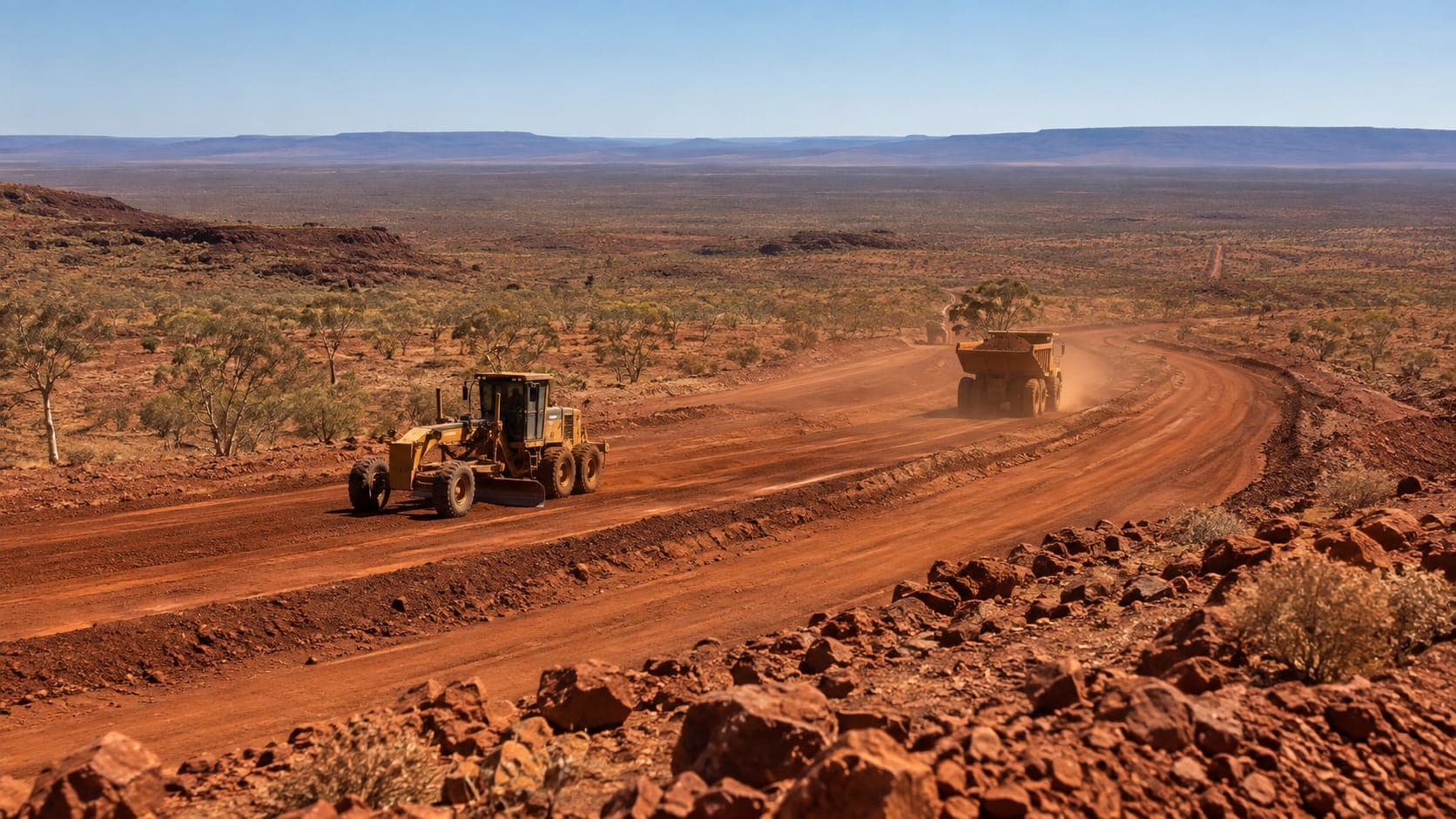
Moving plant to regional and remote Australia takes more planning than a metropolitan delivery. Distances, road conditions, permits, fuel supply and support all affect whether a machine arrives on time and stays productive. This guide walks through the stages of a remote mobilisation, from choosing a dispatch point to bringing the fleet home.
01 / Choosing the dispatch point
The first decision is where plant will come from. A supplier's nearest depot is not always the best dispatch point if the right machine is sitting elsewhere, or if a regional partner can supply a compliant unit closer to the site. Comparing total transport time and cost from each option, including return legs, often reveals that a slightly more expensive machine located nearer the work is cheaper overall.
Availability of transport also shapes dispatch. Floats and low loaders capable of carrying larger machines may be in short supply in some regions, particularly during harvest or when several projects mobilise at once. Booking transport early, and confirming the carrier holds the right trailers and permits, reduces the risk of a machine being ready but stranded at the depot waiting for a truck.
02 / Route surveys and oversize movements
Larger machines often exceed standard vehicle dimensions or mass limits once loaded, which makes them oversize or overmass movements. Carriers should survey the route before committing, checking bridge limits, overhead structures, narrow sections, rail crossings, roadworks and the final access track into site. Unsealed roads that seem suitable in dry weather may become impassable after rain. Low-hanging trees, cattle grids and causeways are common hazards on the final approach to rural and remote sites.
Oversize and overmass movements generally require permits, and many are managed through the National Heavy Vehicle Regulator, with some roads needing consent from state road managers or local councils. Depending on dimensions and route, pilot or escort vehicles may be required, and travel may be restricted to certain times of day. Requirements differ between jurisdictions and can change, so confirm them with the regulator and road managers well ahead of the planned move.
Machines can sometimes be partially dismantled to reduce transport dimensions, for example by removing counterweights, buckets or blades. This can avoid the need for escorts or larger trailers but adds reassembly time on site. The trade-off should be discussed with the carrier and supplier, and the reassembly must be done by competent personnel following manufacturer procedures. Lifting equipment and a suitable hardstand may also be needed on site to reassemble heavier components safely.
03 / Fuel, parts and consumables
Fuel supply is a basic but critical question on remote sites. Some projects have bulk fuel storage and a fuel truck service, while others rely on the supplier or contractor to arrange delivery. The plan should cover storage capacity, bunding and spill controls, delivery frequency, and what happens if a delivery is delayed by weather or road closures. Running out of fuel stops an entire fleet.
Parts supply needs similar attention. Remote sites should hold critical spares such as filters, hoses, ground engaging tools, belts and common wear items, tailored to the fleet on site. Suppliers should also identify where larger components can be sourced and how long freight will take. A satellite phone or reliable communications link helps technicians order parts without driving hours to find coverage.
04 / People, accommodation and welfare
Operators and technicians working remotely may be on fly-in fly-out or drive-in drive-out rosters, or based in local towns. Each option carries costs and risks, from flight availability to fatigue on long drives. The plan should specify rosters, travel arrangements, and how cover is provided when someone is unwell or needs to leave site unexpectedly. Fatigue management for long drives to and from site should be addressed in the plan, not left to individuals.
Accommodation can be the limiting factor in some regions, especially near active mining or energy projects where camps and motels fill quickly. Securing accommodation early, confirming meals and laundry, and ensuring communication access all support workforce wellbeing. Remote work also demands emergency planning, including first aid capability, evacuation routes and contact procedures for medical emergencies. Distances to the nearest hospital and the availability of aeromedical retrieval should be known to everyone on site.
05 / Recovery and contingency planning
Breakdowns far from a service centre can idle a machine for days, so recovery planning should be part of mobilisation. Suppliers should identify who can respond to a breakdown, how long a technician would take to arrive, and whether a replacement machine can be dispatched. For critical plant, holding a backup unit on site or nearby may be justified by the cost of lost production.
Weather events such as floods, cyclones and bushfires can cut access to remote sites for extended periods. Contingency plans should consider how plant will be secured or moved if a site must be evacuated, what happens to fuel storage, and how personnel will be accounted for. Contracts should state how delays caused by these events are treated commercially. Checking insurance cover for plant left on an evacuated site is a sensible step before mobilising.
06 / Demobilisation and handback
Demobilisation needs the same planning as mobilisation. Transport must be booked, permits obtained again for oversize loads, and machines cleaned to meet biosecurity or environmental requirements before leaving site. Joint inspections record machine condition and resolve any damage questions before the float departs, which avoids disputes once the machine is back at the depot. Photographs, hour meter readings and signed inspection sheets provide a clear record for both parties.
Final reconciliation should cover hours, fuel, parts used, standby periods and any variations. Unused spares and consumables need to be returned or accounted for. A short review of what worked and what did not, recorded while details are fresh, is valuable for planning the next remote job and for refining the supplier's regional mobilisation approach. Sharing the review with the hirer helps both parties plan more effectively if they work together again.
Field checklist
- Compare total transport cost from each potential dispatch point
- Book floats early and confirm carrier permits and trailer capability
- Survey the route including bridges, overhead structures and site access
- Confirm oversize permits, escort and travel time requirements with the regulator
- Plan fuel storage, delivery frequency and spill controls
- Stock critical spares and confirm freight times for major components
- Secure accommodation and emergency arrangements before mobilising people
- Schedule joint inspections and wash-downs for demobilisation
Frequently asked questions
Do I need a permit to move a large excavator on a float?
Often, yes. Once loaded, larger machines may exceed standard dimension or mass limits and become oversize or overmass loads. These movements generally require permits, often through the National Heavy Vehicle Regulator, and may need escorts or travel time restrictions. Requirements vary by dimensions, route and jurisdiction, so confirm them with the regulator before the move.
What is a route survey for plant transport?
A route survey checks whether a loaded float can travel safely from the dispatch point to site. It considers bridge limits, overhead clearances, narrow roads, rail crossings, roadworks and the condition of site access tracks. Carriers use route surveys to plan permits, escorts and alternative routes before committing to a movement.
How do remote sites manage fuel for hired plant?
Approaches vary. Some sites have bulk fuel storage and a fuel truck servicing machines daily, while others rely on deliveries arranged by the contractor or supplier. Plans should cover storage capacity, spill controls, delivery frequency and contingency for delays. The contract should state who supplies fuel and how it is charged.
What happens if a hired machine breaks down on a remote site?
The response depends on the hire agreement and the supplier's regional capability. Options include an on-site technician, callout from a regional branch, or replacement with another machine. Travel time for technicians and parts can be long, so agree response and replacement times before mobilisation and consider holding critical spares on site.