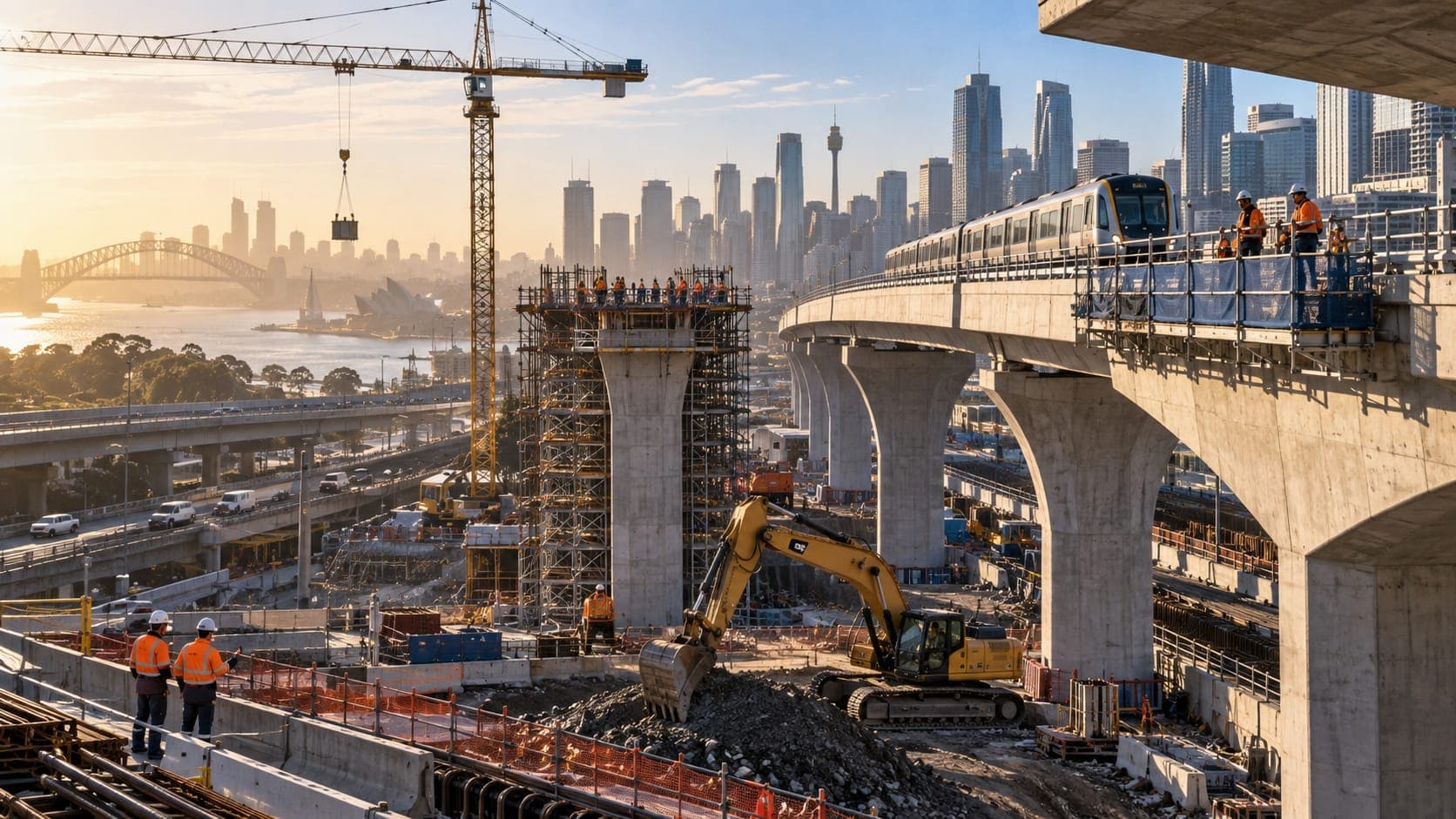
Major infrastructure, resources and energy projects expect more from plant suppliers than a machine and a rate. They want evidence, systems, reliable people and the ability to absorb problems without stopping the job. This guide sets out what readiness looks like from both sides: the supplier preparing to win and deliver the work, and the contractor procuring plant for it.
01 / Why major projects are different
On a small job, a supplier can often mobilise on a phone call and a purchase order. Major projects work differently. Principal contractors and joint ventures carry heavy contractual obligations to their clients, including safety performance, environmental conditions, program milestones and reporting. They pass many of those obligations down to their subcontractors and suppliers, which means a plant hire company is assessed as part of the delivery system rather than as a transactional vendor.
Scale changes the risk profile too. A major project may need dozens of machines of a single class for years, operating across multiple work fronts and shifts. A supplier that performs well with five machines may struggle with thirty if its maintenance, logistics and administration do not scale. Contractors procuring plant need to test for that capacity rather than assume it, and suppliers need to be honest about where their limits lie.
02 / Prequalification and the evidence pack
Most major projects require suppliers to complete a prequalification process before they can be considered. The requests typically cover company details, insurances, financial capacity, safety and environmental management systems, quality management, incident and performance history, industrial relations compliance and, increasingly, modern slavery and sustainability information. Some projects use third-party platforms that verify documents and track expiry dates. Requirements differ between principal contractors, and even between projects run by the same organisation, so each request should be read in full.
Suppliers who prepare an evidence pack before a tender arrives are far better placed than those who scramble. The pack should include current certificates of currency, system manuals or summaries, recent audit results, a machine register with specifications and ages, sample inspection and maintenance records, and a list of comparable projects with referees. Keeping it current, rather than rebuilding it each time, saves effort and avoids errors caused by outdated documents.
Contractors can make this process more efficient by stating their requirements clearly and early, accepting recognised third-party certifications where appropriate, and avoiding requests for documents that add little to the assessment. A focused prequalification process attracts better suppliers, because capable firms are more likely to respond when the effort required is proportionate to the opportunity. Clear feedback to unsuccessful suppliers also helps the market improve over time.
03 / Fleet evidence and machine standards
Major projects commonly publish mobile plant standards that set minimum requirements for machines entering site. These can include age limits, emissions standards, specific safety features such as proximity detection or seatbelt interlocks, fire suppression on larger units, telematics and particular lighting or signage. Suppliers should obtain the standard early and assess each machine against it, identifying any modifications needed and their lead times.
Evidence matters as much as the machine itself. Contractors will expect to see service histories, pre-start systems, periodic inspection records, lifting equipment certifications, operator manuals and risk assessments for each unit. Digital records that can be shared quickly are increasingly expected. A supplier that can produce a complete file for any machine on request demonstrates a level of control that reassures project teams.
04 / Systems, people and supervision
Behind the machines, major projects look for systems that work under pressure. That includes safety management aligned with the project's requirements, a maintenance system that schedules servicing around production shifts, a defect reporting and close-out process, and administrative capacity to handle dockets, invoicing and reporting accurately. Contractors often audit these systems during the project, not only at tender. A supplier that can show recent internal audits and corrective actions gives project teams confidence that its systems are active rather than paper-based.
People are the other half of readiness. For operated hire, operators need the right licences and competencies, project-specific inductions and, often, verification of competency on the site. Supervisors and account managers need to be available and empowered to make decisions. Suppliers mobilising a large fleet should consider appointing a dedicated site representative who attends coordination meetings and resolves issues before they escalate.
05 / Redundancy and continuity
No fleet is immune from breakdowns, so major projects want to know what happens when a machine fails. A credible answer might include standby machines held nearby, a critical spares inventory on site, an on-site or rapid-response technician and an agreed replacement time. Suppliers should be realistic about these commitments because failing to meet them damages trust quickly. Commitments should be written into the contract so both parties share the same expectations about response.
Continuity also covers people and the business itself. Contractors may ask how the supplier would cover operator absences, what happens if a key manager leaves and how financial stability is maintained across a long project. Suppliers who have thought through these scenarios and documented their response come across as mature partners rather than opportunistic bidders. Contractors should ask these questions directly rather than relying on assumptions drawn from company size.
06 / Reporting, performance and close-out
Reporting obligations on major projects can be substantial. Suppliers may need to provide hours, availability, fuel use, emissions estimates, incident and hazard reports, maintenance records and workforce data on weekly or monthly cycles. Agreeing formats and data sources at the start avoids repeated rework. Where telematics are used, contractors and suppliers should agree how those records reconcile with site dockets.
Close-out is often overlooked until it arrives. Demobilisation must be planned so that machines leave site clean, inspected and with any damage recorded jointly. Final invoices, retention releases and outstanding variations need to be resolved, and records handed over where required. A clean close-out, supported by a short lessons-learned review, strengthens the relationship and improves the supplier's standing for the next project.
Field checklist
- Build and maintain a current prequalification evidence pack
- Obtain the project mobile plant standard and assess every machine against it
- Prepare a complete digital file for each unit before mobilisation
- Appoint a site representative for large fleet mobilisations
- Document standby machines, critical spares and replacement times
- Agree reporting formats and data sources at contract start
- Plan a joint inspection and records handover for demobilisation
Frequently asked questions
What does prequalification involve for a plant hire supplier?
Prequalification usually involves submitting company information, insurances, financial details, safety, environmental and quality system documentation, performance history and references. Some projects verify documents through third-party platforms. The goal is to confirm the supplier can meet the project's requirements before being invited to price work. Having a current evidence pack speeds the process considerably.
What is a mobile plant standard on a major project?
A mobile plant standard is a document setting the minimum requirements for machines entering a project site. It may cover safety features, age, emissions, telematics, fire suppression, lighting and documentation. Each project or principal contractor sets its own standard, so suppliers should obtain and review it before committing machines to the work.
How can a smaller supplier compete for major project work?
Smaller suppliers can compete by focusing on plant categories where they have depth, maintaining a strong evidence pack, demonstrating reliable systems and offering responsive local support. Partnering with larger suppliers or principal contractors on specific packages can also help build a track record. Being clear about capacity limits builds credibility with project teams.
What should contractors look for when procuring plant for a major project?
Contractors should assess technical fit, fleet capacity, compliance with the plant standard, maintenance and support arrangements, safety performance, reporting capability and commercial clarity. Testing how a supplier handles breakdowns and replacements is especially important. Site visits to depots and reference checks with previous clients provide useful evidence beyond documents.
Why is demobilisation planning important?
Poorly planned demobilisation can lead to disputes over damage, missing records, delayed final payments and lingering machines on site. Planning joint inspections, cleaning, transport and final documentation in advance helps both parties close out cleanly. A smooth close-out also supports the supplier's reputation for future work with the same contractor.