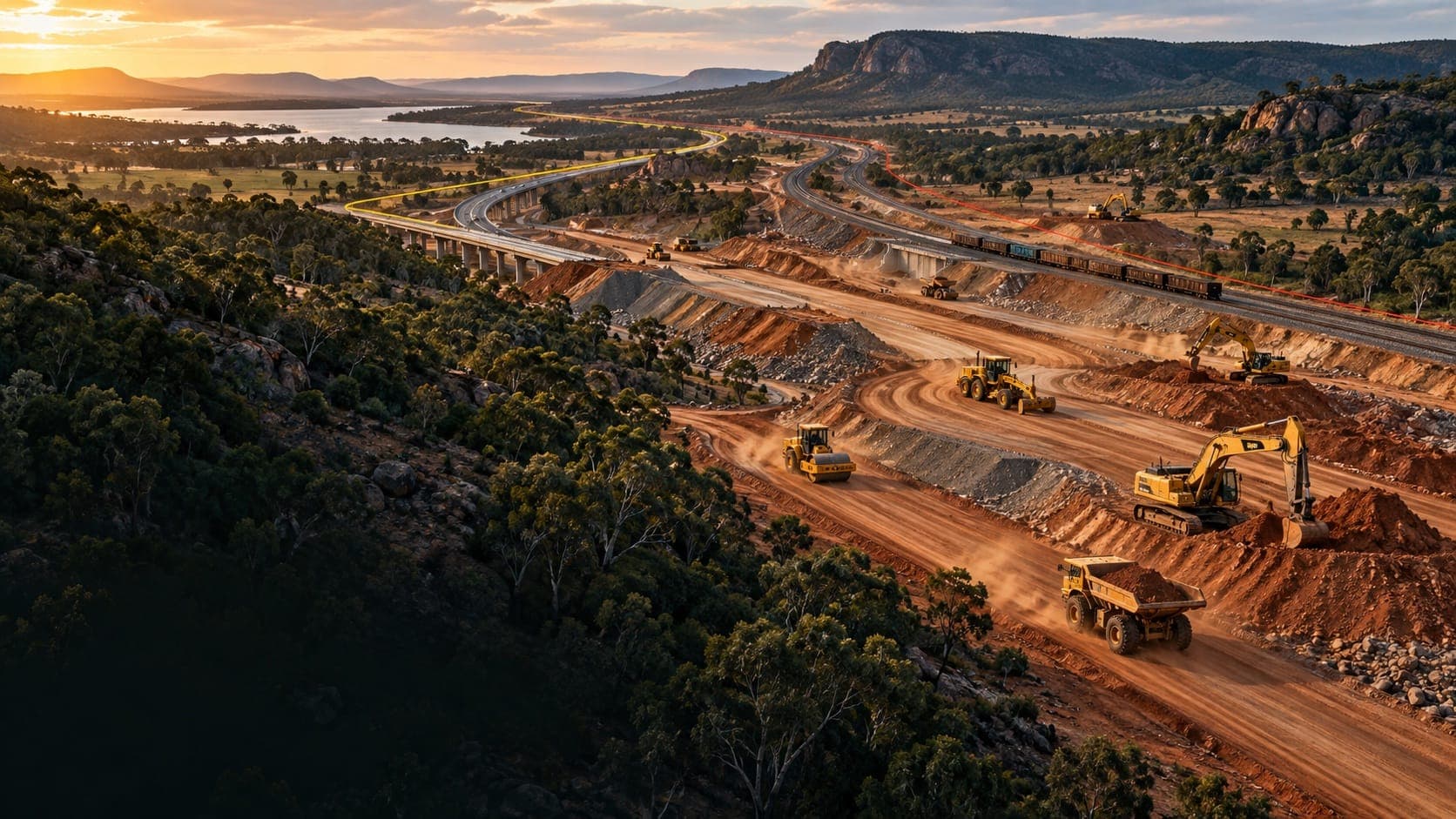
Soft ground turns ordinary earthworks into a problem of load spreading and recovery. Whether the cause is saturated clay, peat, reclaimed land or a wetland margin, the right machine is the one that stays on top of the ground, and the right plan assumes that something will eventually get stuck.
01 / Understanding ground-bearing capacity
Before choosing machines, find out what the ground can actually carry. A geotechnical report, test pits, or a simple cone penetrometer survey can reveal how bearing capacity varies across the site and with depth. Share this information with suppliers, because it lets them compare the ground pressure of different machines against what the site can support. Without it, selection becomes guesswork and the first bogged machine becomes the site investigation.
Ground conditions change over a program. A formation that carries a loaded dump truck in the morning may fail after rain or after repeated passes pump moisture to the surface. Plan haul routes that can be rotated, identify areas that must stay untrafficked, and agree who has authority to stop plant movement when conditions deteriorate. These decisions are easier to make in advance than when a machine is already sinking.
02 / Low-ground-pressure machines and swamp pads
Low-ground-pressure dozers, often designated LGP, use longer track frames and wider shoes to spread weight, reducing ground pressure substantially compared with standard configurations. Excavators can be fitted with swamp pads or extra-wide track shoes for similar benefits, and dedicated swamp excavators with pontoon undercarriages can work in very soft wetlands. Ask suppliers for the published ground pressure figures for the exact configuration offered rather than the base model.
Wider shoes have trade-offs. They increase stress on the undercarriage, make turning harder, and can wear quickly on rocky or abrasive ground. Tracked carriers with rubber tracks can move material where dump trucks would bog, but carry less per load. Weigh the productivity lost to smaller payloads against the time saved by avoiding recovery and rework, and consider mixing machines so that each works on the ground it suits.
03 / Bog mats, crane mats and temporary access
Bog mats, typically made from timber, composite or steel, spread load and create temporary access across soft ground. They are commonly used for crane outrigger pads, excavator working platforms and haul road crossings. Confirm the mat type, dimensions and load rating are suited to the machine and ground, and remember that mats need a machine to place and relocate them, which adds to the plant list.
Other options include geotextiles and geogrids beneath imported fill, timber corduroy for short crossings, or stabilising the formation with lime or cement where the design allows. Each has cost and environmental implications. Discuss with your engineer which approach suits the program, and make sure the chosen solution is included in the plant hire scope so that equipment arrives when needed.
04 / Recovery planning
Assume a machine will get stuck and plan how it will be recovered. Identify recovery points on each machine, confirm that rated recovery gear such as shackles, snatch straps or wire rope slings is available, and decide which machine will perform recovery. Improvised recovery is a serious hazard, as a failed strap or shackle can release a great deal of energy. Include recovery in the SWMS and brief operators on the procedure.
Ask the supplier about their policy on bogged machines. Some will send a recovery crew, others expect the hirer to handle it, and costs for damage during recovery can be contentious. Clarify who pays for recovery and any resulting damage before the hire starts. Where the risk is high, it may be worth hiring a dedicated recovery machine or winch to remain on site throughout the work.
05 / Scoping and supplier questions
When requesting quotes, provide ground investigation data, expected moisture conditions, haul distances and the tasks each machine will perform. Ask suppliers to confirm the ground pressure of each offered configuration, whether swamp pads or LGP undercarriages are available, and how much notice they need to change configurations. Availability of specialist soft-ground plant can be limited, particularly during wet periods when many sites need the same machines.
Maintenance on soft ground often centres on undercarriages and cooling systems. Mud packing into track frames increases wear and load on final drives, while mud on radiators reduces cooling. Agree a daily cleaning routine, allow time and water for it, and ask the supplier how undercarriage wear is assessed at off-hire. Clear expectations here prevent surprises when the machine is returned.
Field checklist
- Obtain ground investigation data and share it with suppliers.
- Request published ground pressure figures for each offered configuration.
- Specify LGP dozers, swamp pads or swamp excavators where ground demands.
- Include bog mats and the machine to place them in the scope.
- Prepare a recovery plan with rated gear and a designated recovery machine.
- Agree who pays for recovery and any damage.
- Schedule daily cleaning of undercarriages and radiators.
Frequently asked questions
What is a low-ground-pressure dozer?
A low-ground-pressure, or LGP, dozer has longer track frames and wider track shoes than a standard dozer, spreading its weight over a larger area. This allows it to work on softer ground without sinking. The trade-off is often greater undercarriage wear on hard or rocky surfaces.
What are swamp pads on an excavator?
Swamp pads are extra-wide track shoes fitted to an excavator to reduce ground pressure on soft or wet ground. They improve flotation but can increase undercarriage stress and make turning harder. Ask the supplier about availability and the ground pressure of the configured machine.
When should I use bog mats?
Bog mats are useful when machines need to cross or work on ground that cannot support their weight, such as saturated clay or wetland margins. They are common under crane outriggers and on temporary haul roads. Confirm mat ratings against the machine loads and ground conditions.
Who is responsible for recovering a bogged hire machine?
This depends on the hire agreement. Some suppliers provide recovery services at a charge, while others expect the hirer to manage it. Damage during recovery may be charged to the hirer. Clarify responsibilities in writing before the hire starts and include recovery in the site safety plan.