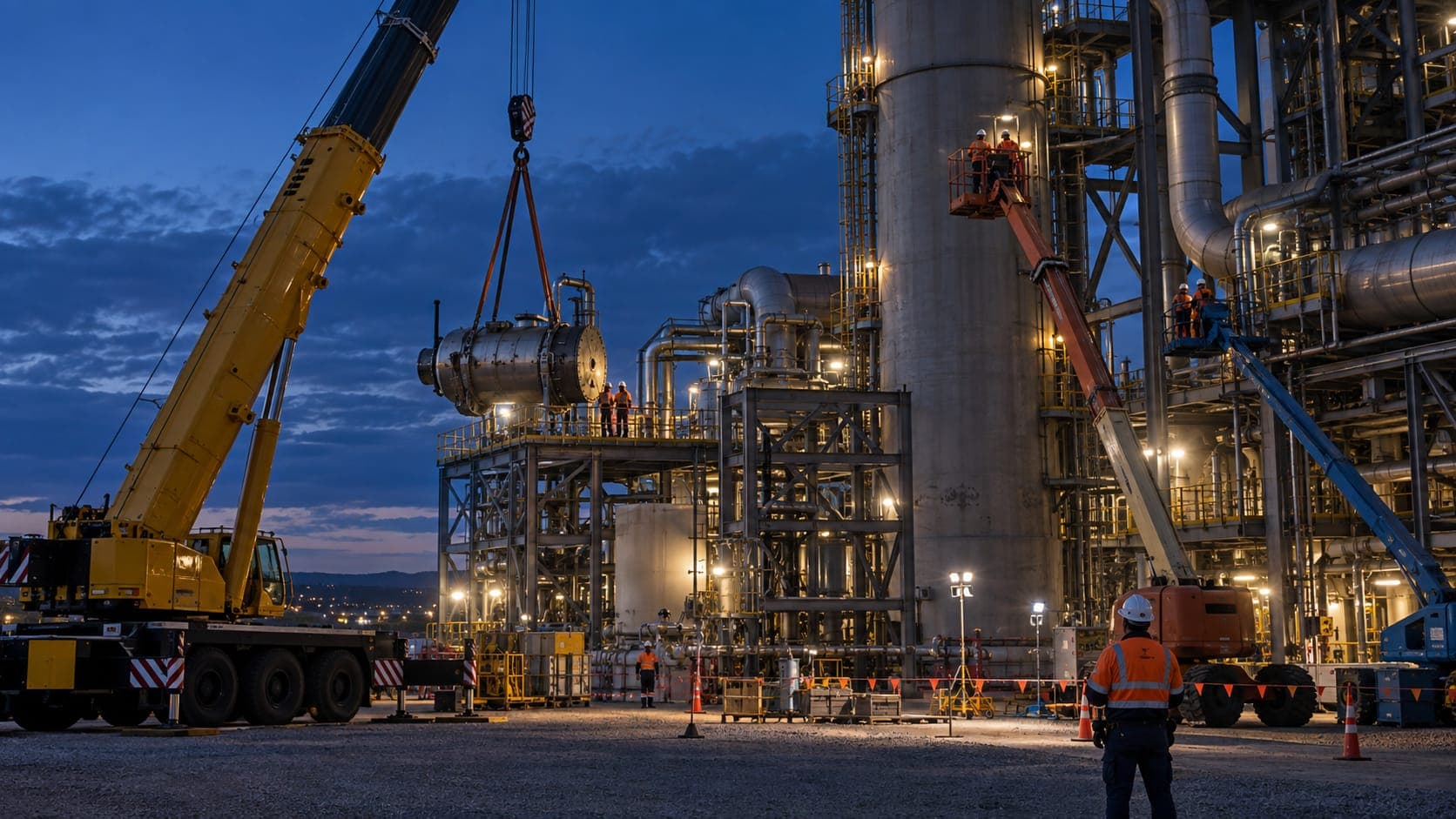
On a constrained urban site, the question is rarely whether a machine can do the work but whether it can fit, arrive and operate without disrupting the neighbourhood. Footprint, delivery timing, noise and public safety drive plant selection long before output rates are considered.
01 / Footprint and machine selection
Zero-tail-swing and reduced-tail-swing excavators allow digging close to boundaries and hoardings without the counterweight swinging into adjacent space. Compact track loaders, mini excavators and tracked carriers can work within narrow laneways and basements where larger machines cannot turn. Measure gates, ramps, overhead clearance and floor loadings before requesting quotes, and share these dimensions with suppliers so they can confirm fit rather than guess.
Consider whether one versatile machine with multiple attachments can replace several single-purpose units. A mid-size excavator with a quick hitch, tilt bucket, hydraulic hammer and grab may handle excavation, demolition and material handling with fewer deliveries. Remote-controlled demolition robots may suit interior strip-outs where human access is restricted or where vibration and exposure need to be reduced. Check the weight of each machine with its heaviest attachment fitted, since suspended slabs and basement ramps are often rated with little margin.
02 / Delivery windows, traffic and permits
Many councils restrict when heavy vehicles can deliver and when work can occur, and some require permits for road occupancy, footpath closures or crane positioning. Plan float deliveries around these windows, and confirm whether the supplier can deliver outside normal hours if the approval allows it. A missed window may mean the machine sits on a truck, attracting waiting charges.
Traffic management plans and traffic controllers are often required for loading and unloading on public roads. Coordinate the plant delivery schedule with the traffic management provider so that both arrive at the same time. Ask the supplier about the float's dimensions and turning requirements, especially where narrow streets, parked cars or tram lines complicate access. Sometimes a smaller tilt-tray or a machine that can be unloaded by the site crane is the only workable option, even if it limits the size of plant you can bring in.
03 / Noise, vibration and neighbours
Urban sites are usually subject to noise restrictions set by the local council or state environmental regulator. Choose machines with lower noise emissions where possible, and consider broadband or smart reversing alarms that reduce disturbance while keeping workers safe, subject to site and principal contractor requirements. Electric or battery-powered compact equipment is increasingly available and may help on sensitive sites.
Vibration from hammers, compactors and piling can affect neighbouring buildings and services. Ask the supplier about low-vibration alternatives such as crushers, saws or rotary cutters, and whether vibration monitoring is needed. Early communication with neighbours about working hours and noisy activities can reduce complaints and the risk of stop-work directions. Where a dilapidation survey of adjoining buildings has been done, share the relevant findings with the supplier so they understand why attachment choice matters on this site.
04 / Oversail, lifting and pedestrian control
Where a crane jib or excavator boom may swing over neighbouring property or public space, an oversail agreement or council approval may be required. Discuss slew limits and exclusion zones with the supplier and the lifting supervisor. Machines fitted with height and slew limiting systems can help keep operations within approved boundaries. Approvals can take weeks to negotiate, so the hire start date should follow the approval rather than assume it, or you may pay for a machine that cannot yet slew over the boundary.
Pedestrian and cyclist safety is paramount near public footpaths. Physical barriers, hoardings, spotters and clearly marked exclusion zones should be set up before plant arrives. Camera systems and proximity detection on machines can support these controls but do not replace them. Make sure the SWMS covers public interface risks as well as worker safety. Plant movements across a live footpath, such as a loader entering the site gate, usually need a dedicated traffic controller or spotter, and that person should be counted in the labour plan from the start.
05 / Storage, refuelling and security
Tight sites may have no space to store machines overnight. Ask whether the supplier can collect and return plant daily, and at what cost, or whether secure off-site parking is available nearby. Where machines stay on site, lock them, isolate batteries and secure attachments, because theft and vandalism are real risks in urban areas. Ask whether the hire agreement or your insurance covers theft from site, and whether the supplier requires particular security measures, such as immobilisers or GPS tracking, as a condition of cover.
Refuelling on constrained sites needs a plan. Mobile fuel delivery may be restricted by access or local rules, and storing fuel on site may be limited. Electric compact machines avoid refuelling but need charging infrastructure. Confirm arrangements before mobilisation so machines are not idle waiting for fuel. For battery machines, find out how long a full charge lasts under your duty cycle, whether a three-phase outlet is available on site, and whether the machine can be opportunity-charged during breaks to get through a full shift.
Field checklist
- Measure access points, clearances and floor loadings before requesting quotes.
- Consider zero-tail-swing and multi-attachment machines to reduce deliveries.
- Align float deliveries with council permits and traffic management.
- Select lower-noise machines and suitable reversing alarms.
- Confirm oversail approvals and slew limiting where needed.
- Plan overnight storage, security and refuelling.
- Communicate noisy activities to neighbours in advance.
Frequently asked questions
What excavator is best for tight urban sites?
Zero-tail-swing or reduced-tail-swing excavators are often preferred because the counterweight stays within the tracks when slewing. Size depends on dig depth and access dimensions. Share gate widths, overhead clearances and ground loadings with suppliers so they can recommend a machine that will fit and perform.
Do I need a permit to deliver plant on a city street?
Many councils require permits for road or footpath occupancy during loading and unloading, and some restrict delivery times. Traffic management plans may also be needed. Requirements vary by council and location, so check early and coordinate with your supplier and traffic management provider.
How can I reduce noise from hired plant in residential areas?
Choose newer machines with lower noise emissions, consider electric or battery-powered compact equipment, use suitable reversing alarms, and schedule noisy work within permitted hours. Low-vibration attachments such as crushers or saws can replace hammers in some tasks. Communicate with neighbours about noisy activities.
What is an oversail agreement?
An oversail agreement is permission from a neighbouring property owner, or an approval from council, allowing a crane jib or boom to swing over their property or public space. It usually sets conditions on loads and times. Legal advice may be needed for complex situations.