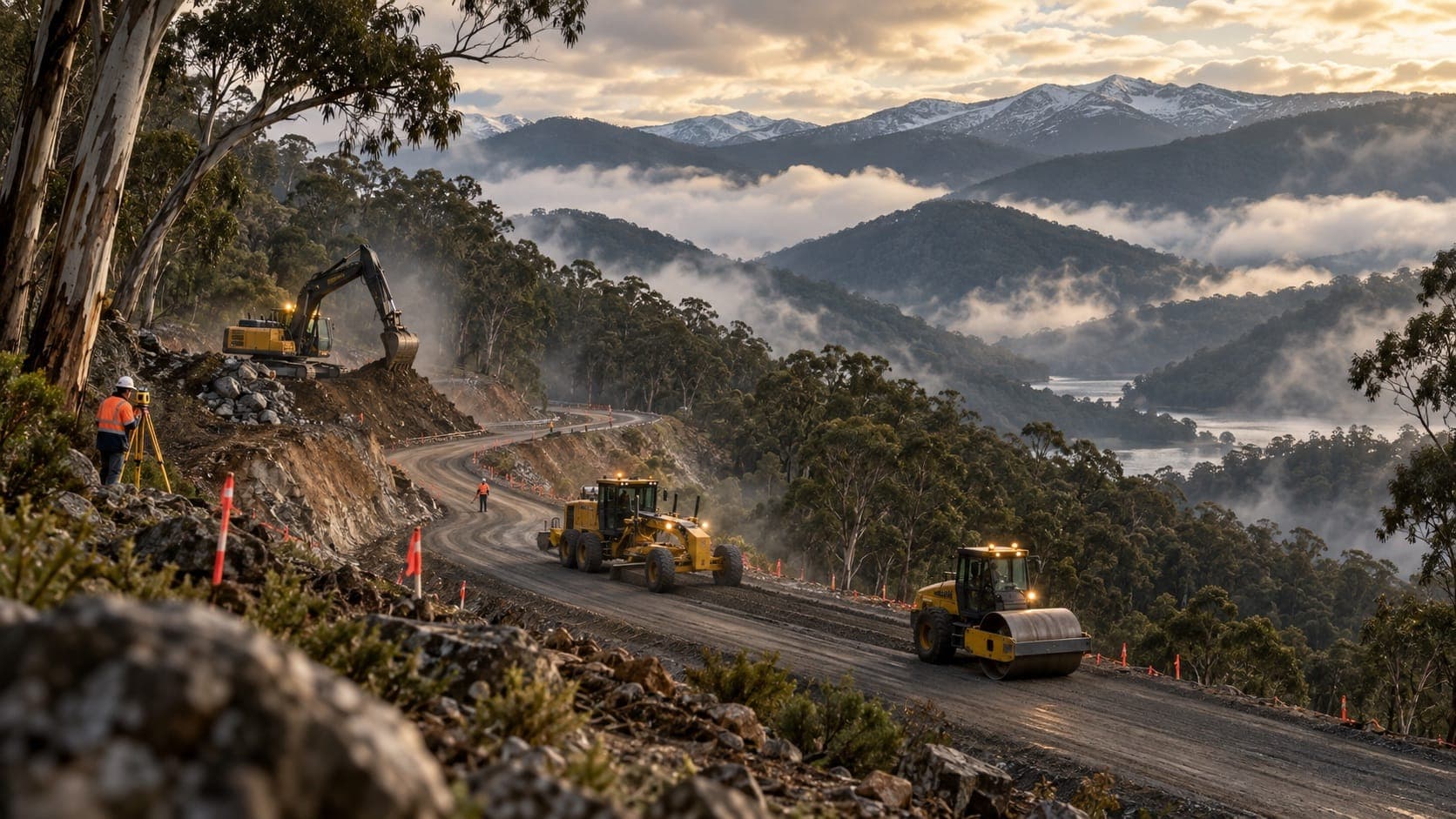
Plant hired into Australian mines is held to a higher standard than most construction equipment, both in how it is built and how it is maintained. This guide explains the fleet typically hired into resources work, what mine-spec usually means in practice, and how suppliers are prequalified and paid on mine sites.
01 / Where hired plant fits on a mine
Mine operators generally own or lease their primary production fleet, such as large haul trucks and face shovels, so hired plant tends to fill support roles. Common examples include dozers for dump and stockpile management, graders for haul road maintenance, water carts for dust suppression, and excavators for drainage, sump cleaning and civil work. Integrated tool carriers and loaders handle tyre changes, cable handling and general site duties.
Hired fleets also cover peaks and projects that sit outside normal production. Pre-strip campaigns, tailings storage facility lifts, rehabilitation and new pit development can all bring in additional excavators, articulated dump trucks and dozers for months at a time. Light vehicles, lighting towers, generators and site services plant are also hired in large numbers and are subject to the same site standards as heavy equipment.
02 / What mine-spec usually involves
Mine-spec is not a single national standard, and each operator publishes its own requirements. Typical items include a fire suppression system on larger machines, battery isolation, wheel chocks, handrails and three points of contact access, high-visibility flags or whip lights, specific beacon colours, reversing cameras and collision avoidance or proximity detection systems. Radios programmed to site channels are almost always required.
Before a machine is allowed to work, it usually goes through a site acceptance or commissioning inspection against the operator's checklist. Missing or non-compliant items are recorded and must be fixed before the machine is released. Suppliers who build their fleet to the most demanding common requirements spend less time on rectification, but the specific site standard should always be obtained and checked before mobilisation.
03 / Regulation and site safety systems
Mine safety is regulated by the states, and in some jurisdictions by mining-specific legislation separate from general work health and safety law. Queensland, Western Australia and New South Wales each have their own mine safety frameworks and inspectorates. Hirers and suppliers should confirm which regulator applies and what obligations flow through to contractors, rather than assuming construction site practices carry across.
Operators run their own permit to work, isolation, fatigue management and drug and alcohol testing systems, and hired operators and maintenance personnel must work within them. Induction on a mine can run for one or more days and may include medicals and site-specific competency assessments. Suppliers should plan for that onboarding time in their mobilisation schedule and in their pricing.
04 / Prequalification and contractor management
Mining companies generally require suppliers to be registered through a contractor management system before work can start. Registration can involve insurances, safety performance data, management plans, training records for personnel, and machine inspection records. Some operators require an on-site supervisor or representative from the supplier for larger mobilisations, and many audit contractors against their own standards during the contract. Registration typically needs renewing annually, and lapsed documents can stop a supplier's personnel at the gate.
Evidence of maintenance discipline carries weight in these assessments. A supplier should be able to show planned maintenance schedules, oil sampling results, component life tracking and records of defect close-out. For operated hire, evidence that operators are trained and assessed on the specific model, not simply the machine class, is frequently requested and is worth preparing in advance. Keeping competency records linked to individual machine models makes these requests quick to answer.
05 / Support, maintenance and remote logistics
Many mines sit hours from the nearest regional centre, so parts and service arrangements shape availability more than headline machine condition. Hirers should ask whether the supplier will station a field service technician on site, hold a critical spares kit, or rely on callout from a regional branch. The answer affects how long a breakdown will keep a machine parked.
Fly-in fly-out and drive-in drive-out rosters apply to supplier personnel as much as to the operator's workforce. Accommodation in camp, flights and roster coverage need to be agreed in the contract, including who pays when a technician must be flown in outside roster. These costs are often significant and should be visible in the pricing rather than discovered through variations.
06 / Commercial models on resources contracts
Hourly machine rates based on engine or productive hours are common on mines, frequently with a minimum monthly hours commitment. Some contracts separate the machine rate, operator rate and maintenance rate so each can be adjusted independently. Longer contracts may include rise and fall mechanisms tied to fuel or labour indices, and availability targets with abatements if a machine falls below an agreed percentage.
Availability clauses should define precisely how downtime is measured, which events are excluded, such as site-caused damage or weather, and how records are reconciled. A supplier's own telematics and the site's fleet management system may report different numbers. Agreeing the source of truth at the outset avoids monthly disputes and makes performance reviews more productive for both parties. Monthly reconciliation meetings, with both data sets on the table, keep small discrepancies from compounding over a long contract.
Field checklist
- Obtain the operator's current mobile plant standard before quoting
- Confirm which mine safety regulator and legislation apply to the site
- Register with the site contractor management system well ahead of mobilisation
- Allow time and cost for inductions, medicals and site acceptance inspections
- Agree on-site service, critical spares and technician rostering arrangements
- Define availability measurement, exclusions and the agreed data source
- Price camp accommodation, flights and out-of-roster callouts explicitly
Frequently asked questions
What does mine-spec mean for hired equipment?
Mine-spec refers to the additional equipment and features a mine operator requires before a machine can work on site. It commonly includes fire suppression, battery isolation, proximity detection, specific lights and flags, radios and improved access systems. Each operator sets its own standard, so the exact requirements must be obtained from the site before a machine is prepared.
Can standard construction plant be used on a mine site?
Sometimes, but usually only after modification and inspection. A standard excavator or loader may lack the fire suppression, isolation points, lighting or proximity detection that the site requires. Some operators accept lighter specifications for machines working in non-production areas. Confirm the applicable standard with the site before assuming a construction-spec machine will be accepted.
How are hired machines usually charged on mines?
Hourly rates based on engine or productive hours are common, often with a minimum monthly commitment. Operator, maintenance and mobilisation costs may be charged separately. Longer contracts may include availability targets and rise and fall provisions. The structure varies by operator and procurement approach, so compare quotes on a like-for-like basis.
How long does it take to get a hired machine onto a mine site?
It depends on the site, the supplier's registration status and how compliant the machine is. Contractor registration, personnel inductions, medicals and site acceptance inspections can each take days or weeks. A supplier already approved on the site with a mine-spec machine can mobilise far faster than one starting from scratch.
Who maintains hired plant on a mine?
Usually the supplier, either through an on-site technician, a callout arrangement or a combination. Some contracts transfer daily servicing to the hirer or site maintenance team while major repairs remain with the supplier. The contract should state who is responsible for each maintenance task, parts supply and component replacement.