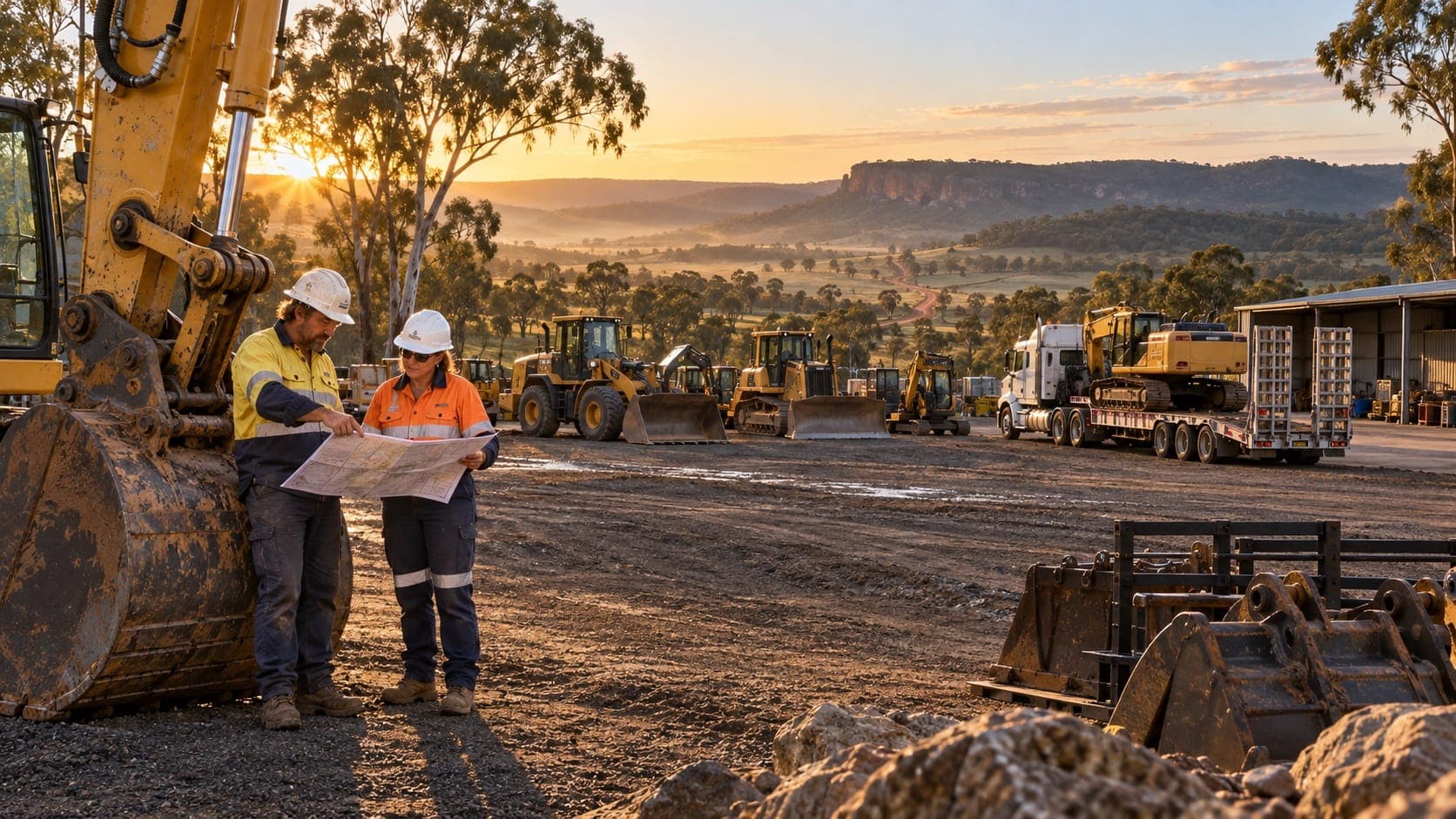
Residential development ranges from greenfield subdivisions to single-lot knockdown rebuilds, and the plant needed shifts accordingly. This guide covers the machines typically hired for residential work, how neighbours and council conditions shape plant choice, and the commercial points worth settling before a machine arrives on a tight suburban street.
01 / Fleet for subdivisions and single lots
Greenfield subdivisions look a lot like small civil jobs. Excavators in the 13 to 30 tonne class dig sewer and stormwater trenches, graders and rollers form road pavements, and water carts keep dust down across stripped ground. Once lots are created, the emphasis shifts to site cuts, retaining wall footings and service connections, which suit 5 to 8 tonne excavators and compact track loaders.
Single-lot and infill work is dominated by smaller machines. Mini excavators between 1.5 and 3.5 tonnes fit through side access and behind existing dwellings, while tracked dumpers move spoil where a truck cannot reach. Posi-track loaders with a four-in-one bucket, pallet forks or auger drive are popular with builders because a single machine can clear, level, lift materials and drill pier holes over the course of a day.
02 / Access, footprint and neighbours
Access dimensions should be measured before a machine is booked, not after the truck is on the street. Gate widths, side setbacks, overhead eaves and the slope of a driveway all determine which machine can physically reach the work area. Rubber tracks reduce damage to driveways and footpaths, and many suppliers can quote on track mats or ground protection panels where turf or pavers need to survive.
Residential sites sit close to people who did not choose to live next to a construction project. Council development consents and construction management plans commonly restrict working hours, noise and where trucks can park or queue. Some councils also require permits to place plant or skip bins on the road reserve. Check the conditions of consent and speak with the local council before assuming a float can unload on the kerb.
03 / Services, retaining walls and slabs
Excavation on established lots carries a real risk of striking gas, water, telecommunications or electrical services. A Before You Dig Australia enquiry is the starting point, but plans are indicative and older connections are often undocumented. Vacuum excavation or careful hand digging to expose services before a bucket goes near them is now a routine expectation on many builders' sites.
Retaining wall and slab preparation drive a lot of residential hire. Excavators with a tilt bucket cut consistent batters, compaction plates or small vibrating rollers prepare the slab pad, and an auger attachment on a loader or excavator drills footing and pier holes. For rock, a hydraulic breaker on a 5 tonne carrier is often more practical than bringing a larger machine into a confined backyard.
04 / What builders should expect from a supplier
Builders running several sites value suppliers who deliver on time and collect promptly, because a machine left on a finished lot occupies space the next trade needs. Ask whether the supplier runs its own tilt tray or float, what delivery windows it can commit to, and whether it can swap attachments on site without a return trip to the depot.
Documentation expectations are lighter than on major civil projects but still matter. A current service record, a pre-start checklist in the machine, and a safe work method statement for common tasks such as trenching are reasonable requests. For operated hire, confirm the operator holds any licence required for the plant and has completed the builder's site induction before arrival. Builders should also check that the operator carries a copy of the machine's operating manual and load chart where one applies.
05 / Commercial terms for residential hire
Residential hire is frequently charged by the day or half day, with delivery and collection billed separately. Longer hires for subdivision civil work may shift to weekly or monthly rates. Check whether fuel is included, how bucket teeth and attachment wear are treated, and whether cleaning fees apply if a machine returns caked in clay after wet weather. Asking these questions at booking avoids small add-on charges accumulating across a build program.
Damage waivers and insurance deserve attention. Many suppliers offer a damage waiver for a fee that limits the hirer's liability for accidental damage, subject to exclusions such as rollovers, misuse or unlicensed operation. Read those exclusions closely, and check whether your own contract works or plant insurance already covers hired equipment before paying for overlapping cover. Record the machine's condition with photographs at delivery so any later damage claim can be assessed fairly.
Field checklist
- Measure gate widths, side access and overhead clearance before booking
- Review council consent conditions for hours, noise and road reserve use
- Lodge a Before You Dig Australia enquiry and plan to expose services safely
- Choose rubber tracks or ground protection where finished surfaces must survive
- Confirm delivery and collection windows so machines do not block the next trade
- Check damage waiver exclusions against your existing plant insurance
Frequently asked questions
What size excavator do I need for a residential site cut?
For most single-lot site cuts, a 5 to 8 tonne excavator balances digging power with access. Tight backyards with side access may need a 1.5 to 3.5 tonne mini excavator paired with a tracked dumper. Rock, deep cuts or large lots may justify a bigger machine. Measure access and get a geotechnical report before deciding.
Do I need a council permit to park plant on the street?
Often, yes. Many councils require a permit to place plant, materials or skip bins on the road reserve or footpath, and conditions of development consent may restrict where trucks and floats can stand. Requirements vary between councils, so check with the relevant council before delivery day rather than risk a fine or stop-work direction.
Is a posi-track or a mini excavator better for residential work?
They do different jobs. A mini excavator is better for trenching, digging footings and working below its own track level. A posi-track or compact track loader is better for levelling, moving material and running attachments such as augers and forks. Many builders hire both for the site preparation phase.
What does a damage waiver on hired plant usually cover?
A damage waiver typically limits the hirer's liability for accidental damage to an agreed excess, in exchange for a fee on each hire. It usually excludes damage from misuse, overloading, rollovers, unlicensed operators or negligence, and it rarely covers theft without precautions. Terms differ widely between suppliers, so read the exclusions before relying on it.