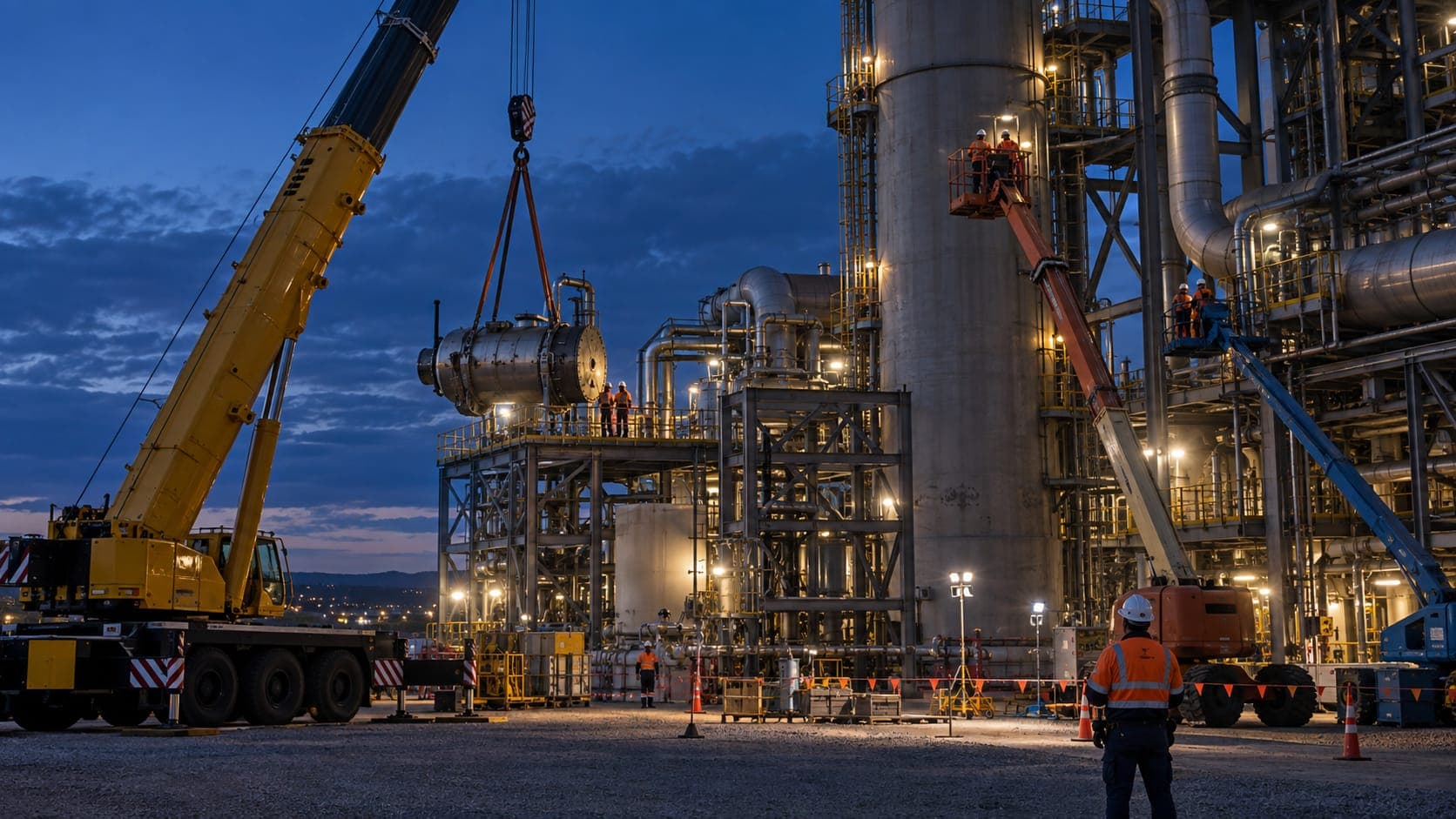
From November to April, cyclones can threaten northern Western Australia, the Northern Territory and Queensland. Plant on site becomes both an asset and a hazard, so cyclone preparation belongs in the hire decision from the start rather than being improvised when a warning is issued.
01 / Cyclone season and warnings
The Australian tropical cyclone season officially runs from November to April, although cyclones have occurred outside those months. Coastal areas of the Pilbara and Kimberley, the Top End, the Gulf of Carpentaria and the Queensland coast are all exposed. The Bureau of Meteorology issues tropical cyclone advices, watches and warnings, and state emergency services and local authorities issue alerts and directions. Projects in these areas should build monitoring into daily routines throughout the season.
Site cyclone management plans usually define stages linked to the Bureau's advices, with actions at each stage. Plant hire needs to be part of that plan. Each machine should have a defined action at each stage: continue, secure in place, relocate, or demobilise off site. Agree these actions with the supplier before the season starts, including who is responsible for each.
02 / Demobilisation triggers and timing
Moving plant off site takes time, and floats may be in short supply when many projects demobilise at once. Ports and industrial sites may also close before a cyclone arrives. Set demobilisation triggers early enough to complete moves safely, and confirm float availability with the supplier. Machines that cannot be moved should be secured in the safest available location on site.
Consider whether some plant should be off-hired before the season rather than kept on standby. Large cranes and elevating work platforms are particularly vulnerable to high winds. Where work must continue through the season, keep the fleet to what is needed and make sure every item has a clear preparation plan. A shorter list of machines is quicker to secure when a watch becomes a warning, and it leaves the crew free to deal with the site itself rather than chasing equipment.
03 / Securing plant on site
Machines that remain on site need to be secured against wind and flooding. Park them on high ground away from drainage lines, trees and structures that may collapse. Lower booms, buckets and blades to the ground, close and lock cabs, and remove or secure loose items. Cranes should be laid down or secured according to the manufacturer's instructions and the lifting supervisor's plan.
Lighter equipment such as lighting towers, generators, site sheds and portable toilets can become airborne in cyclonic winds. Tie them down with rated anchors or move them into secure buildings. Fuel tanks should be secured and bunded. Take photographs of each item and its condition before the event to support any later insurance claims. Tie-down points, anchor ratings and strap or chain sizes should be worked out well before the season, because sourcing rated gear on the day a warning is issued is rarely possible.
04 / Fuel, power and communications
After a cyclone, fuel supply, power and communications may be disrupted for days or weeks. Top up fuel before the event and secure fuel storage. Generators will be in high demand for recovery, so if your site will need power afterwards, arrange it in advance. Pumps and lighting may also be needed quickly. Keeping a generator, a dewatering pump and a lighting tower secured on site, fuelled and ready, can let the crew restore basic operations before outside help arrives. Agree with the supplier in advance whether these units stay through the event or are recovered and redeployed afterwards.
Communications should not rely solely on mobile networks. Satellite phones, UHF radios and a clear contact list for suppliers, emergency services and site personnel should be prepared. Confirm how your supplier will contact you after the event and how they will assess and recover their machines. Nobody should return to site until authorities and the site manager confirm it is safe, and machines should be inspected before restarting, since water in intakes, electrical systems or fuel can cause serious damage.
05 / Contract terms and insurance
Clarify in the hire agreement who is responsible for damage to plant during a cyclone, how hire charges are treated while machines are secured or demobilised, and what notice is needed for early off-hire. Insurance cover for cyclone damage varies, and some policies have specific conditions or exclusions. Check your policy and the supplier's before the season starts. Some insurers expect evidence that a documented cyclone plan was followed.
After the event, recovery work may create strong demand for plant. If your project will need machines for clean-up or repairs, discuss priority arrangements with suppliers in advance. Keep records of all preparation actions, as these may be needed to support insurance claims. It is also worth asking whether the supplier will honour your existing rates for post-event hire, or whether recovery work will be priced separately once demand across the region rises.
Field checklist
- Include plant actions for each stage in the site cyclone management plan.
- Agree demobilisation triggers and float availability with suppliers.
- Off-hire vulnerable plant such as large cranes before the season where practical.
- Park remaining machines on high ground with booms and buckets lowered.
- Tie down lighting towers, generators and site buildings.
- Top up and secure fuel and prepare satellite communications.
- Confirm damage responsibility, hire charges and insurance before the season.
Frequently asked questions
When is cyclone season in Australia?
The official tropical cyclone season runs from November to April, although cyclones can occur outside that period. Northern Western Australia, the Northern Territory and Queensland are most exposed, including the Pilbara, Kimberley, Top End, Gulf country and Queensland coast. The Bureau of Meteorology issues advices, watches and warnings, which should drive site preparation stages.
How should hired plant be secured for a cyclone?
Park machines on high ground away from drainage lines and structures, lower booms and buckets, lock cabs and remove loose items. Cranes should be laid down or secured according to manufacturer instructions. Tie down lighter equipment such as lighting towers and generators.
Who pays if hired plant is damaged in a cyclone?
That depends on the hire agreement and insurance arrangements. Some agreements place the risk on the hirer, others on the supplier. Insurance policies may have specific conditions for cyclone damage, such as requiring a documented preparation plan. Read both the hire terms and your policy before the season starts, and resolve any gaps in writing.
Should I demobilise plant before a cyclone arrives?
Where practical, moving vulnerable plant off site before a cyclone reduces risk. Demobilisation takes time, floats may be scarce and ports or roads may close early, so triggers should be set well ahead of expected impact. Machines that cannot be moved should be secured on site according to the cyclone plan.