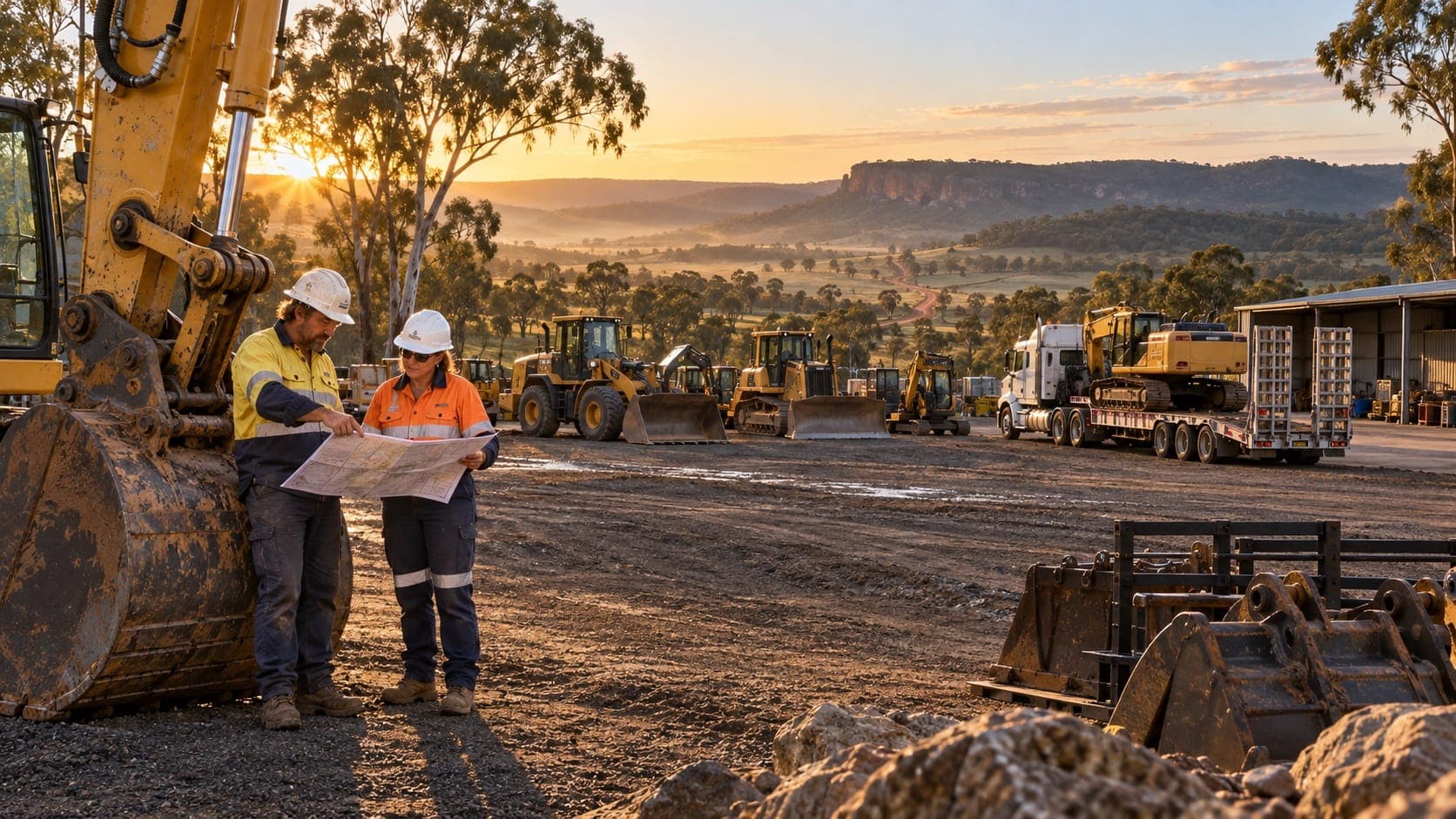
When grain, cane and other crops come in, regional Australia's trucks, loaders, telehandlers and drivers are suddenly in demand. Civil, mining and agricultural projects that need the same resources during harvest are better off booking early and planning around the squeeze than hoping availability holds.
01 / Understanding the harvest calendar
Harvest timing varies with crop, region and season. Winter grain harvest typically begins in central Queensland and northern New South Wales around spring and moves south through the Riverina, Victoria, South Australia and the Western Australian wheatbelt toward early summer. Sugar cane crushing in Queensland and northern New South Wales generally runs through the middle and second half of the year. Cotton, horticulture and other crops add their own peaks. Talk to local suppliers about when pressure usually builds in your area.
A wet spring or a late start can compress harvest into a shorter window, intensifying demand, while a poor season may ease it. Because timing moves from year to year, treat the calendar as a risk window rather than a fixed date. If your project falls in a grain or cane region, plan as if the busiest weeks will coincide with your most plant-intensive phase, and adjust as the season firms up.
02 / Which plant gets tight
Harvest draws on exactly the kind of equipment many regional projects also need. Wheel loaders and telehandlers are used at silos, receival sites and on farms. Side tippers, road trains and tipper trucks carry grain and cane. Float operators move harvesters and chaser bins between properties. Experienced heavy vehicle drivers and loader operators are drawn into seasonal work, sometimes at rates that project roles struggle to match.
Support services feel the pressure too. Regional mechanics, tyre services, hydraulic hose repairers and parts suppliers may be flat out keeping harvest machinery running, which lengthens response times for everyone else. A breakdown on a hired excavator in the middle of harvest may take longer to fix than it would in a quieter month, simply because the local fitter is committed to headers and trucks.
03 / Booking early and locking in terms
The simplest response to harvest pressure is to secure plant and transport before the season starts. Confirm bookings in writing, including machine type, delivery date, hire period and rate. Where a project start is uncertain, ask whether the supplier will hold a unit for a reservation fee or a short standby period rather than releasing it to harvest work. Longer hire commitments may also secure better availability.
Transport is often the harder booking. If machines need to be floated during harvest, confirm the float operator and date as early as possible, and discuss what happens if the float is delayed. Ask whether the supplier has its own transport or relies on subcontractors who may be committed to seasonal work. Building a few days of float in the program around key mobilisations reduces the impact of slippage.
04 / Rural roads and heavy vehicle movements
Harvest brings heavier traffic onto rural roads, including large agricultural machinery, road trains and grain trucks, often around receival points and silos. Some states and the National Heavy Vehicle Regulator operate harvest management schemes or notices that change mass or access arrangements for grain vehicles during the season. These are aimed at agricultural freight, but they change traffic conditions on the roads your plant may use, so be aware of them.
Oversize plant movements on rural roads usually need permits, and route conditions may change during harvest with increased traffic and wear. Brief drivers and operators on sharing roads with slow-moving agricultural machinery and large trucks. Where your site access joins a road used heavily by harvest traffic, consider signage, traffic control and timing of plant movements to avoid peak periods.
05 / Local relationships and support planning
In regional areas, relationships matter. Local suppliers often prioritise customers they know and work with year-round. Engaging with them early, explaining your program and committing where you can may secure better availability than a last-minute enquiry. Consider whether a local supplier with a smaller fleet but reliable local support serves the project better than a larger company based far away.
Plan for reduced support during harvest by carrying a small stock of critical spares, such as filters, hoses and ground engaging tools, on site. Agree breakdown response times with the supplier and ask whether they have contingency arrangements during peak season. Where a machine is critical to the program, consider hiring a backup unit or arranging a swap at short notice with the supplier before harvest starts.
Field checklist
- Ask local suppliers when harvest pressure usually peaks in your region.
- Book loaders, trucks and telehandlers before the season begins.
- Confirm float operators and dates early and allow slack around key moves.
- Check heavy vehicle permits and any harvest-related road arrangements.
- Brief drivers on sharing rural roads with agricultural machinery.
- Hold critical spares on site to offset slower local support.
- Agree breakdown response times and backup options before harvest.
Frequently asked questions
When is harvest season in Australia?
It depends on the crop and region. Winter grain harvest typically starts in Queensland and northern New South Wales in spring and moves south and west toward early summer, while sugar cane crushing generally runs through the middle and second half of the year. Local suppliers can advise on typical timing in your area.
Why is plant harder to hire during harvest?
Harvest creates strong demand for loaders, telehandlers, trucks, floats and experienced operators, and regional mechanics and parts suppliers become very busy. Civil and mining projects competing for the same resources may find availability tight, rates firmer and breakdown response times longer than usual.
How far ahead should I book plant for a harvest-period project?
As early as practical, ideally once the program is firm enough to commit. Several weeks to months ahead is common in busy regions. Confirm bookings in writing, including transport, and ask whether the supplier will hold a unit if your start date is uncertain.
Do harvest road arrangements affect construction plant?
Harvest schemes are generally aimed at grain and agricultural vehicles, not construction plant, but they change traffic conditions on rural roads. Oversize plant still needs the usual permits. Be aware of increased heavy traffic and plan plant movements around busy periods near receival sites.