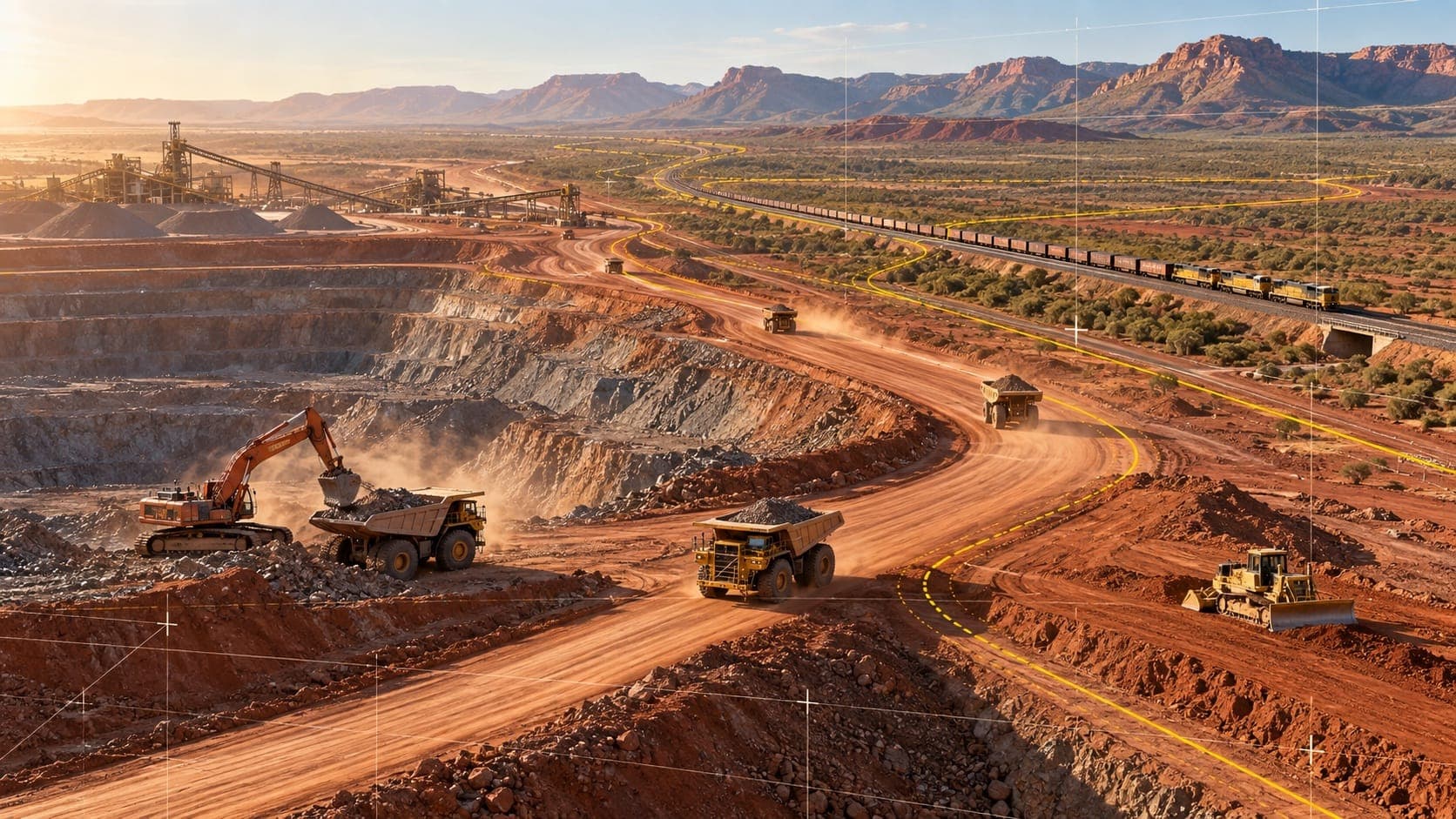
Across northern Australia the wet season arrives on a known calendar but an unknown schedule. Projects that treat it as a planning milestone, rather than a weather event, tend to decide early which machines stay, which go home and what contingency fleet will carry the job through to the dry.
01 / When and where the wet matters
In the Northern Territory's Top End, the Kimberley and Pilbara in Western Australia, and northern and far north Queensland, the wet season broadly runs from around November to April, with the build-up beforehand bringing heat, humidity and early storms. Timing and intensity vary a great deal from year to year and between regions. The Bureau of Meteorology publishes seasonal outlooks and northern wet season onset information, and these are worth reviewing when programs are being set in the middle of the year.
Southern projects have their own version of this problem. Prolonged wet periods in eastern states, particularly in La Niña years, can bring months of saturated ground. The principles in this guide apply there too, but the northern wet is distinctive because roads, river crossings and whole regions can be cut off for extended periods, which turns a plant decision into a logistics decision.
02 / Deciding what stays and what goes
Several weeks before the expected onset, review every machine on hire against the work that can realistically continue once rain sets in. Large articulated trucks, scrapers and wheeled loaders used for bulk earthworks often have little to do on saturated ground, and paying standby on them for months can be expensive. Off-hiring them while roads are still open, and before every other project in the region tries to do the same, avoids a queue for floats.
What remains should be a deliberate contingency fleet: a tracked excavator or two with suitable shoes, a low-ground-pressure dozer if drainage work continues, dewatering pumps, a generator and lighting towers, and the support gear to keep them serviced. Ask your supplier whether they can hold a replacement unit in a regional depot, because once access closes, swapping a failed machine may not be possible for weeks.
03 / Access, stockpiles and pre-positioning
Many unsealed roads in the north become impassable during the wet, and some are formally closed for the season. If work must continue at a remote site, machines, fuel, spares and consumables need to be in place before closure. Build a list with the supplier of the filters, hoses, ground engaging tools, grease and oils needed to run the retained fleet until access reopens, and agree who owns and stores them.
Stockpiling materials on high, well-drained ground can let work continue between storms. So can laying hardstand for machine parking and servicing, so that fitters are not working in mud. Where float access might be lost, discuss with the supplier whether machines can be walked out along an alternative route, or whether they will simply remain on site until the dry season and how that time will be charged.
04 / Pumps, drainage and ground protection
Drainage work done before the wet pays back many times over. Clean out table drains and culverts, form up diversion drains and sediment basins, and set up pump stations while machines can still move freely. Size dewatering pumps for heavy storm inflows rather than average rainfall, and keep at least one spare on site for any excavation that must stay dry. Solids-handling trash pumps are often better suited to storm runoff than clear-water units.
Where machines must keep crossing soft ground, bog mats, geotextile and rock-armoured access tracks help maintain trafficability. Plan who will place and move mats and include that machine in the retained fleet. Check that your erosion and sediment control plan reflects the pumping arrangements, because discharge of turbid water can breach environmental conditions and bring work to a halt. Flocculant dosing gear may also be needed for basins.
05 / Standby clauses and contract terms
Hire agreements handle rain very differently. Some charge the full rate regardless of weather, others apply a reduced standby rate for wet days, and some set minimum weekly hours. For a northern project that may lose a significant share of days during the wet, these terms can matter more than the base rate. Read them closely, ask how a wet day is defined and who confirms it, and make sure daily dockets are signed so there is no dispute later.
Ask about notice periods for off-hire and whether a machine that is stranded by road closures continues to accrue hire. Some suppliers will negotiate a seasonal rate for plant retained through the wet on remote projects. Get any such arrangement in writing, including what happens if a machine breaks down when a technician cannot reach the site. Whether a trained on-site fitter can carry out supplier-approved repairs is worth settling at the same time.
06 / People, heat and communications
The build-up before the rains is often the most physically demanding time of year, with high temperatures and humidity combining to increase heat stress risk. Plan work hours, hydration, rest breaks and air-conditioned cabs accordingly. Once the wet sets in, slippery access to machines, lightning and flash flooding become the main hazards. Lightning procedures should specify when operators leave exposed machines and where they shelter.
Communications can fail when storms damage infrastructure or when sites become isolated. Satellite phones, UHF radios, check-in procedures and an emergency evacuation plan that works when roads are cut should be in place before the season begins. Operators should know who makes the call to stop work and withdraw plant when warnings are issued. That decision is easier to make quickly when the trigger, such as a particular warning level or rainfall total, has been agreed in advance and written into the site plan.
Field checklist
- Review the Bureau of Meteorology seasonal outlook when setting mid-year programs.
- Off-hire bulk earthworks plant while roads and floats are still available.
- Define a contingency fleet for work that must continue through the wet.
- Pre-position fuel, filters, hoses and wear parts before road closures.
- Complete drainage, sediment basins and pump stations before onset.
- Confirm wet-day, standby and stranded-machine terms in writing.
- Set lightning, flash flood and communications procedures for crews.
Frequently asked questions
When should I start planning plant hire for the northern wet season?
Ideally during the middle of the year, when programs are being set and the Bureau of Meteorology's seasonal outlooks are available. Decisions about off-hiring bulk plant and retaining a contingency fleet should be locked in several weeks before the expected onset, while roads are open and float operators have capacity.
What machines should stay on site through the wet season?
Usually a small, versatile fleet suited to soft ground: tracked excavators with suitable shoes, possibly a low-ground-pressure dozer, dewatering pumps, a generator and lighting. The exact mix depends on which work must continue. Bulk earthworks machines are often better off-hired until conditions improve.
Will I pay hire on machines stranded by road closures?
That depends on the hire agreement. Some suppliers charge full hire, some agree a standby or seasonal rate, and a few suspend charges. Ask this directly before the season starts and record the agreement in writing, particularly on remote northern projects where closures can last weeks.
How do I size dewatering pumps for the wet season?
Provide your supplier with excavation dimensions, depth, soil type, discharge distance and expected rainfall. Size for storm inflow rather than average conditions, and choose solids-handling pumps where runoff carries silt. Keeping a spare pump on site is common practice where an excavation must stay dry.