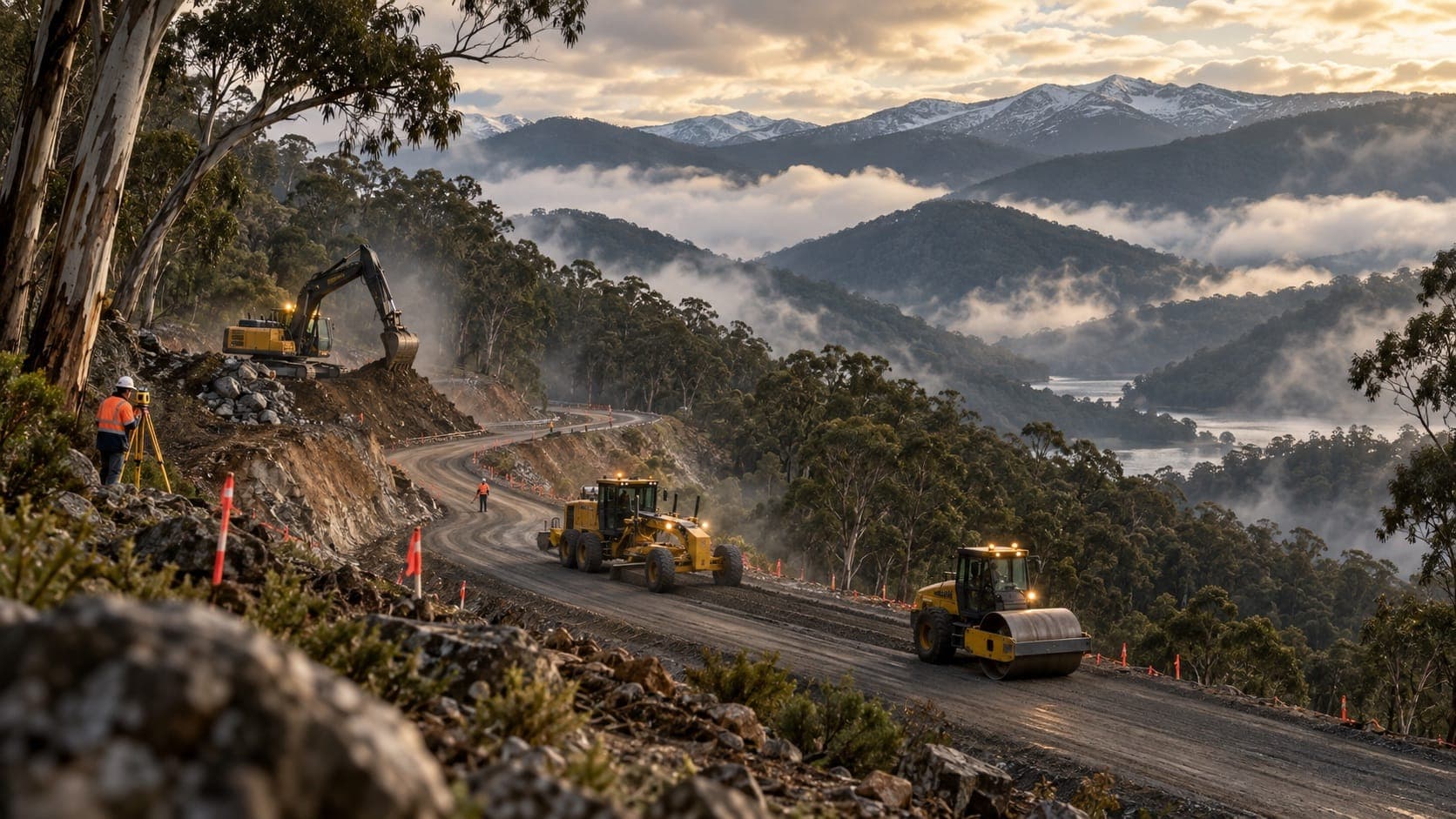
Wet hire and dry hire describe who runs the machine and, just as importantly, who carries the risks that come with running it. The choice affects price, supervision, safety obligations and what happens when something breaks. This guide explains the usual split of responsibilities and the questions to settle before signing.
01 / What the two terms usually mean
In Australian plant hire, wet hire generally means the machine is supplied with an operator, and dry hire means the machine alone, operated by the hirer's own people. Some suppliers also use wet hire to indicate that fuel is included, so the phrase is not perfectly standardised. The safest approach is to treat the label as shorthand and confirm, in writing, exactly what the rate includes and excludes.
Between the two sit hybrid arrangements. A crane may be supplied with an operator but the hirer provides the dogman or rigger. An excavator may be dry hired but the supplier sends a fitter for scheduled servicing on site. A long-term dry hire might include a periodic inspection regime. Each variation shifts responsibility slightly, and each should be written into the hire agreement rather than assumed from past jobs.
02 / What wet hire typically includes
A wet hire rate commonly covers the machine, a competent operator and the operator's wages, with the supplier responsible for the operator's employment matters such as workers compensation. Maintenance and breakdown response usually stay with the supplier. Fuel may or may not be included, and travel time, minimum call-out hours, overtime, meal breaks and weekend rates are frequently charged separately, so read the rate schedule closely.
The practical advantage is that an experienced operator arrives already familiar with the machine, which can improve productivity and reduce the chance of misuse. The hirer still directs the work and remains responsible for site safety systems, inductions, exclusion zones and coordination with other trades. Wet hire does not transfer all safety duties to the supplier; under work health and safety law, duties are generally shared by everyone who has influence over the work.
03 / What dry hire typically includes
A dry hire rate usually covers the machine itself, delivered in serviceable condition, with the hirer supplying the operator, fuel and day-to-day checks. Routine servicing on longer hires may be done by the supplier by arrangement, but daily pre-start inspections, greasing, fluid checks and reporting of faults commonly fall to the hirer. Misuse, operator error and avoidable damage are typically the hirer's cost.
Dry hire generally shifts more risk to the hirer. You are responsible for ensuring your operators are competent and, where the plant requires it, licensed. You also carry more exposure to damage, theft and loss while the machine is in your care, which is why dry hire terms often require either the supplier's damage waiver or evidence of your own plant cover. Check both options before deciding which is cheaper overall.
04 / Choosing between wet and dry hire
Dry hire tends to suit contractors who already employ experienced operators, have a steady workload for the machine and run their own maintenance and fuel logistics. It gives more control over scheduling and can reduce cost when the machine is used heavily. It suits less well when the task is specialised, the machine unfamiliar, or your own crew is already stretched across other work fronts.
Wet hire usually makes sense for specialised plant such as cranes, for short or intermittent tasks, and where the operator's experience with that exact machine materially affects safety or output. It can also help when your organisation does not want to carry operator employment or training obligations for a one-off job. Comparing the two on hourly rate alone is misleading; include fuel, supervision, idle time, damage exposure and administration in the comparison.
05 / Points to settle in the hire agreement
Whichever model you choose, confirm the minimum hire period and minimum daily hours, how hours are recorded, what happens during wet weather or site stoppages, and whether standby is charged. For wet hire, ask how operator fatigue, breaks and replacement operators are managed. For dry hire, ask what daily checks the supplier expects and how faults must be reported to preserve your position if a breakdown occurs.
Clarify damage waiver, insurance and indemnity terms, because these differ sharply between the two models and between suppliers. Ask what the waiver excludes, what excess applies and whether it covers the machine while in transit or stored off site. If your head contract or insurer imposes conditions, check them against the supplier's terms. Where the exposure is significant, an insurance broker or lawyer can confirm how the documents interact.
Field checklist
- Confirm in writing whether the rate includes operator, fuel, servicing and transport
- Check minimum hire period, minimum daily hours and how hours are recorded
- For wet hire, ask about travel time, overtime, breaks and replacement operators
- For dry hire, confirm your operators' competency and any licences the plant requires
- Agree who performs daily checks, greasing and fault reporting
- Compare damage waiver cost and exclusions with your own plant cover
- Include idle time, fuel and supervision when comparing total cost
Frequently asked questions
What is the difference between wet hire and dry hire?
Wet hire generally means plant supplied with an operator, while dry hire means the machine only, operated by the hirer. Some suppliers also use wet hire to mean fuel is included. Because usage varies, confirm in writing who supplies the operator, fuel, servicing, transport and insurance before accepting any quote.
Is fuel included in wet hire?
Not always. Some wet hire rates include fuel, while others charge it separately or expect the hirer to refuel the machine on site. Fuel arrangements can materially affect total cost on long or heavy-use hires, so ask each supplier to state their fuel position clearly and to explain how any fuel surcharge or refuelling charge is calculated.
Who is responsible for safety under wet hire?
Safety duties are generally shared. The supplier is usually responsible for providing safe plant and a competent operator, while the hirer controls the site, the work method, inductions and coordination with other activities. Work health and safety duties typically apply to everyone with influence over the work, so wet hire does not remove the hirer's obligations.
Is dry hire cheaper than wet hire?
The hire rate for dry hire is usually lower because no operator is included, but the total cost depends on your operator wages, fuel, supervision, idle time and exposure to damage. For a well-utilised machine run by an experienced crew, dry hire can be economical. For short or specialised tasks, wet hire may cost less overall.