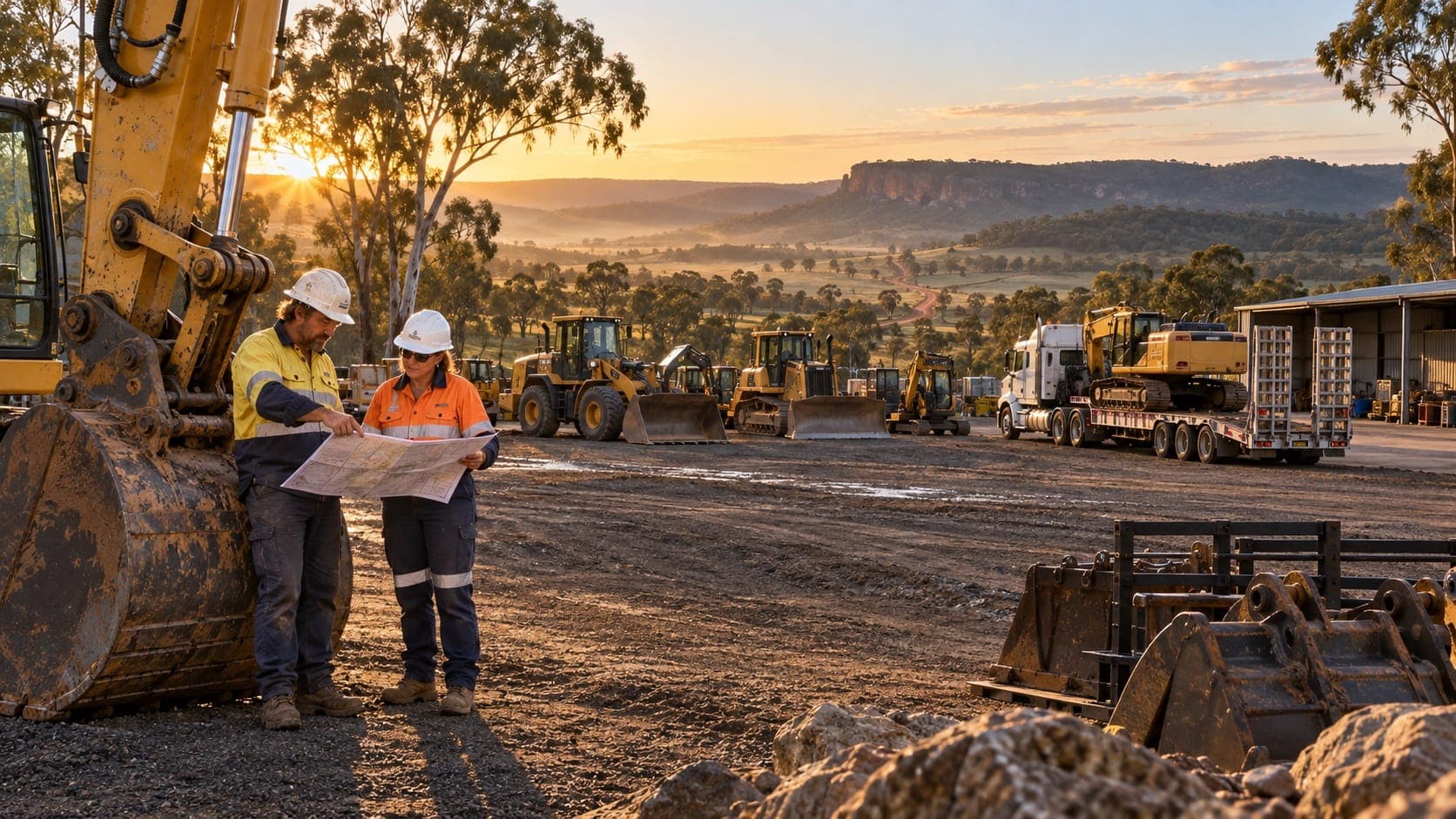
A plant hire quote is only as reliable as the brief behind it. When the request says little more than a machine size and a start date, every supplier fills the gaps with their own assumptions, and those assumptions resurface later as variations. This guide sets out what a practical brief contains and how to structure it so quotes come back comparable.
01 / Describe the task, not just the machine
Most weak briefs name a machine class and stop there. A better starting point is the work itself: bulk excavation in clay, trenching for a stormwater line, loading trucks from a stockpile, lifting precast panels, or working at height on a façade. When suppliers understand the task, they can confirm whether the requested size is suitable, suggest a configuration that is more productive, or flag that the job needs an attachment you had not considered.
Include the quantities and constraints that shape the choice. Trench depth and width, bucket sizes, lift weights and radii, material type, working height and reach all change the answer. If you are unsure of a figure, say so and give a range. An honest range invites a sensible recommendation, whereas a guessed figure presented as fact can lead to a machine that is undersized on arrival or oversized and more expensive than it needs to be.
02 / Site access and ground conditions
Delivery is often where the brief falls short. State the site address, the entry point for heavy vehicles, any gate widths or height limits, overhead powerlines, and whether there is a hardstand for unloading a float. Note if access is via a residential street, a shared driveway or an unsealed track, and whether delivery windows or curfews apply. These details decide which transport the supplier can use and whether escorts or permits come into play.
Ground conditions matter both for transport and for the work. Soft or saturated ground, slopes, contaminated material, rock, or proximity to excavations can affect machine selection, outrigger pads, matting and the method of work. If a geotechnical report or site survey exists, offer to share the relevant extract. For cranes and elevating work platforms in particular, known ground bearing information helps the supplier plan set-up rather than discovering constraints on the day.
03 / Duration, hours and working pattern
Give a realistic start date, an expected duration and the degree of certainty around both. A two-week job that might stretch to five is priced differently from a firm two weeks, and many suppliers apply minimum hire periods or offer better weekly and monthly rates. Telling them early avoids a quote built on daily rates when a longer-term arrangement would have been cheaper and simpler to administer.
Spell out the working pattern: day shift or night works, the number of hours per shift, whether weekends or public holidays are likely, and whether the machine will sit idle between stages. Hour-meter based pricing, standby arrangements and overtime rates for operated hire all depend on these facts. If the program includes planned stand-down periods, say whether you expect the machine to stay on site or be off-hired and returned later.
04 / Operator, supervision and site requirements
State whether you need the plant wet (with an operator supplied) or dry (machine only), and if wet, what you expect of the operator. That can include licences for high risk work where they apply, verification of competency for the specific machine, site-specific inductions, and any client or principal contractor requirements such as medicals or drug and alcohol testing. Suppliers price operators differently depending on these conditions, so stating them up front matters.
List the documents the machine and supplier must provide before mobilisation. Common requests include a current plant risk assessment, maintenance and service records, pre-start checklists, registration where the plant is registrable, insurance certificates and safe work method statements for high risk construction work. If you use a contractor management platform, say so, because onboarding can take days and should run in parallel with pricing rather than after the order is placed.
05 / Commercial terms to state up front
Ask suppliers to price against a stated set of commercial assumptions: payment terms, whether you will accept the supplier's damage waiver or rely on your own insurance, who supplies fuel, and how breakdowns are handled. If you have your own hire terms or a head contract that flows obligations down, attach or summarise them. A supplier who quotes on their standard terms may later need to reprice once your conditions are applied.
Request that quotes separate the hire rate from mobilisation, demobilisation, attachments, consumables, cleaning and any surcharges. This makes comparison possible and reduces the risk of line items appearing only on the first invoice. Ask for a quote validity period and a statement of which specific unit, or which model range, is being offered. A quote for a machine class is not the same as a commitment to a particular serviced unit.
Field checklist
- Describe the task, quantities and material, not only the machine size
- Give site address, heavy vehicle access point, gate widths and overhead hazards
- Note ground conditions and share any geotechnical or survey information
- State start date, likely duration and the level of certainty around both
- Specify shift pattern, hours per shift, weekend work and planned idle periods
- Confirm wet or dry hire and list operator and induction requirements
- List pre-mobilisation documents and any onboarding platform in use
- Ask for mobilisation, attachments and surcharges to be itemised separately
Frequently asked questions
What should a plant hire request include?
At minimum, the task and material, site location and access constraints, start date and duration, working hours, whether you need an operator, and the documents the supplier must provide. Adding ground conditions, delivery windows and your commercial assumptions such as fuel, insurance and payment terms helps suppliers price the same job rather than their own version of it.
Should I specify an exact machine model?
Usually it is better to specify the task and the performance you need, and let suppliers propose a suitable model. Naming an exact model can limit competition and may rule out a machine that would suit the job better. If a particular model is genuinely required, for example to fit an existing attachment or a tight access point, state the reason.
How far ahead should I send a plant brief?
There is no fixed rule, but longer lead times generally help, particularly for cranes, specialised attachments, remote sites and peak periods. Enough time for suppliers to check availability, plan transport and complete your onboarding is the practical test. For common machines in metropolitan areas, shorter notice may work, but availability of a specific unit is never guaranteed.
Why do suppliers keep asking follow-up questions?
Follow-up questions usually signal gaps in the brief that affect price or safety, such as access, ground conditions, hours or operator requirements. Suppliers who ask are often trying to avoid pricing on assumptions. Collecting the answers and sending them to all bidders at once keeps the process fair and helps make the returned quotes comparable.