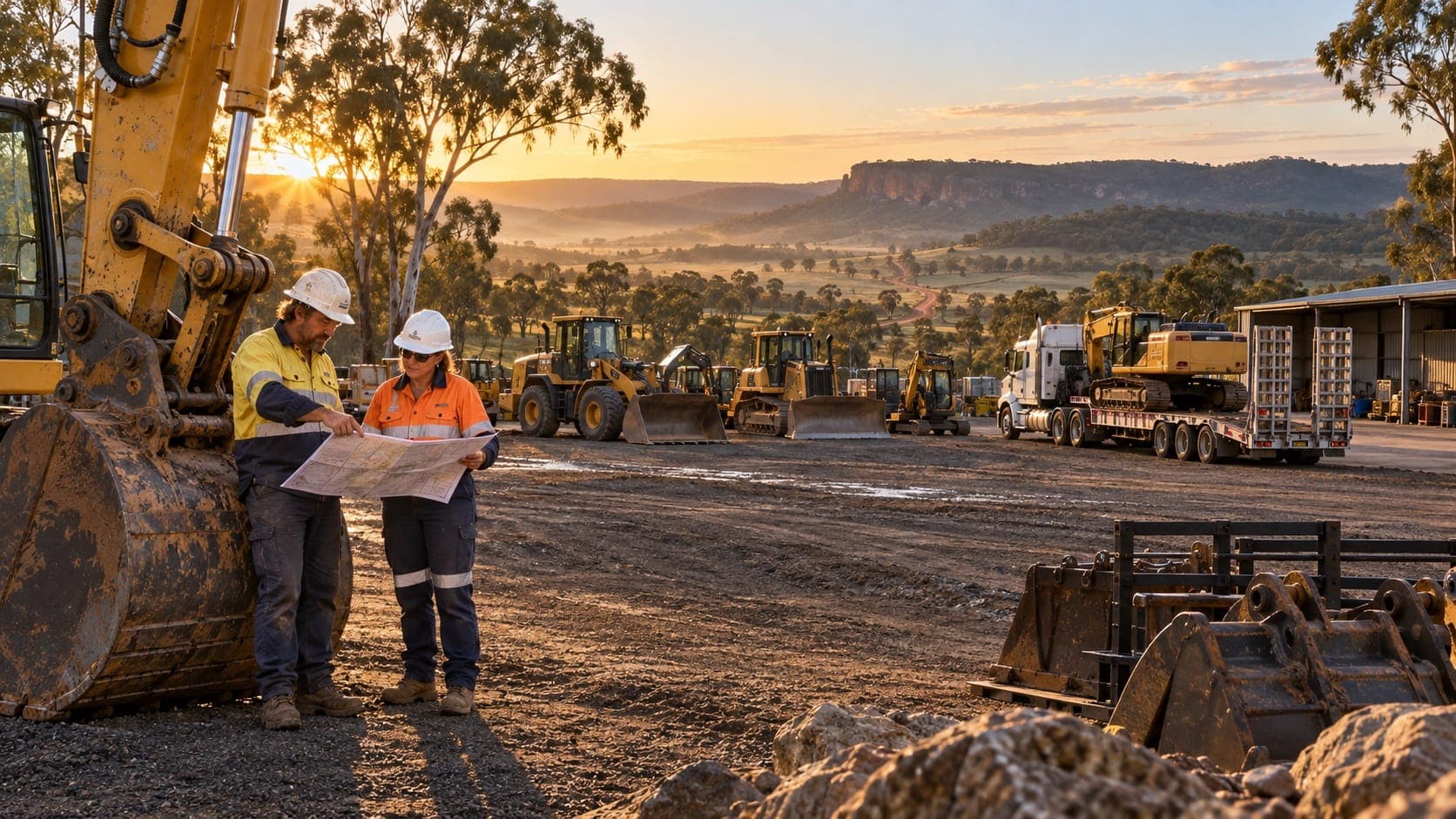
Hiring plant for a remote project brings logistics that metropolitan jobs rarely test: long transport routes, limited fuel and servicing, operators on rosters and a breakdown that cannot be fixed by a same-day swap. Planning these elements early usually costs less than solving them once the machine is on site. This guide sets out what to scope before committing.
01 / Routes, seasons and site access
Map the route from the likely dispatch depot to site before seeking quotes. Unsealed roads, river crossings, load limits on bridges and restricted access routes can all shape which transport can be used and when. Some regional roads close or become impassable in wet seasons, and access may be restricted during certain periods on land subject to other uses or agreements. Local knowledge from the site owner or council is valuable.
Share the route details with suppliers and ask them to confirm how they would transport the plant, including whether permits or escorts may be needed over longer distances. If access depends on dry conditions, build that into the program and discuss with suppliers what happens if a machine cannot be demobilised on time because a road is closed. The hire terms should address who carries the cost of that delay.
02 / Fuel, servicing and spare parts
On remote sites, fuel supply is part of plant logistics rather than an afterthought. Confirm who supplies fuel, how it is stored and delivered on site, and whether the supplier's rate assumes the machine is refuelled by the hirer. Check any environmental or site requirements for fuel storage and spill response, which may be set by the site owner, the principal contractor or regulators.
Servicing intervals continue whether or not a fitter is nearby. Ask how scheduled servicing will be delivered, whether a fitter will travel to site and how that travel is charged, and whether filters, oils and common wear parts can be sent with the machine. For critical plant, it may be worth agreeing a small on-site stock of consumables, such as bucket teeth, hoses and filters, to avoid long waits for minor repairs.
03 / Operators, rosters and accommodation
For wet hire, discuss how operators will be rostered, how they will travel to site and where they will stay. Fly-in fly-out or drive-in drive-out rosters, travel days and accommodation all carry cost and need to align with your shift pattern. If you provide camp accommodation or meals, say so in the brief. If not, ask suppliers where they expect operators to stay and what that means for travel time each day.
Continuity matters on remote jobs. Ask how the supplier will cover leave, illness or roster changes, and whether replacement operators will already hold the site's required inductions and medicals. Onboarding on remote projects can involve additional requirements, such as specific medicals, remote first aid or fatigue management training, so check early whether the supplier's operators already meet them or need time to complete them.
04 / Breakdowns and replacement planning
A breakdown that would cost a day in a city can cost a week on a remote site. Before mobilising, agree in writing how breakdowns will be reported, how quickly the supplier will respond, and what happens if the machine cannot be repaired on site. Ask whether a replacement unit would come from a depot hundreds of kilometres away and who pays for that transport.
Review the hire terms for off-hire during breakdowns. Many agreements provide that hire charges cease when a machine is out of service due to a fault not caused by the hirer, but the details vary and may require prompt notice. Keep clear records of when a fault was reported and when the machine returned to service. For critical activities, consider whether a backup machine or a second unit is justified.
05 / Communications and documentation on remote sites
Mobile coverage can be patchy or absent. Agree how operators and supervisors will communicate with the supplier for faults and emergencies, whether by satellite phone, UHF radio or a site office connection. Pre-start records, hour readings and incident reports should be collected in a way that works offline and can be transferred when coverage is available, rather than relying on an app that needs a constant connection.
Documentation that is easy to fix in a metropolitan setting can stall a remote mobilisation. Confirm that registration, inspection records, risk assessments and operator credentials are complete before the machine leaves the depot. A missing document discovered at the site gate may mean the machine waits, or returns, at considerable cost. A checklist signed off by the supplier before dispatch reduces that risk.
Field checklist
- Map the transport route, seasonal closures and load limits before quoting
- Confirm who supplies and stores fuel and how refuelling is managed
- Agree servicing arrangements and an on-site stock of common wear parts
- Plan operator rosters, travel days and accommodation with the supplier
- Check remote-site medicals, inductions and training for all operators
- Agree breakdown response, replacement pathway and off-hire during faults
- Set up communications that work without mobile coverage
- Verify all documents before the machine leaves the depot
Frequently asked questions
How do I hire plant for a remote site?
Start with a detailed brief covering route, access, seasonal conditions, fuel, servicing, operator rosters and accommodation. Ask suppliers how they will transport, maintain and replace plant at that distance. Confirm breakdown and off-hire arrangements in writing, and complete all documentation before dispatch to avoid delays at the site gate.
Who pays for fitter travel on remote hires?
This depends on the agreement. Some suppliers include scheduled servicing travel in the rate, while others charge travel time and accommodation separately. Breakdown attendance may be charged differently depending on the cause. Ask each supplier to state their approach so you can compare the likely cost across the hire.
Do hire charges stop during a breakdown?
Many hire agreements provide that charges stop when a machine is out of service because of a fault that was not caused by the hirer, often subject to prompt notice. The details vary between suppliers. Check the terms before hiring and keep records of when the fault was reported and resolved.
Should I keep spare parts on a remote site?
For critical plant, a small stock of common consumables such as filters, hoses and ground engaging tools can prevent long delays waiting for parts. Agree with the supplier which items to keep, who owns them and how unused stock is returned or charged at the end of the hire.