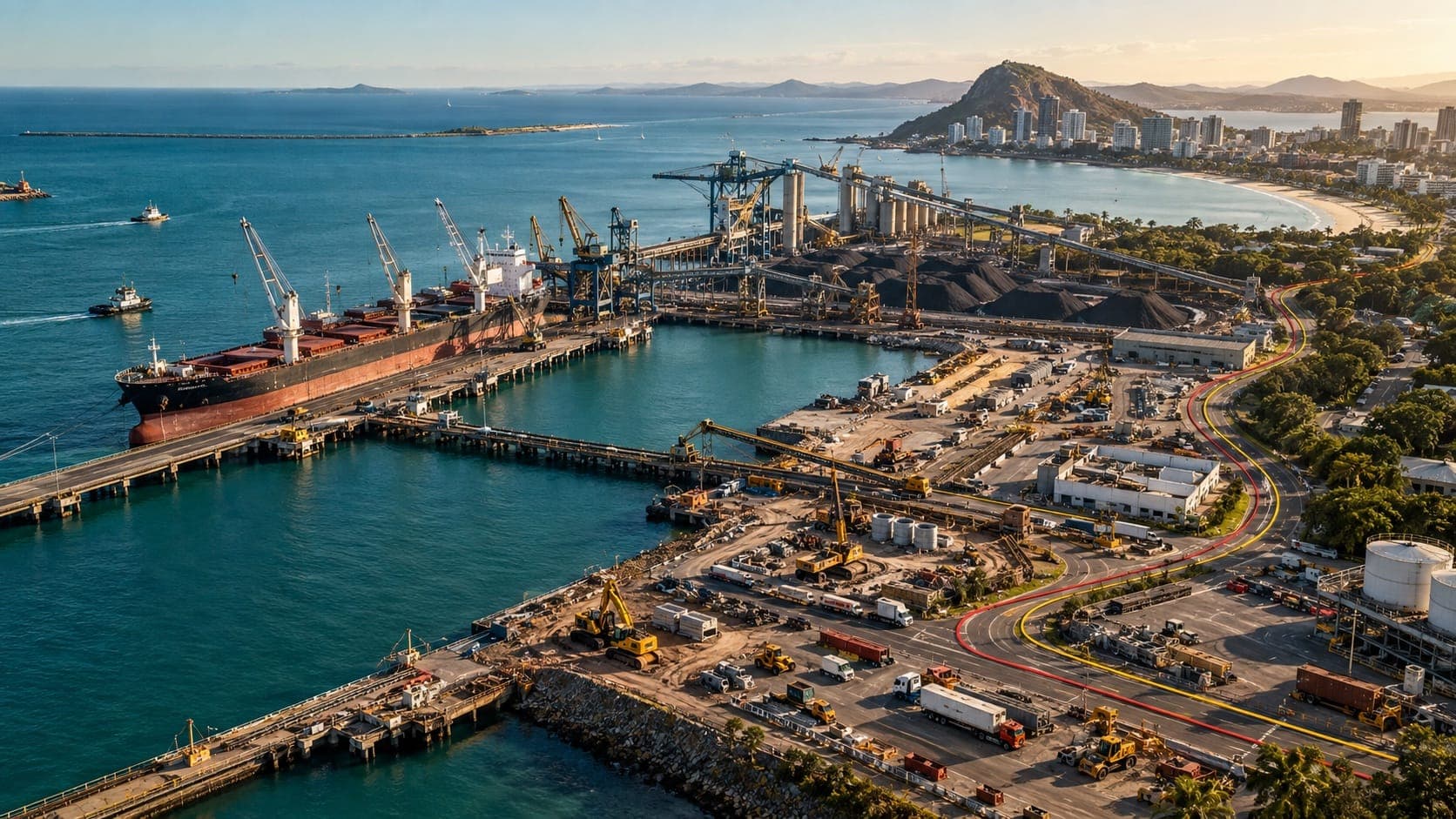
The Hunter and Newcastle market combines port, resources, energy transition, industrial maintenance, transport and urban development. Projects can move from open civil sites to tightly controlled live facilities within a short geographic distance.
01 / The connected work market
Typical demand spans bulk earthworks, heavy lifting, shutdown access, road and rail interfaces, remediation, material handling and supporting utilities. Supplier selection should test both the machine and the provider’s familiarity with site permits, industrial controls and time-critical handovers.
Start with the nominated workface and programme. A corridor is useful planning context, not evidence that a provider or machine covers the site. Ask for the exact allocation and origin every time.
02 / The practical supply line
Port and industrial precincts may impose escorts, induction lead times, restricted gates and precise delivery windows. Inland work can add longer mobilisation and communications gaps. Ask where the proposed equipment, operator and field-service technician will each start.
Compare transport, operator travel, service response and replacement exposure on the same basis as the hire rate. A cheaper unit can carry greater programme risk when support sits outside the working corridor.
03 / Seasonal pressure
Storms, coastal exposure and overlapping shutdown or infrastructure programs can compress supply. Confirm wash-down, corrosion exposure, lighting, after-hours support and how standby is treated when access is controlled by another party.
Record the weather and access assumptions in the enquiry and quote. Agree what constitutes standby, when the machine can be recovered and which party decides that conditions are suitable to resume.