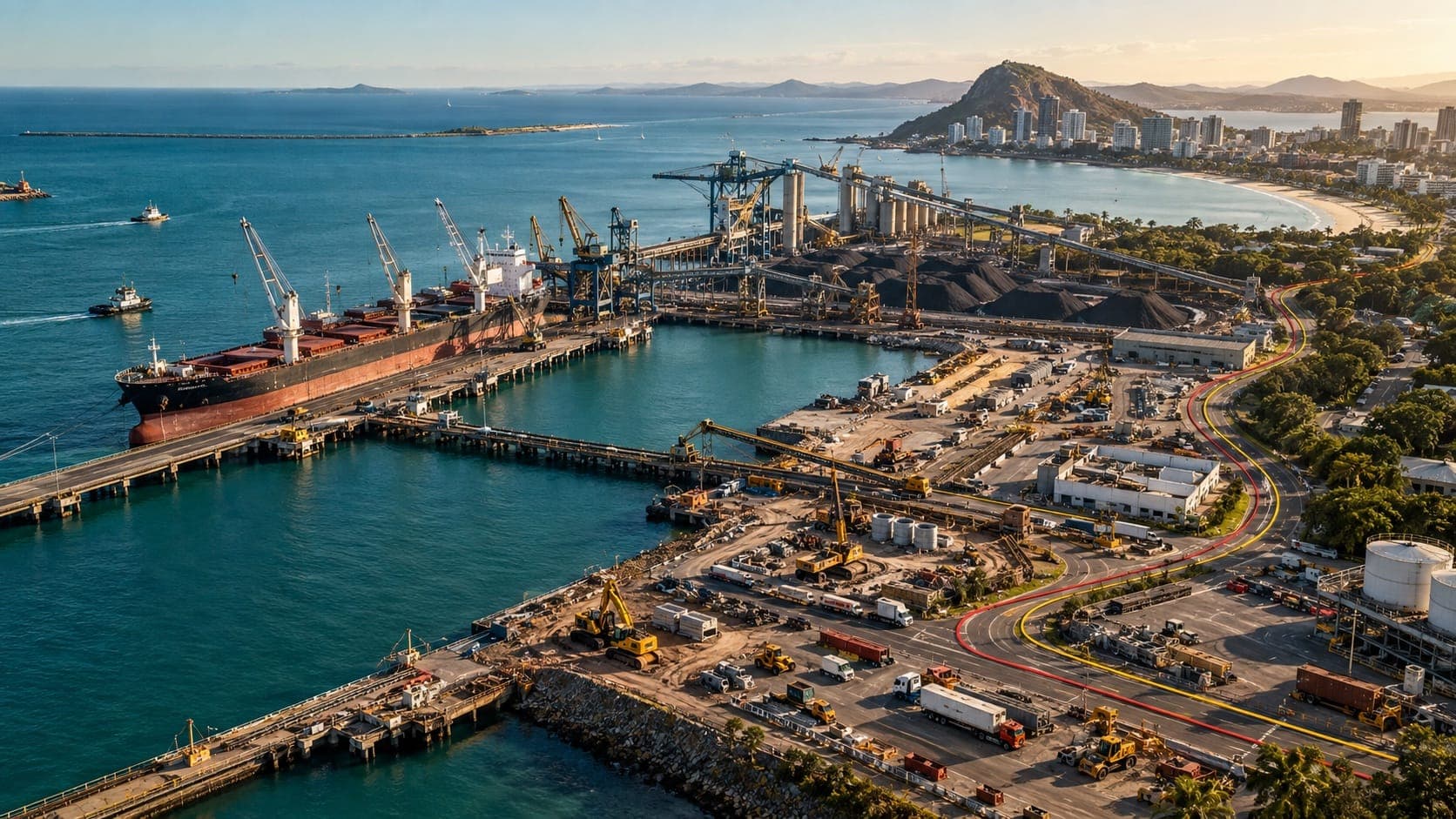
Darwin and the Top End support defence, resources, roads, ports, utilities and remote-community works across a tropical operating environment. Seasonal access and long supply lines should influence equipment selection from the first enquiry.
01 / The connected work market
Programs may combine urban civil works around Darwin and Palmerston with remote roads, airstrips, water, community infrastructure and resource support. The needed fleet can shift from compact service work to graders, rollers, water carts, excavators, generators and remote camp support.
Start with the nominated workface and programme. A corridor is useful planning context, not evidence that a provider or machine covers the site. Ask for the exact allocation and origin every time.
02 / The practical supply line
Confirm road status, barge or ferry interfaces, wet-season cutoffs, fuel supply, communications and operator accommodation. For remote work, the support plan should state who carries consumables, filters, hoses and recovery equipment—and how a replacement would actually travel.
Compare transport, operator travel, service response and replacement exposure on the same basis as the hire rate. A cheaper unit can carry greater programme risk when support sits outside the working corridor.
03 / Seasonal pressure
The dry season concentrates construction activity and fleet demand. The build-up and wet season add heat, humidity, storms and access risk. Booking earlier is useful only when the nominated unit, transport and readiness date are all confirmed.
Record the weather and access assumptions in the enquiry and quote. Agree what constitutes standby, when the machine can be recovered and which party decides that conditions are suitable to resume.