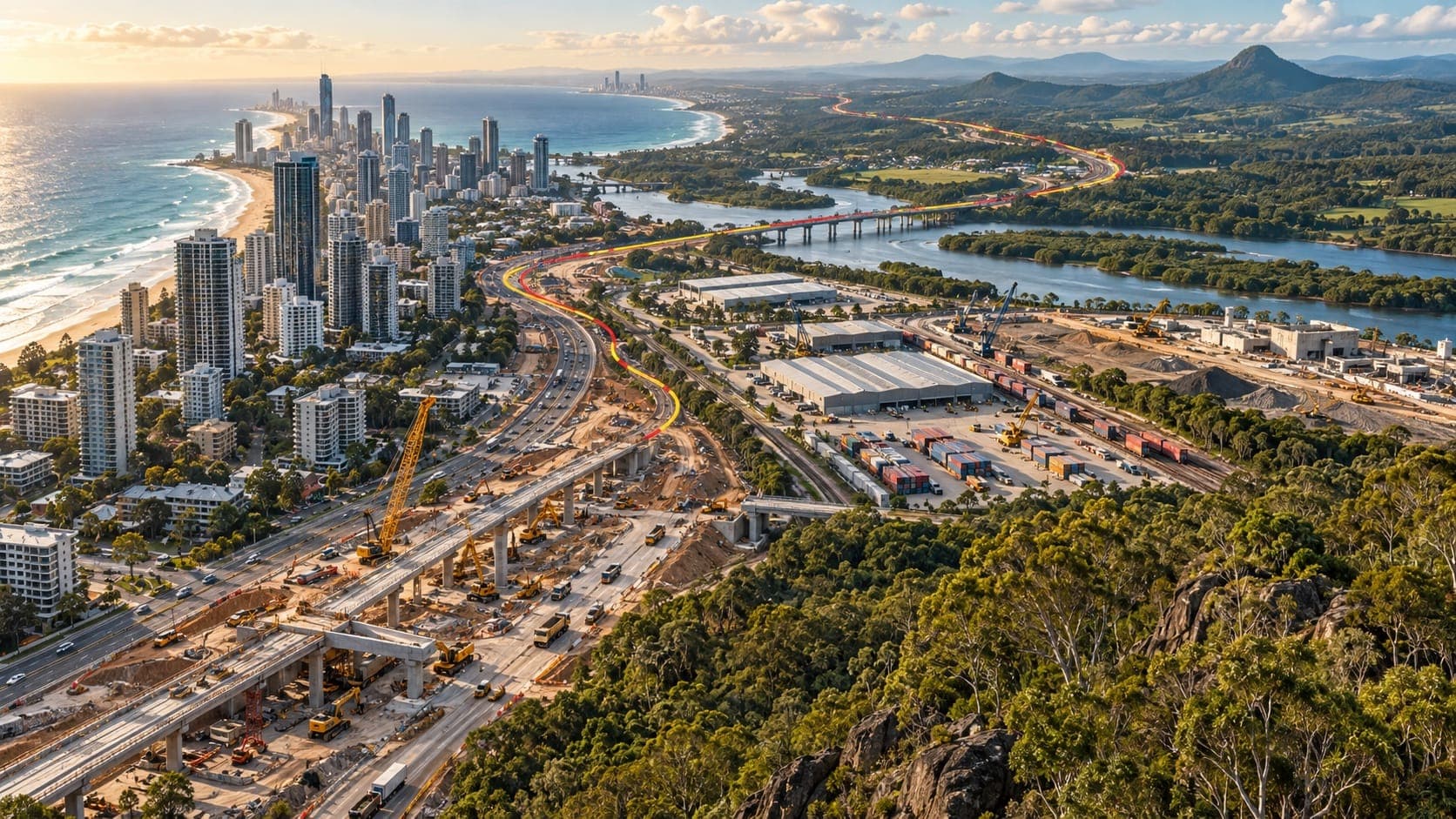
Australia’s eastern seaboard links the country’s deepest plant markets with its busiest road, rail, utilities, residential and commercial programs. Fleet depth can be strong, but congestion, delivery windows and simultaneous demand make the exact depot and dispatch plan important.
01 / The connected work market
The corridor carries metropolitan tunnelling and transport packages, greenfield subdivisions, utility renewals, industrial estates, data and logistics facilities, public-realm works and maintenance programs. The same equipment category may be configured very differently for a tight CBD possession, a motorway widening or a regional subdivision stage.
Start with the nominated workface and programme. A corridor is useful planning context, not evidence that a provider or machine covers the site. Ask for the exact allocation and origin every time.
02 / The practical supply line
Treat the final urban kilometres as part of mobilisation. Confirm float routes, oversize restrictions, curfews, loading zones, traffic control, laydown and whether the proposed machine is already committed to another project front. A supplier’s state coverage does not confirm a practical response time across this long corridor.
Compare transport, operator travel, service response and replacement exposure on the same basis as the hire rate. A cheaper unit can carry greater programme risk when support sits outside the working corridor.
03 / Seasonal pressure
Summer storms, coastal rain, heat and major construction peaks can shift demand quickly. Programme-sensitive work benefits from a written replacement pathway and an early check on attachments, operator inductions and transport slots.
Record the weather and access assumptions in the enquiry and quote. Agree what constitutes standby, when the machine can be recovered and which party decides that conditions are suitable to resume.