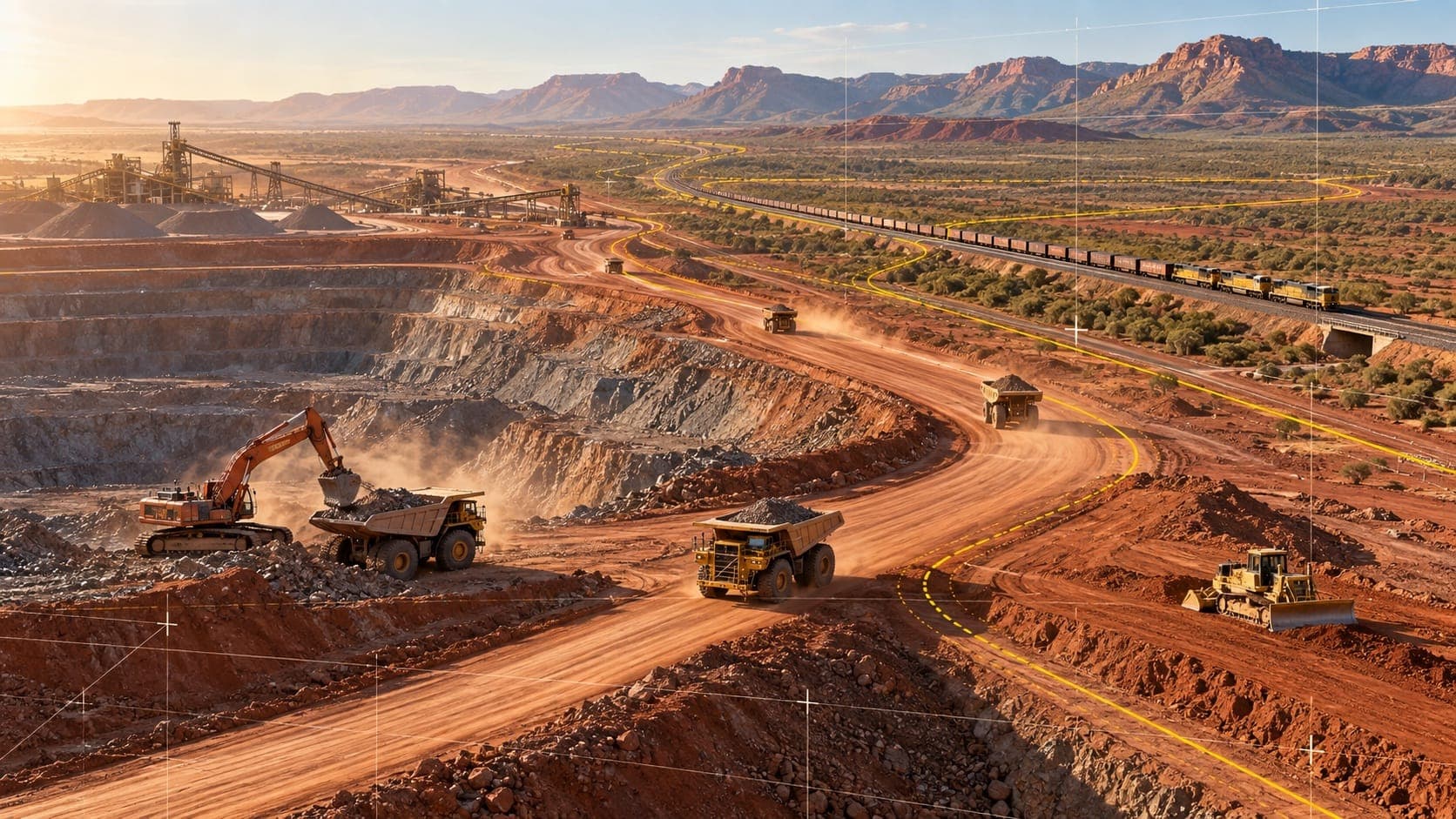
The Pilbara and North West compress extreme distance, heat, abrasive dust, resources standards and coastal weather into one supply system. A dependable hire plan must connect equipment readiness with transport, people, parts and realistic backup.
01 / The connected work market
Major mining operations sit beside ports, rail, roads, energy projects, community infrastructure and maintenance campaigns. Fleet requirements range from production-scale earthmoving and crushing support to access, lighting, power, water management and specialist lifting.
Start with the nominated workface and programme. A corridor is useful planning context, not evidence that a provider or machine covers the site. Ask for the exact allocation and origin every time.
02 / The practical supply line
A low day rate can be erased by uncertain mobilisation or slow response. Verify the machine’s location, float availability, road permissions, freight cutoff, technician roster, critical spares and substitute capacity. Clarify whether remote travel begins when personnel leave a regional base or arrive on site.
Compare transport, operator travel, service response and replacement exposure on the same basis as the hire rate. A cheaper unit can carry greater programme risk when support sits outside the working corridor.
03 / Seasonal pressure
High ambient temperatures affect cooling, tyres, people and service intervals. Cyclone planning needs safe shutdown, relocation or tie-down decisions, while heavy rain can close routes that appeared straightforward when the quote was prepared.
Record the weather and access assumptions in the enquiry and quote. Agree what constitutes standby, when the machine can be recovered and which party decides that conditions are suitable to resume.