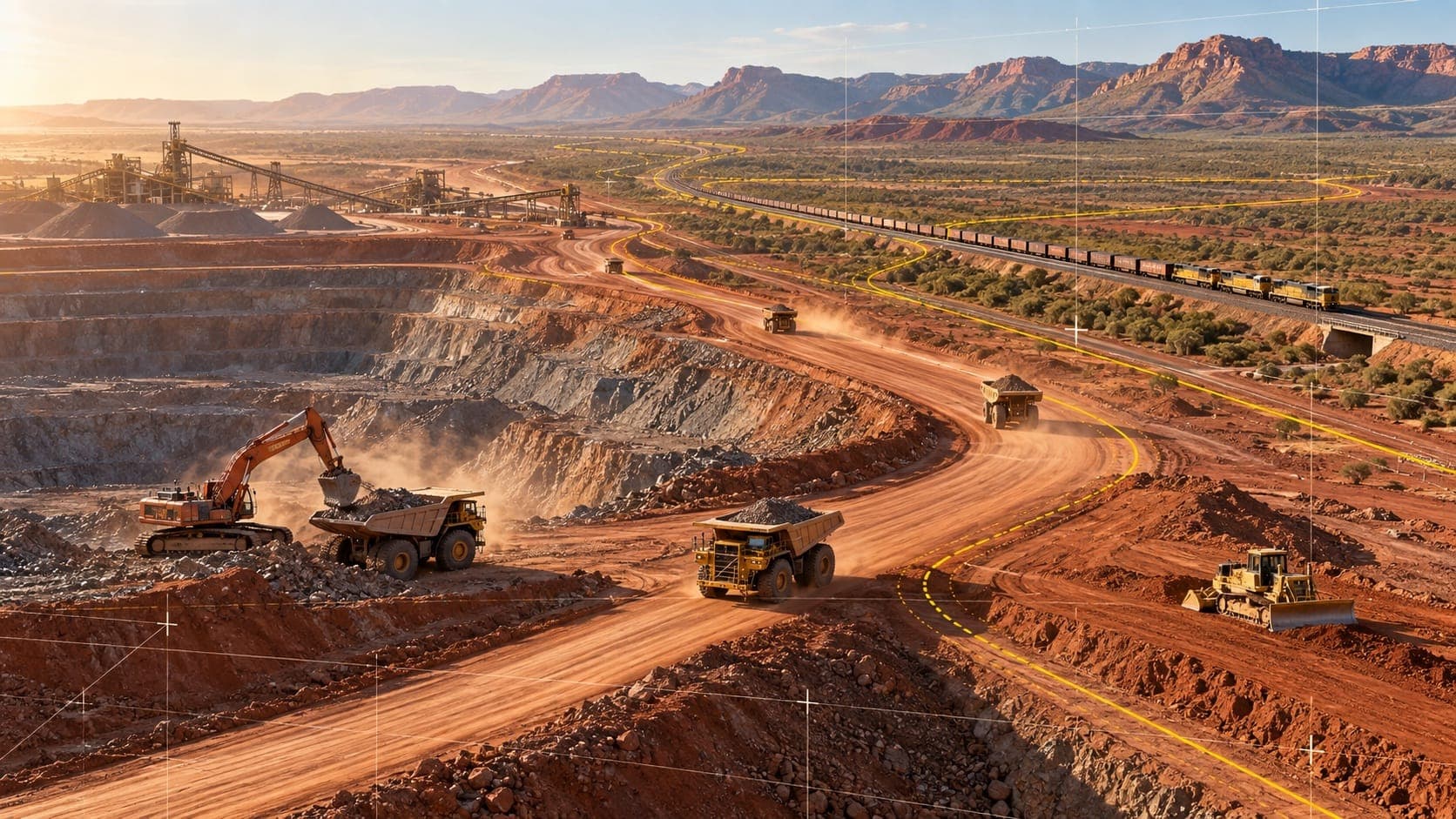
Central Queensland’s resources, rail, port, energy and regional civil programs create a plant market shaped by distance, mine specifications and concentrated demand. Mackay, Rockhampton, Gladstone and inland service centres play different support roles.
01 / The connected work market
Demand can include mine and quarry production support, access roads, rail maintenance, ports, renewable projects, water infrastructure and regional recovery work. Equipment suitability may depend on mine compliance, fire suppression, communications, guarding and documented inspection regimes.
Start with the nominated workface and programme. A corridor is useful planning context, not evidence that a provider or machine covers the site. Ask for the exact allocation and origin every time.
02 / The practical supply line
Do not price distance from a company’s advertised service area. Confirm the allocated unit’s present yard, transport route, permits, operator travel, accommodation, fuel, tyres and parts. Service capacity should be measured against the nominated site rather than the nearest city name.
Compare transport, operator travel, service response and replacement exposure on the same basis as the hire rate. A cheaper unit can carry greater programme risk when support sits outside the working corridor.
03 / Seasonal pressure
Wet-season rainfall, heat and cyclonic systems can isolate routes or change ground pressure requirements. Build demobilisation triggers, weather standby and recovery into the plan before a machine crosses the gate.
Record the weather and access assumptions in the enquiry and quote. Agree what constitutes standby, when the machine can be recovered and which party decides that conditions are suitable to resume.