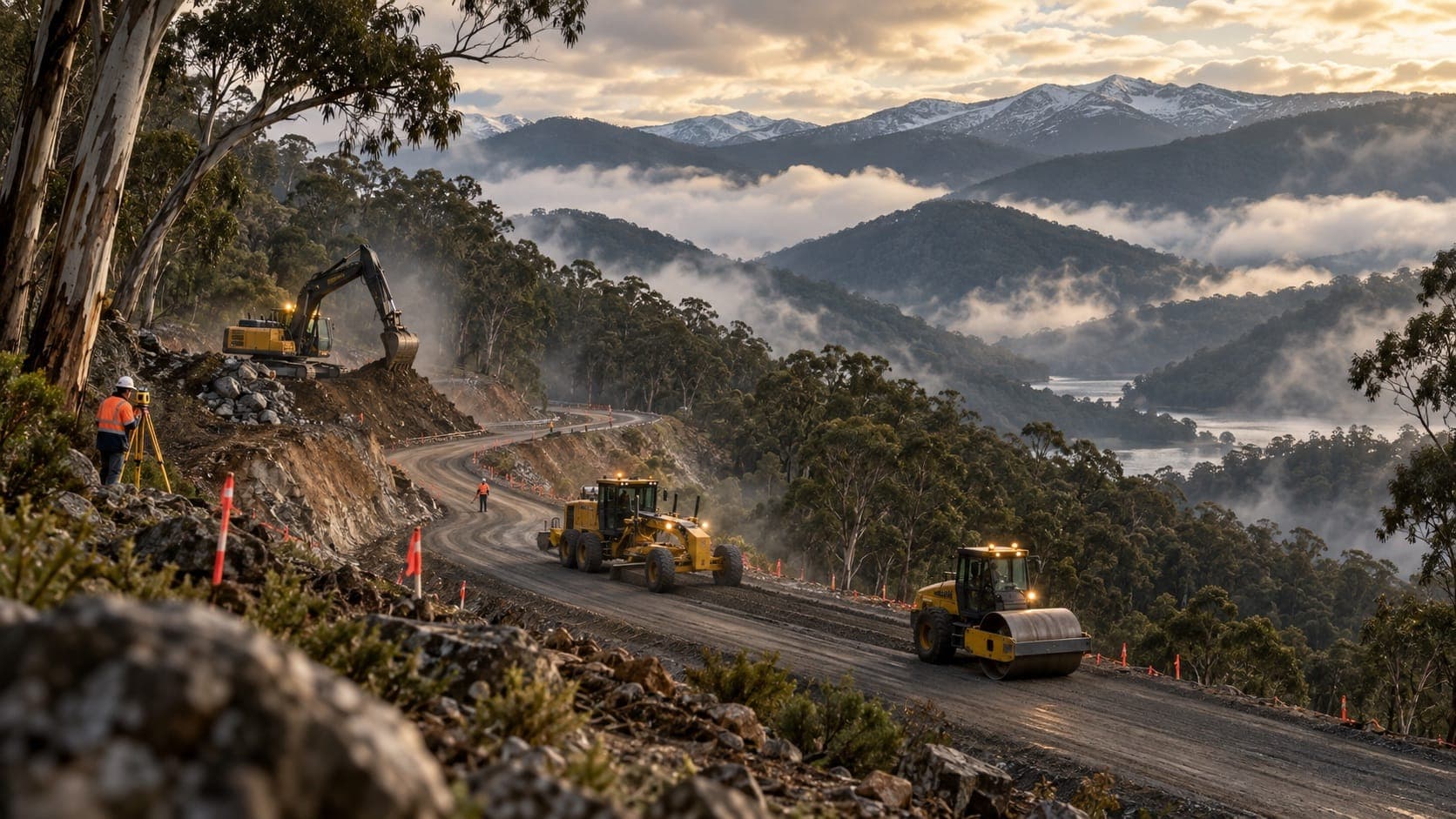
Tasmania's plant hire market is small, island-bound and closely tied to its regions. Most equipment is already in the state or has to cross Bass Strait, and the weather can vary sharply between the sheltered east and the wet, rugged west.
01 / Three regional markets on one island
Hobart and its surrounds, including Glenorchy, Cambridge and the Derwent Valley, form the southern market with the broadest range of general hire, access and earthmoving plant. Launceston and the Tamar Valley anchor the north, with industrial activity around Bell Bay. The North-West coast, centred on Devonport and Burnie, has its own contractor base serving agriculture, port, manufacturing and the West Coast.
Queenstown, Rosebery and Strahan on the West Coast, the Central Highlands and the east coast towns from St Helens to the Tasman Peninsula are served by a handful of small operators or by machines sent from the three main centres. Although distances look modest compared with the mainland, winding mountain roads, steep grades and narrow bridges mean a delivery can take far longer than the kilometres on the map suggest.
02 / Hydro, forestry, farming and aquaculture
Energy infrastructure is a significant part of Tasmania's work mix, reflecting the state's long reliance on hydro power. Hydro-electric dams, canals and power stations across the Central Highlands and West Coast require ongoing maintenance, while wind farm and transmission projects need cranes, specialised transport and civil crews. Access to many of these assets is via remote, steep and weather-exposed roads, which narrows the choice of suitable machines.
Forestry remains active in parts of the state, supporting demand for harvesting, road building and earthmoving plant. Agriculture in the North-West, Midlands and Coal River Valley uses tractors, loaders and irrigation earthworks, and irrigation schemes have expanded cropping in some districts. Aquaculture in the south and on the West Coast generates marine and shore-based construction, while mining at Rosebery and other West Coast sites brings its own plant and compliance needs.
03 / Rain, snow and bushfire
The west of Tasmania is one of the wettest parts of Australia, and prolonged rain can make earthworks and access tracks difficult for long stretches of the year. The east and Midlands are drier, but southern winters bring cold, short days and frost. Snow can fall on the Central Plateau, around Cradle Mountain and on higher roads such as those near kunanyi/Mount Wellington, occasionally closing routes and affecting access to highland sites.
Summer brings a real bushfire threat, particularly when dry fuel loads meet strong north-westerly winds. The Tasmania Fire Service issues fire permits during restricted periods and declares total fire bans, and forestry or rural jobs involving slashing, hot works or tracked machinery in dry grass need to be planned around them. Look up the current restrictions for the municipality before mobilising, especially for sites surrounded by bush.
Wind is a practical concern too. Exposed coastal and highland sites can see strong gusts that exceed the operating limits of cranes and elevated work platforms, sometimes for days at a stretch. Allow weather contingency in the programme for lifts, confirm the wind-speed limits of the specific machine being hired, and ask whether the supplier charges full rates on days the crew is stood down because of wind.
04 / Crossing Bass Strait
When the right machine is not available in Tasmania, it must come across Bass Strait by sea. Freight services connect Victoria with Devonport, Burnie and Bell Bay, and larger or specialist plant may need to be booked onto sailings well in advance. Weather can delay crossings, and costs for shipping oversize equipment can be substantial, so confirm transport arrangements and schedules before committing to dates.
Once a machine is on the island, road movement follows the national heavy vehicle law, and NHVR permits for oversize floats depend on consent from the state road authority and the local council. Some country roads have tight bends and weight-limited bridges that a mainland driver may not expect, so ask the transport provider to confirm the full route, including the last few kilometres to site, before a large float is dispatched.
05 / Safety regulation and supplier questions
WorkSafe Tasmania is the state's regulator under the harmonised WHS model, and its remit covers plant, registrable items and licensing for high risk work. Mines may bring extra conditions of their own. For specialist equipment brought from the mainland, confirm that documentation, service history and operator competencies are in order before the ship sails, as fixing gaps once the machine is in Devonport or Burnie can be slow.
With a smaller fleet on the island, availability is the key question. Ask whether the machine is already in Tasmania, where it is based and whether it is committed to other jobs around your dates. For longer projects, discuss what happens if a machine breaks down and a replacement needs to come from the mainland, and whether the supplier holds spare parts locally.
Field checklist
- Confirm whether the machine is already in Tasmania or must be shipped across Bass Strait.
- Book shipping early for large or specialist plant and allow for weather delays.
- Check route restrictions such as tight bends and bridge limits for oversize loads.
- Plan around wet conditions in the west and snow risk on highland sites.
- Check Tasmania Fire Service permit periods and total fire bans for summer work.
- Ask about local spare parts and breakdown replacement arrangements.
Frequently asked questions
How long does it take to ship plant to Tasmania?
Timeframes vary with the freight operator, sailing schedules and the size of the load. Large or oversize machines may need to be booked well ahead, and weather in Bass Strait can delay crossings. Allow time for transport to and from the ports on both sides. Ask your supplier or freight provider for a realistic schedule and build in contingency.
Is it better to hire plant in Hobart or Launceston?
Choose the supplier closest to your site where possible. Hobart suppliers typically serve the south, while Launceston and the North-West towns serve the north. For West Coast or Central Highlands jobs, compare which centre offers the shorter and safer route. Local knowledge of roads and conditions can matter as much as price.
When is the best time for earthworks in Tasmania?
Late spring through autumn usually offers the best conditions, especially in the wetter west and highland areas. Winter brings cold, short days and heavy rain in many regions, with snow on higher ground. Drier eastern districts can be workable for longer, but it is wise to build weather contingency into any programme.
What happens if a hired machine breaks down in Tasmania?
Most suppliers will send a mechanic from their nearest depot, but parts for less common machines may need to come from the mainland, which can take several days. Before hiring, ask what spares are held on the island, whether a like-for-like replacement is available locally, and whether hire charges stop while the machine is out of action.