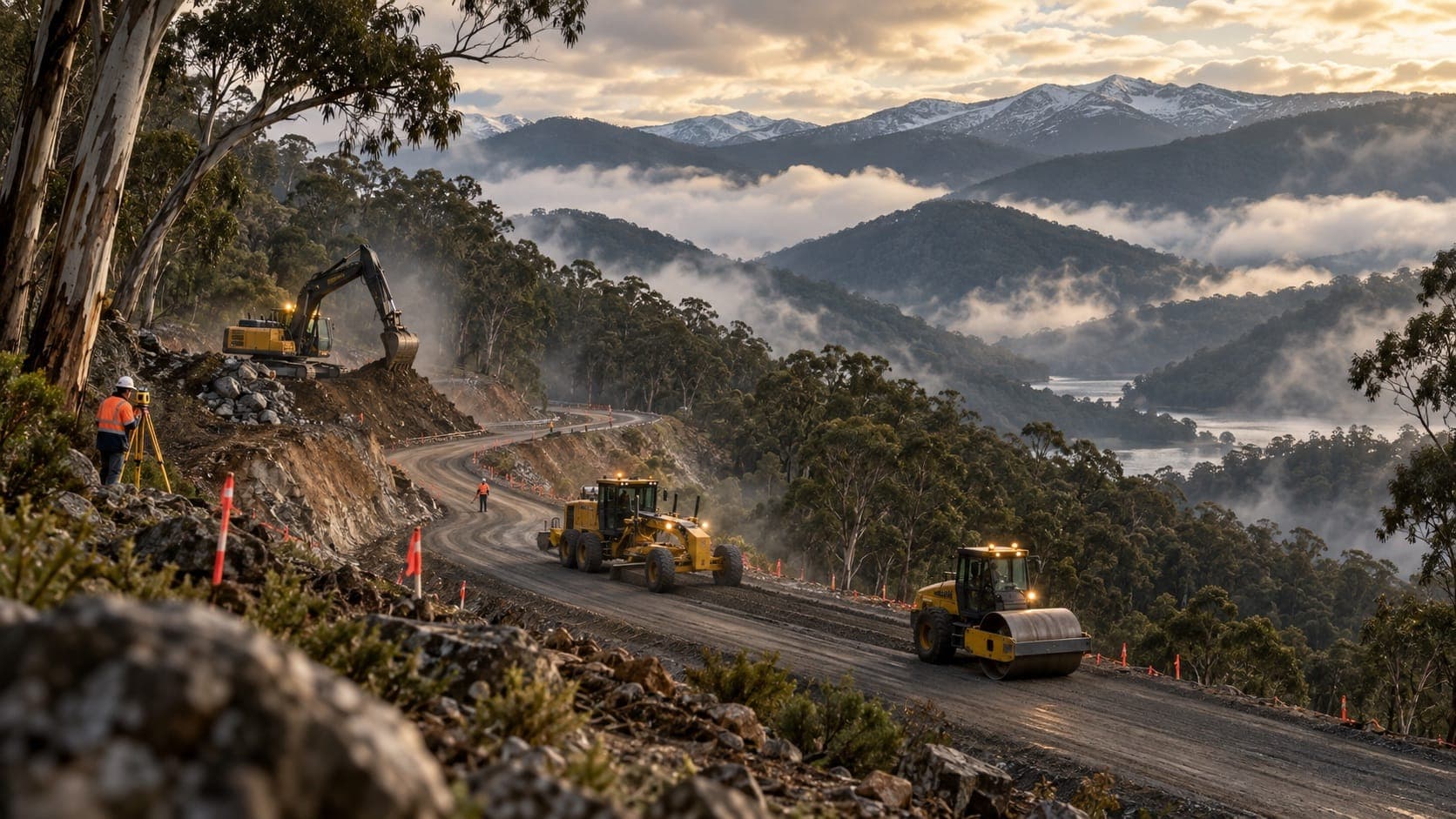
Tasmania’s civil, hydro, forestry, agriculture and energy work is shaped by steep country, wet weather and island freight. Local fleet capability can be strong, but specialist equipment crossing Bass Strait needs deliberate lead time and backup planning.
01 / The connected work market
Projects span highways and bridges, hydro assets, wind and transmission, forestry roads, ports, farms and urban construction around Hobart, Launceston and the North West. Gradients, sensitive ground and narrow regional access frequently matter more than nominal machine capacity.
Start with the nominated workface and programme. A corridor is useful planning context, not evidence that a provider or machine covers the site. Ask for the exact allocation and origin every time.
02 / The practical supply line
For imported equipment, identify sailing availability, dangerous-goods or attachment requirements, delivery sequence and the cost of an interrupted crossing. For local equipment, confirm the depot, mountain-route suitability and service support on the correct side of the island.
Compare transport, operator travel, service response and replacement exposure on the same basis as the hire rate. A cheaper unit can carry greater programme risk when support sits outside the working corridor.
03 / Seasonal pressure
Rain, snow, wind and short winter daylight can reduce productive windows. Plan tracked access, lighting, surface protection and recovery, and ask how ferry delay or weather standby changes the commercial basis.
Record the weather and access assumptions in the enquiry and quote. Agree what constitutes standby, when the machine can be recovered and which party decides that conditions are suitable to resume.