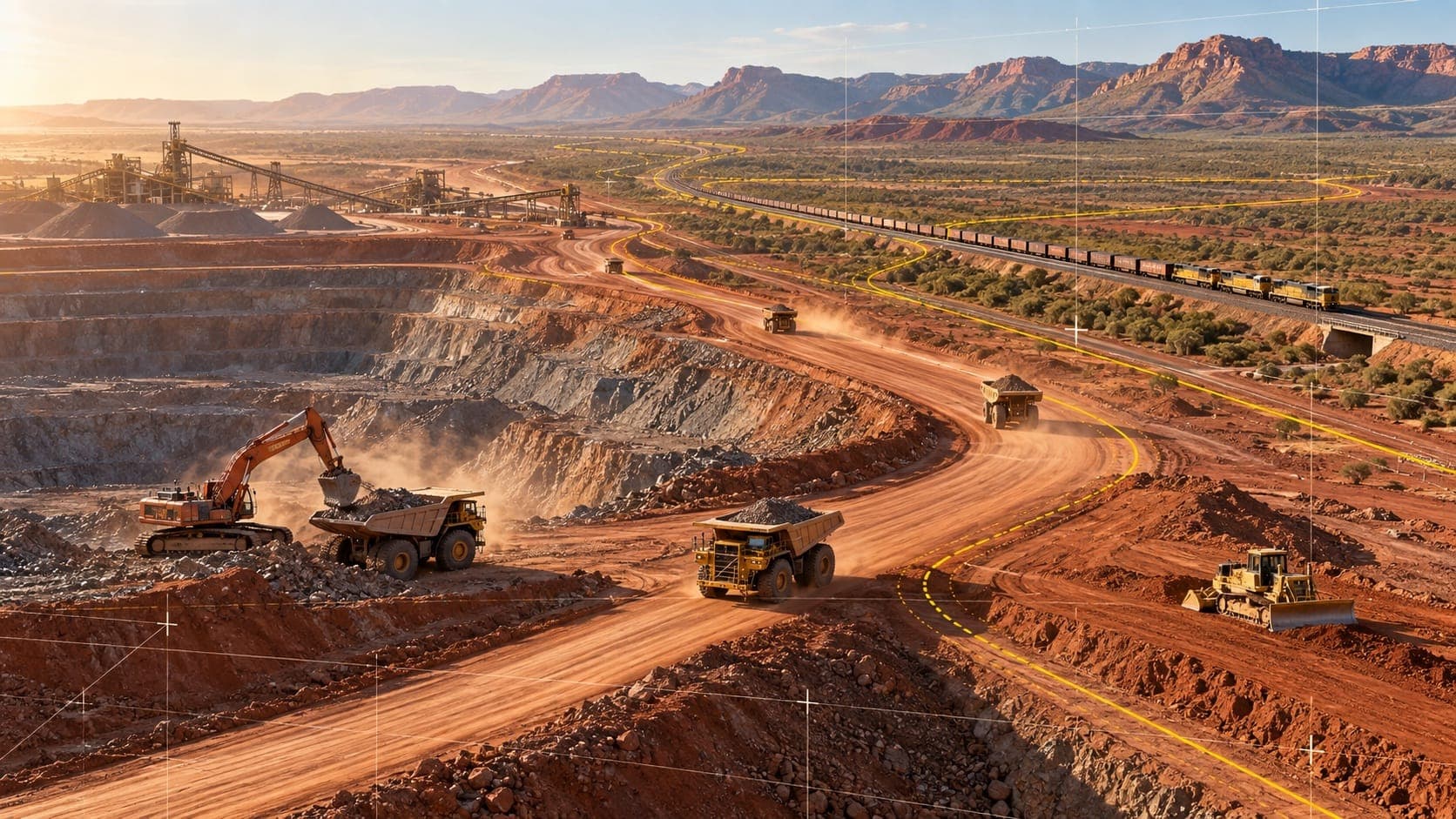
Western Australia's plant hire market spans a third of the continent, with Perth as the main supply base and mining regions such as the Pilbara and Goldfields generating heavy demand. Distance, heat and cyclones are central to planning, and heavy vehicle rules work differently from the eastern states.
01 / Perth, the Pilbara, the Goldfields and the South West
Perth's depots are spread across industrial areas such as Welshpool, Kewdale, Canning Vale, Malaga, Kwinana and Hazelmere, supplying metropolitan construction and a large share of the state's regional work. The Pilbara, centred on Karratha, Port Hedland, Newman and Tom Price, hosts substantial fleets tied to iron ore and energy, while the Goldfields around Kalgoorlie-Boulder serve gold and nickel operations and the exploration activity that surrounds them.
In the South West, Bunbury and Busselton serve agriculture, forestry, port and residential work. Geraldton covers the Mid West, Albany the Great Southern, and Broome and Kununurra the Kimberley. Many remote mine sites, pastoral stations and Aboriginal communities are hundreds or even thousands of kilometres from Perth, which makes mobilisation one of the biggest single factors in both the cost and the timing of a hire.
02 / Mining, energy and regional infrastructure
Mining dominates regional demand. Iron ore in the Pilbara, gold and nickel in the Goldfields, and lithium and other minerals elsewhere in the state require large earthmoving fleets, support equipment and specialised maintenance. Mine-site hire usually involves strict equipment standards, inspections, inductions and fitments, and suppliers based in mining regions are often better placed to meet them on short notice.
Oil and gas activity in the Pilbara and offshore creates demand for cranes, heavy haulage and support equipment, while renewable energy and transmission projects add to the civil workload. Agriculture across the Wheatbelt and South West relies on tractors, loaders and seasonal transport, particularly around seeding and harvest, and Perth's residential growth and infrastructure upgrades keep metropolitan fleets busy through most of the year.
Remote communities and pastoral stations need road maintenance, housing and essential services work, often requiring contractors to be largely self-sufficient in fuel, parts and accommodation. On these isolated jobs a supplier's practical ability to send a service truck, carry filters and hoses, and keep a machine running for weeks without a workshop nearby can matter more than the headline hire rate.
03 / Heat, cyclones and seasonal planning
The Pilbara and Kimberley experience extreme heat for much of the year, and the northern cyclone season generally spans November to April. Cyclones can shut down sites, close ports and roads, and damage infrastructure, and many operations have procedures for securing, lowering or evacuating plant when warnings are issued. In the Kimberley, the wet season can make unsealed roads impassable for weeks, cutting off stations and communities.
Further south, Perth and the South West have hot, dry summers and wetter winters. Bushfire risk is significant in the South West, the Perth Hills and the Wheatbelt during summer, and harvest and vehicle movement bans may be imposed by local governments on high-risk days, alongside restrictions on hot works. Check current advice from the Department of Fire and Emergency Services and the relevant shire before scheduling rural work.
04 / Heavy vehicles and long-distance mobilisation
Western Australia has not adopted the Heavy Vehicle National Law, so oversize and overmass permits come from Main Roads WA rather than the NHVR. Route approvals, pilot and escort rules, and the restricted access vehicle networks for larger combinations all follow the state's own system. Your transport provider should be familiar with that process and with any lead times that apply to the specific load and route.
Mobilising plant from Perth to the Pilbara or Kimberley involves road hauls that can take days, and the cost can be substantial. For remote jobs, compare suppliers based in the region with Perth-based options, and ask how breakdowns, parts and mechanical support will be handled far from a depot. Cyclone closures and wet-season flooding can also delay deliveries or leave floats waiting for roads to reopen.
05 / WorkSafe WA and choosing a supplier
WorkSafe WA regulates workplace safety in Western Australia, which moved to its own version of the harmonised WHS laws in recent years, with mine safety addressed within the same broad framework. Hirers should check that plant, operator licences and site inductions meet the requirements of the specific site, particularly for mining and resources work where operators often set standards above the legal minimum.
Ask suppliers whether their fleet is mine-spec and already inducted for your site, and whether they have a presence in the region or will mobilise from Perth. Clarify how cyclone stand-downs and extreme heat are handled in the hire agreement, and whether remote work includes accommodation, fuel and travel charges. For long projects, discuss servicing intervals, parts availability and who carries out routine maintenance.
Field checklist
- Confirm oversize transport permits and routes through Main Roads WA.
- Check whether plant is mine-spec and meets site requirements before mobilisation.
- Plan northern work around cyclone season and wet-season road closures.
- Compare regional suppliers with Perth-based options for remote jobs.
- Ask how breakdowns, parts and mechanics are handled far from a depot.
- Clarify accommodation, fuel and travel charges for remote work.
- Check DFES and shire advice on bushfire and harvest bans for southern summer work.
Frequently asked questions
Does the NHVR cover heavy vehicles in Western Australia?
No. Western Australia has not adopted the Heavy Vehicle National Law, so oversize and overmass permits and route approvals are handled by Main Roads WA. Restricted access vehicle networks and escort requirements follow the state's own framework. Make sure your transport provider is familiar with WA requirements before plant is dispatched.
When is cyclone season in Western Australia?
The northern cyclone season generally runs from around November to April, affecting the Pilbara and Kimberley in particular. Cyclones can shut sites, close ports and roads, and damage infrastructure. Many operations have procedures for securing plant during warnings, so discuss arrangements and hire charges during stand-downs with your supplier.
Is it cheaper to hire plant in Perth for a Pilbara job?
Not always. Long road hauls from Perth to the Pilbara can add substantial mobilisation cost and time. Suppliers based in Karratha, Port Hedland or Newman may offer better delivered prices and faster breakdown support. For specialist equipment, Perth may still be the best source, so ask both for a price delivered to site.
What does mine-spec mean when hiring plant in WA?
Mine-spec generally describes a machine fitted and documented to meet a mine operator's site standards, which can include items such as extra lighting, fire suppression, specific signage, radios and inspection records. There is no single universal specification, because each operator sets its own. Ask the site for its requirements and have the supplier confirm compliance before mobilisation.