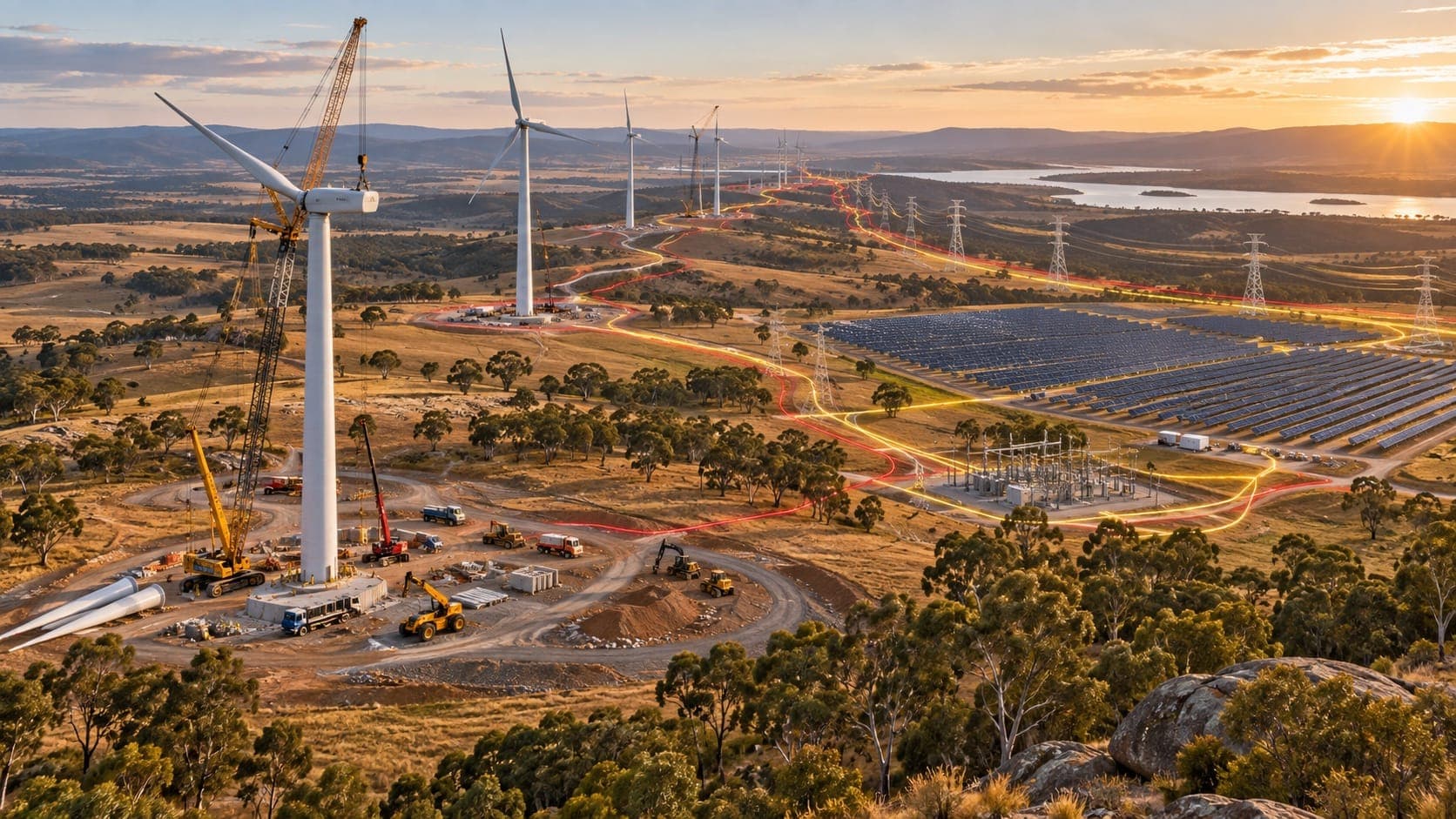
South Australia’s wind, solar, storage and transmission programs connect coastal, agricultural and remote workfronts with Adelaide-based fleet and specialist suppliers. Heavy lifts, long components and linear civil packages make sequencing central.
01 / The connected work market
Typical packages involve access roads, crane pads, piling, trenching, cable routes, substations, laydown, heavy transport and rehabilitation. The plant plan must recognise that civil, electrical and lifting teams may compete for the same access and support equipment.
Start with the nominated workface and programme. A corridor is useful planning context, not evidence that a provider or machine covers the site. Ask for the exact allocation and origin every time.
02 / The practical supply line
Confirm oversize routes, escort needs, bridge and turning constraints, laydown geometry and where support comes from after the fleet leaves Adelaide. Regional wind and transmission sites can stretch technician response and require planned service windows rather than reactive maintenance.
Compare transport, operator travel, service response and replacement exposure on the same basis as the hire rate. A cheaper unit can carry greater programme risk when support sits outside the working corridor.
03 / Seasonal pressure
Heat, fire danger, wind and dry dust influence lifting windows, earthworks, water demand and maintenance. Clarify who controls weather stand-down decisions and how plant shared across project fronts is prioritised.
Record the weather and access assumptions in the enquiry and quote. Agree what constitutes standby, when the machine can be recovered and which party decides that conditions are suitable to resume.