South Australia's plant hire market is heavily centred on Adelaide, with regional suppliers spread across the Upper Spencer Gulf, the Riverland, the Limestone Coast and the Eyre Peninsula. Extreme summer heat, a long fire danger season and grain harvest all shape when and how plant gets used.
01 / Adelaide first, then the regional service towns
Most of the state's hire fleet is based around Adelaide, particularly in the northern industrial suburbs such as Wingfield, Gepps Cross, Salisbury and Elizabeth, and in the south around Lonsdale. From these yards, suppliers service metropolitan construction as well as a large share of regional work, since Adelaide sits within a day's drive of most populated parts of the state and holds the widest range of specialist attachments and larger machines.
The Upper Spencer Gulf towns of Whyalla, Port Augusta and Port Pirie form an industrial hub with steelmaking, smelting and energy-related work, and support contractors heading into the Far North. Mount Gambier serves the Limestone Coast and its plantation forestry, Murray Bridge and the Riverland towns of Berri and Renmark serve irrigated horticulture along the Murray, and Port Lincoln is the service centre for the Eyre Peninsula's farming and fishing districts.
02 / Defence, resources, energy and farming
Defence industry is a notable part of the South Australian economy, with shipbuilding activity on the Lefevre Peninsula and air force and defence facilities in Adelaide's northern suburbs. These sites generate construction and maintenance demand that comes with security clearances, escorted access and site-specific inductions. Not every supplier is set up to meet those conditions, so it is worth asking early whether their operators have worked inside such precincts before.
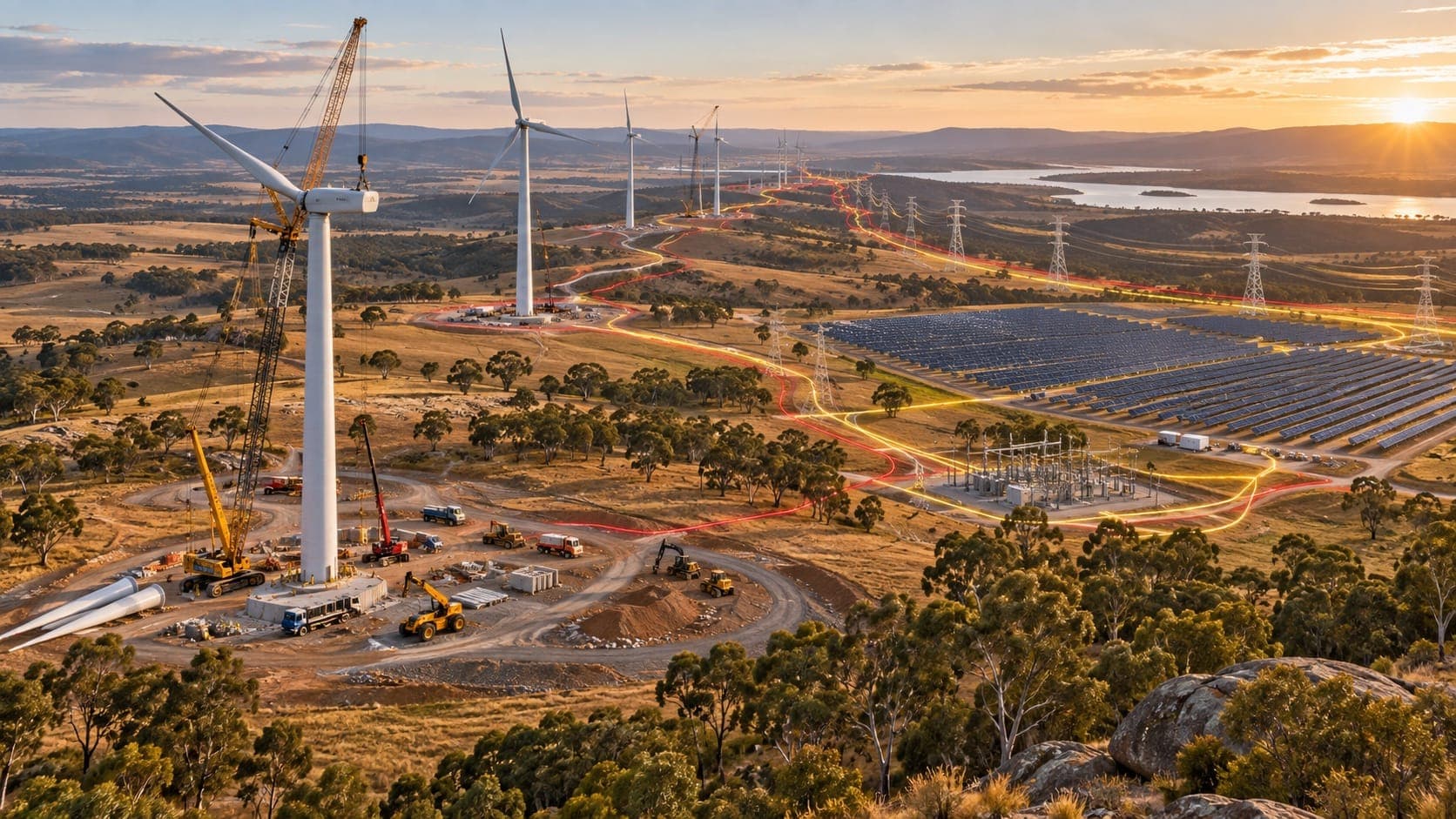
The Far North and the Gawler Craton host copper, uranium and other mining operations that rely on earthmoving plant, support equipment and specialised maintenance crews. The state has also seen extensive wind and solar development, particularly through the Mid North and around the Spencer Gulf, drawing on cranes, heavy transport and civil contractors. Grain cropping on the Yorke and Eyre Peninsulas, plus viticulture in the Barossa, Clare, McLaren Vale and Coonawarra, adds strong seasonal demand for agricultural and earthmoving plant.
Metropolitan Adelaide supports steady residential development, especially on the northern and southern fringes around places such as Angle Vale and Aldinga, along with road, water and infill building projects. That work relies heavily on compact excavators, skid steers, access platforms and city-tag cranes, and demand for these smaller machines tends to be less seasonal than in the farming regions, though summer heat still changes working hours.
03 / Heat, fire danger and a dry climate
South Australia regularly records runs of very hot summer days, and heatwaves take a toll on operators and machines alike. Engines, hydraulics and tyres all work harder in high temperatures, and a reliable cabin air-conditioning system becomes a genuine safety item rather than a comfort. Many contractors shift to dawn starts through summer, which can change when deliveries arrive and how hire hours are counted on the docket.
The fire danger season is long across much of the state, and the Country Fire Service sets season dates and total fire ban declarations by district. On those days, spark-producing activities such as grinding, welding and some paddock work with machinery may be prohibited or need specific precautions. Because season dates differ between districts and years, confirm them with the CFS for each site rather than carrying assumptions over from another job.
Rainfall is modest in most agricultural areas, but intense storms still cause flash flooding, particularly around the Flinders Ranges and across the north, where unsealed roads and creek crossings can close within hours. Sites reached by dirt roads may need a plan for getting plant out quickly if heavy rain is forecast, and hirers should ask whether the supplier expects the machine to be moved before conditions deteriorate.
04 / Distances, harvest and transport
In South Australia the NHVR handles most oversize and overmass permits, with the state's transport department and local councils consenting for their own roads. The main corridors out of Adelaide, including the Augusta, Sturt and Dukes highways, carry heavy freight, and long hauls into the Far North, across the Nullarbor approaches or onto the Eyre Peninsula can take a full day or more before a machine is even unloaded on site.
Grain harvest, typically running from late spring into summer, can tighten the availability of trucks, floats and agricultural plant across the cropping districts. If your project runs through that period in the Mid North or on the peninsulas, book transport early and confirm that your supplier has committed capacity rather than assuming it will be free. Vintage in the wine regions creates a similar, if smaller, squeeze in late summer and autumn.
05 / SafeWork SA and choosing a supplier
SafeWork SA oversees work health and safety in South Australia under the harmonised national model, including the rules on plant, registrable equipment and high risk work licences. Mining operations may carry further obligations set by the mine operator and other agencies. As elsewhere, hirers should verify maintenance records, operator licences and site inductions themselves rather than relying on a supplier's general assurances or a brochure.
For regional work, ask whether the supplier has a presence nearby or will service the job entirely from Adelaide. That affects response times for breakdowns, mechanical support and replacement machines. Clarify how hot-weather stand-downs are treated in the hire agreement, and whether minimum daily hours still apply when work stops early for extreme heat or a total fire ban in your district.
Field checklist
- Check CFS fire danger season dates and total fire ban rules for each district you work in.
- Plan summer work around extreme heat, including dawn starts and working cabin air conditioning.
- Book trucks and floats early if working in cropping districts during harvest.
- Confirm security clearances and inductions for defence or industrial sites.
- Ask whether regional jobs will be serviced from Adelaide or a local depot.
- Clarify how heat and fire-ban stand-downs are charged in the hire agreement.
Frequently asked questions
Can Adelaide plant hire companies service jobs on the Eyre Peninsula?
Many do, but the drive to Port Lincoln and beyond means mobilisation costs and travel time can be significant. Local contractors on the Eyre Peninsula may be better placed for smaller or shorter jobs. For longer projects, Adelaide suppliers may offer more range. Ask each supplier how long a breakdown would realistically leave you without a machine.
Are there restrictions on using machinery on total fire ban days in South Australia?
Yes, some activities are restricted. On total fire ban days, work that can generate sparks or flame, such as welding, grinding and certain uses of machinery in the open, may be banned or allowed only with specific precautions. The Country Fire Service publishes the rules and district declarations, so check them before the season and again on any high-risk day.
When is the busiest time for agricultural plant hire in South Australia?
Demand usually peaks around sowing in autumn and early winter and again during grain harvest from late spring into summer. Vintage in the wine regions adds pressure in late summer and autumn. If you need tractors, loaders or transport in those periods, book early, as local fleets and trucks can be heavily committed.
Can I get mine-ready plant for the Far North from Adelaide?
Some Adelaide suppliers keep machines fitted to mining standards, but many general hire fleets are built for construction sites. Mine operators usually specify their own requirements for equipment, inspections and inductions. Ask for the site's standard in writing, check that the supplier can meet it, and allow time for the long road haul north.