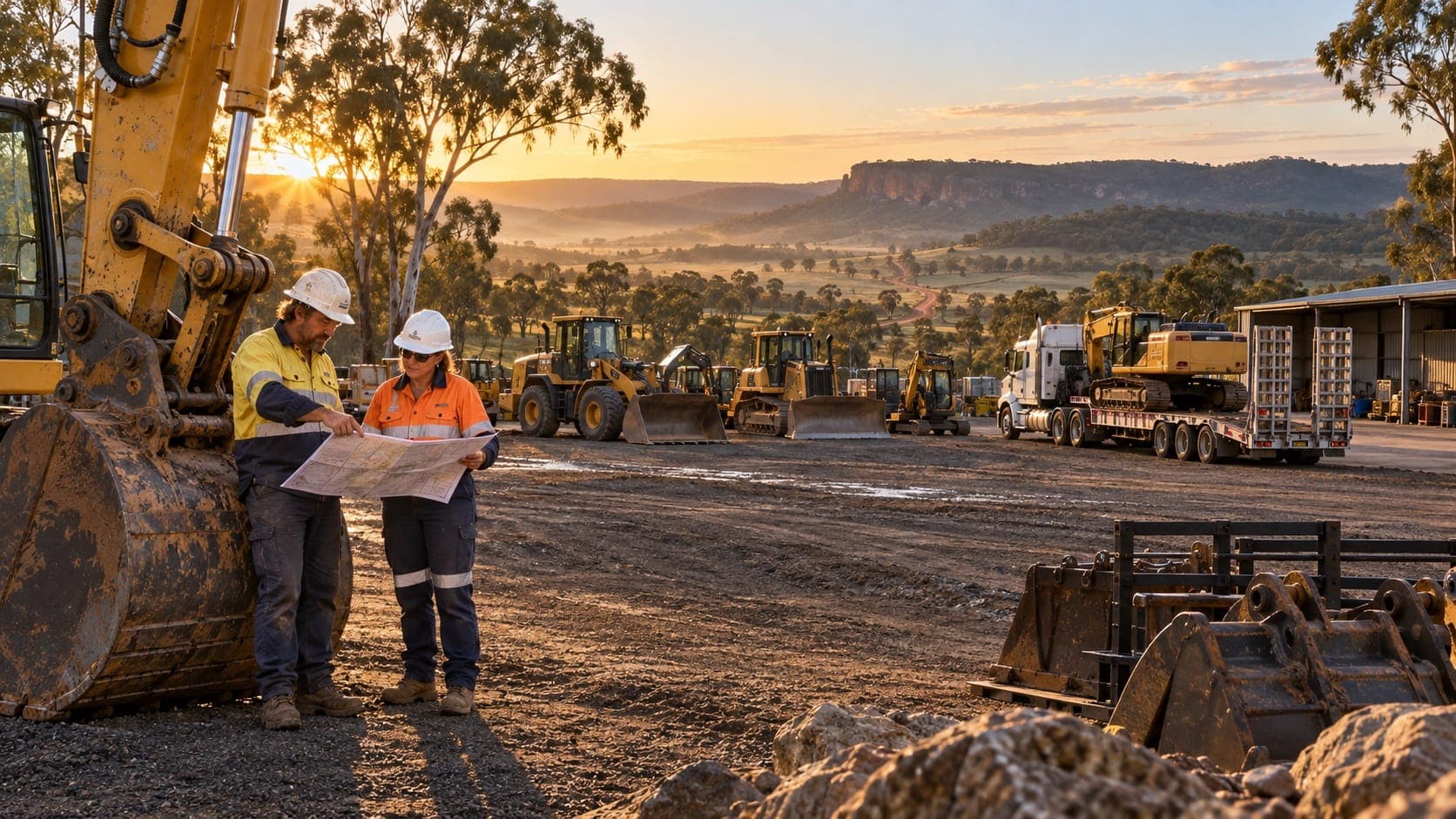
Across the Murray–Darling system, plant demand follows water, agriculture, regional roads, flood recovery, utilities and town growth. Seasonal programs and long travel between centres reward early, location-specific supplier checks.
01 / The connected work market
Common scopes include channel and levee maintenance, pump and pipeline works, farm dams, drainage, road rehabilitation, bridge approaches, vegetation management and recovery after flood or drought. Material moisture and ground access often decide the productive configuration.
Start with the nominated workface and programme. A corridor is useful planning context, not evidence that a provider or machine covers the site. Ask for the exact allocation and origin every time.
02 / The practical supply line
Regional providers may cover wide territories while equipment is positioned around existing commitments. Ask for the actual dispatch town, float schedule, service radius and call-out basis. Check bridge limits, unsealed roads, property gates and whether unloading is possible after rain.
Compare transport, operator travel, service response and replacement exposure on the same basis as the hire rate. A cheaper unit can carry greater programme risk when support sits outside the working corridor.
03 / Seasonal pressure
Harvest, irrigation shutdowns, fire danger and flood response can create sharp equipment peaks. Align the hire window with agricultural traffic, soil condition, water approvals and local contractor availability rather than assuming a uniform regional market.
Record the weather and access assumptions in the enquiry and quote. Agree what constitutes standby, when the machine can be recovered and which party decides that conditions are suitable to resume.