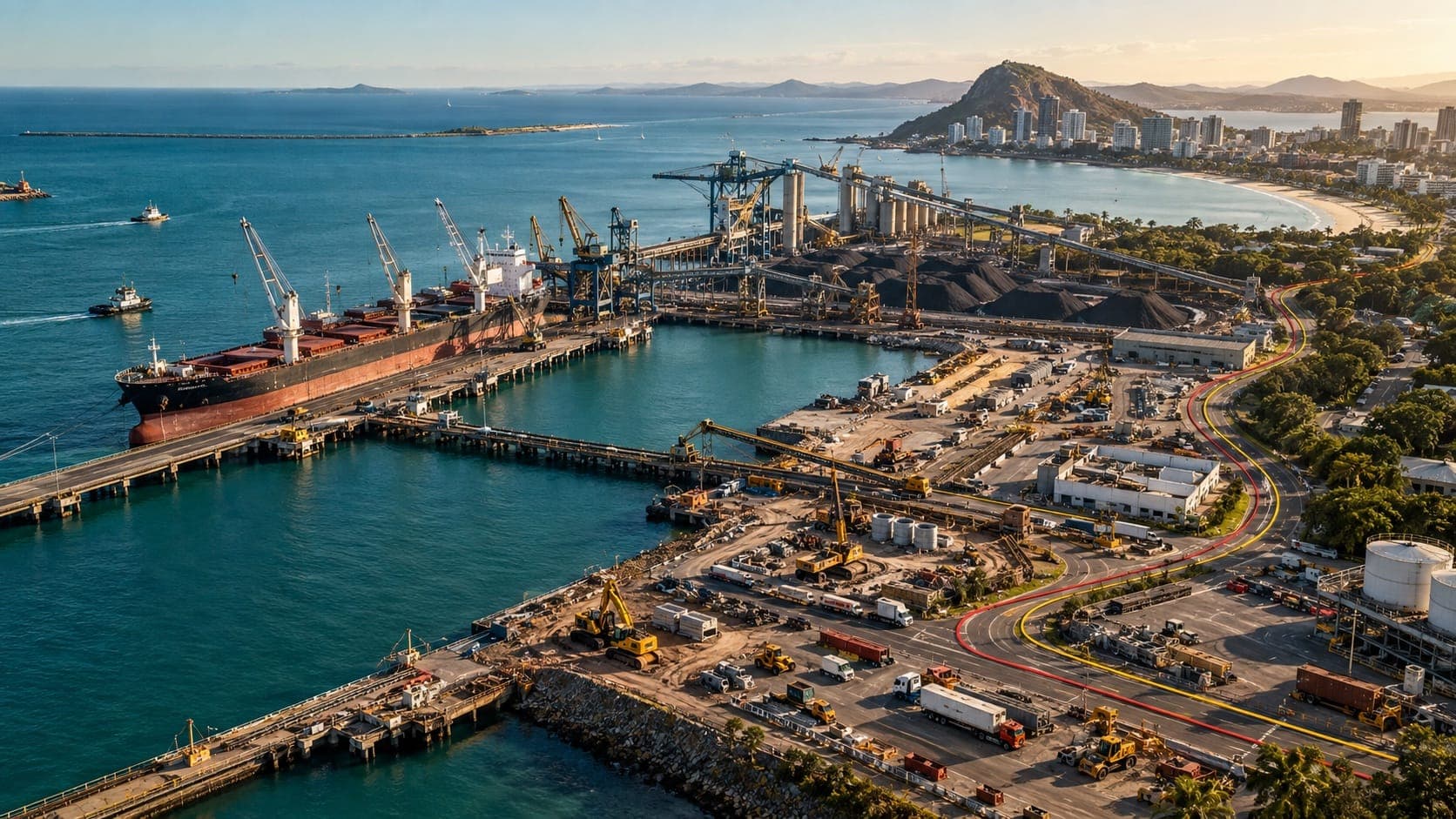
Hiring plant in Darwin is a logistics decision as much as an equipment decision. Local access, supplier distance, project mix and the timing of delivery can all change the real cost of the machine.
01 / The work around Darwin
Darwin supports defence, ports, oil and gas, civil infrastructure, utilities, construction and wet-season response across the Top End.
Common project settings in this market include defence, port operations, oil and gas, civil construction. Translate that context into a specific scope: quantities, shift pattern, operating envelope, attachments, ground and finish.
02 / Access and mobilisation
Cyclone readiness, heat, wet-season access and remote support should form part of the equipment plan.
Ask where the machine will dispatch from, what transport is included and how call-outs are handled. A provider with dependable local support can protect the program when weather, damage or scope changes pressure the original plan.
03 / Conditions to put in writing
Seasonal weather in Northern Territory should be checked against the planned work window. Record surface condition, gradient, overhead and underground services, noise constraints, public interfaces and inductions before asking for a final rate.
04 / Build a local comparison
Ask every supplier to identify the proposed unit, present machine location, mobilisation basis, included attachments and service response. This makes responses from a nearby operator and a larger interstate fleet genuinely comparable.