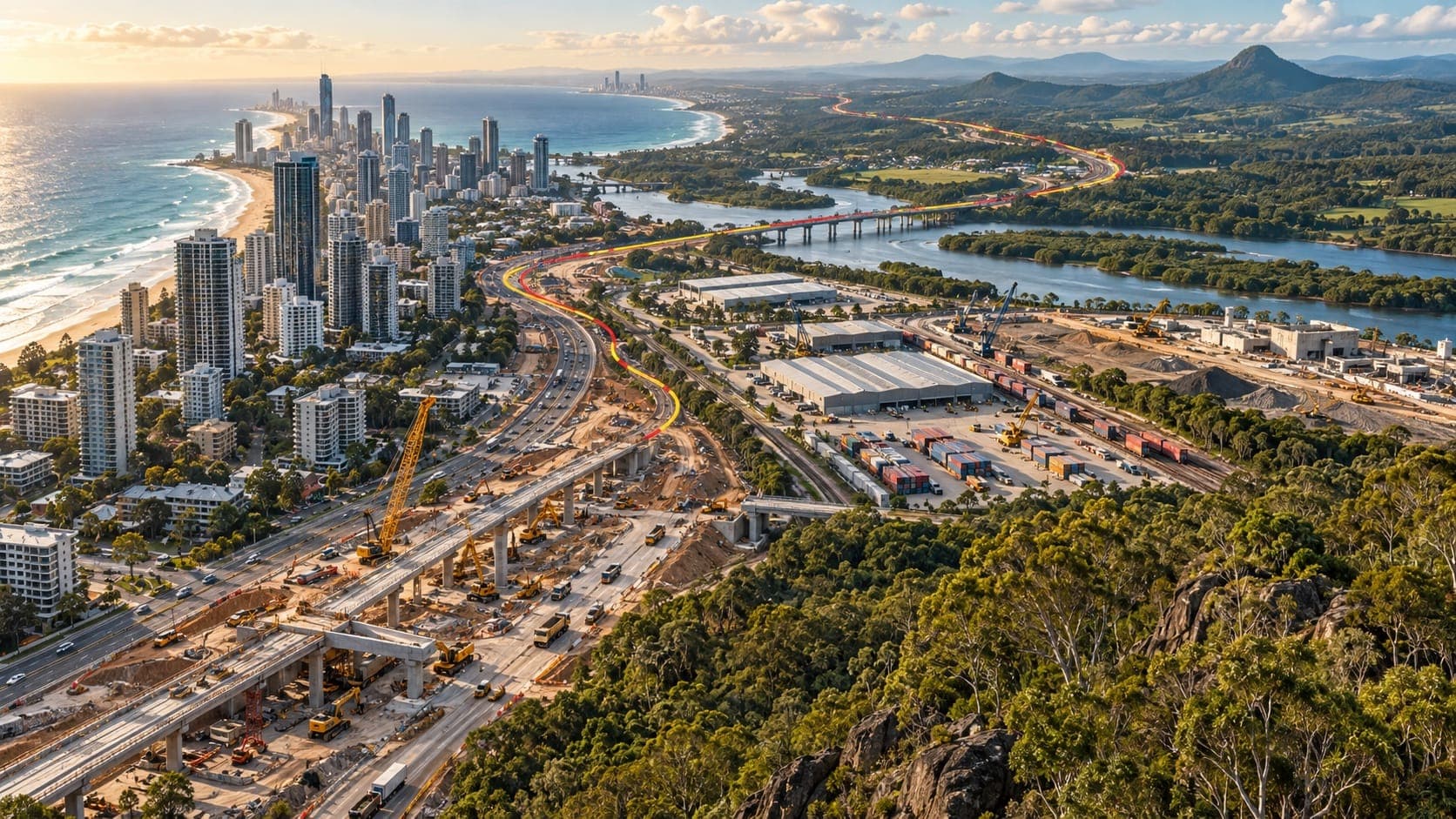
New South Wales has Australia's largest plant hire market, but it behaves like several markets at once. Sydney's congested metro sites, the Hunter's resources and energy work, and a long list of regional centres each bring different availability, access and seasonal pressures.
01 / Sydney, the Hunter, the Illawarra and the regions
Greater Sydney holds the densest concentration of depots in the country, with major yards clustered through the western and south-western industrial belts around places like Wetherill Park, Smithfield, Ingleburn and Moorebank. Newcastle and the Hunter form a second hub with strong earthmoving, crane and mining-support fleets, while Wollongong and the Illawarra serve heavy industry, port and escarpment work. The Central Coast sits between them and draws on both.
Across the regions, supply radiates from service centres. Orange, Bathurst and Dubbo cover the Central West, Wagga Wagga and Griffith the Riverina, Albury the southern border, Tamworth and Armidale the New England, and Coffs Harbour, Port Macquarie and Lismore the North Coast. Broken Hill is effectively its own remote market in the Far West. The further from these centres a site sits, the more cartage and operator travel shape the final price.
02 / Where the work comes from
Urban infrastructure and housing drive much of Sydney's demand: motorway and rail corridors, utility upgrades, new estates on the western and south-western fringe, and high-rise construction that needs cranes, access equipment and compact plant able to work on tight sites. Metropolitan work also brings strict hours, noise limits and traffic management requirements that affect which machines suit a job and when they can be delivered.
Outside Sydney, the mix changes. The Hunter combines coal mining with power generation, heavy industry and a growing energy transition workload. Regional New South Wales has designated renewable energy zones where wind, solar and transmission construction calls for heavy haulage, cranes and civil fleets. Broadacre cropping, irrigation and livestock operations across the west and Riverina keep tractors, loaders and water carts busy, particularly around sowing and harvest.
Coal and other mines in NSW are overseen by a dedicated resources regulator in addition to general work health and safety arrangements, so plant going onto mine sites typically faces additional inspection, compliance and induction requirements. Suppliers that regularly work in the Hunter or on Central West mine sites will usually understand those expectations and keep fleets fitted accordingly; a general hire yard in suburban Sydney may not, and retrofitting a machine at short notice is rarely cheap.
03 / Floods, alpine winters and bushfire seasons
Flooding is a recurring risk on the North Coast, in the Hawkesbury-Nepean and along inland river systems such as the Namoi, Macquarie and Murrumbidgee. When roads close, machines can be stranded on site and deliveries delayed, and recovery work after major floods can absorb local fleets for months. If your project sits in a flood-prone catchment, ask how the supplier handles recovery of plant and whether hire charges pause while a site is inaccessible.
The Snowy Mountains around Cooma, Jindabyne and Thredbo bring genuine alpine conditions: snow, ice, restricted access and short working days through winter, so much alpine construction is squeezed into the warmer months. Elsewhere in the state, the bushfire danger period brings limits on hot works and, on the worst days, on some machinery use in rural areas. The NSW Rural Fire Service publishes the relevant dates and ratings for each district.
04 / Moving plant around a big state
Heavy vehicle access in New South Wales sits under the Heavy Vehicle National Law, with the National Heavy Vehicle Regulator issuing most oversize and overmass permits after consulting road managers such as Transport for NSW and local councils. In Sydney, curfews, escorts and restricted routes can dictate when large plant moves. In the regions, long distances and limited float availability are the bigger constraints, particularly when harvest or major infrastructure work competes for trucks.
Distances in western NSW are considerable. A dozer or excavator for a job near Bourke, Cobar or Broken Hill may be sourced from Dubbo, from Mildura across the Victorian border, or even from Adelaide, depending on what is available that week. Ask suppliers to be explicit about where plant will travel from, how many days it will spend on the road, and whether mobilisation is charged per kilometre, per hour or as a fixed amount.
05 / Regulation and the questions worth asking
SafeWork NSW is the state's work health and safety regulator, operating under the harmonised model WHS laws. Duties relating to plant, including registration of certain items and high risk work licensing, sit within that framework. Hirers should expect suppliers to provide current service records, pre-start checklists and evidence of operator competency for wet hire, and should confirm who holds responsibility for daily inspections during a dry hire.
Because the market is so large, prices and terms vary widely. Ask whether quoted rates include GPS tracking, damage waivers and fuel, how minimum hire periods work for short jobs, and whether a breakdown replacement will come from a nearby yard or from Sydney. For regional jobs, ask about any extra charges for operators staying away from home, such as accommodation, meal allowances and travel time counted as hire hours.
Field checklist
- Identify whether your site is in a flood-prone catchment or alpine area and plan around the season.
- Confirm which depot the machine will come from and how mobilisation is charged.
- Check Sydney delivery curfews, council approvals and traffic management needs before booking.
- Ask whether operators and plant are already inducted for mine sites if working in the Hunter or Central West.
- Clarify responsibility for daily plant inspections under a dry hire arrangement.
- Review damage waivers, fuel policy and minimum hire periods in writing.
- Check Rural Fire Service bushfire danger period dates for your district.
Frequently asked questions
Is it cheaper to hire plant from Sydney or a regional NSW supplier?
It depends on the job's location and length. Sydney yards may offer broader range and competitive base rates, but cartage and operator travel to regional sites can erase that advantage. A local supplier in Dubbo, Wagga Wagga or Tamworth may be cheaper overall for short jobs. Compare total delivered cost, including mobilisation, demobilisation and any accommodation, rather than the daily rate alone.
When is the best time to book plant in the Snowy Mountains?
Most alpine construction in the Snowy Mountains is planned for late spring through early autumn, when roads are clearer and ground conditions are more workable. Because many projects share that window, demand for local earthmoving and crane capacity can peak in summer. Book early, and confirm whether the supplier is comfortable operating on steep, remote alpine sites.
Do I need special approvals to use a crane on a Sydney street?
Often, yes. Using a crane or placing plant on public roads or footpaths in Sydney usually involves approvals from the relevant council or road authority, along with traffic management planning. Requirements differ between councils and roads, so check with the authority responsible for the location. Experienced crane hire companies can often advise on the process, but responsibility may sit with the principal contractor.
Who regulates mine site plant in New South Wales?
Mines in NSW are overseen by a dedicated resources regulator, which works alongside the general work health and safety framework administered by SafeWork NSW. Plant entering mine sites typically faces extra inspection and compliance steps. If your hire is for a mine, ask the supplier whether their equipment and operators already meet the site's requirements.