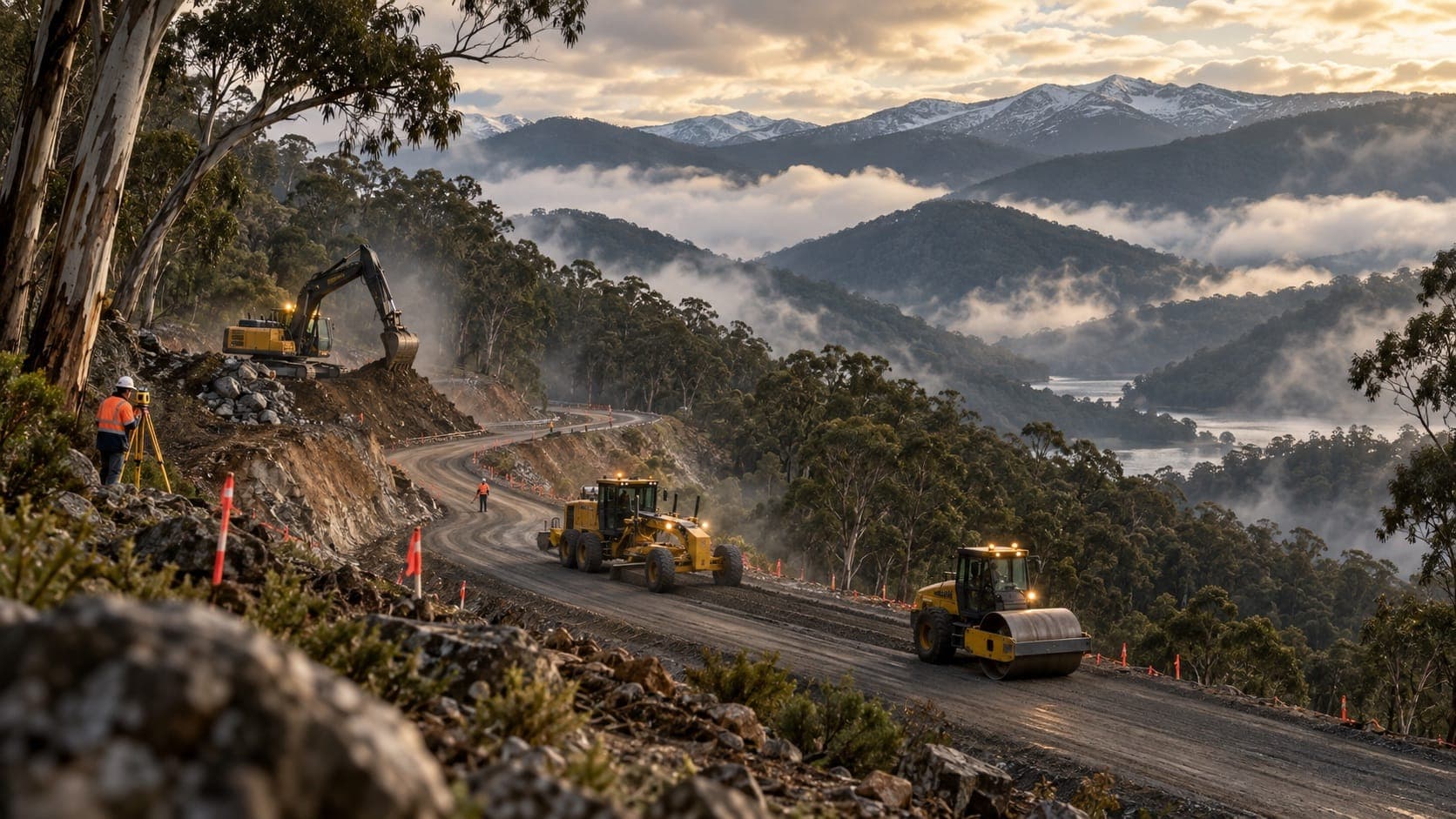
Victoria's plant hire market combines a large, busy Melbourne metro area with regional centres that serve farming, energy and alpine work. Wet winters, alpine snow and a severe bushfire season all shape when and where plant can be used.
01 / Melbourne's growth corridors and regional centres
Melbourne's yards cluster in the west around Laverton, Truganina and Derrimut, in the north around Campbellfield and Thomastown, and in the south-east around Dandenong. These areas sit close to the city's growth corridors, including the western plains towards Werribee and Melton, the northern corridor around Craigieburn and Wollert, and the south-east towards Pakenham and Clyde, where subdivision work keeps excavators, graders and rollers busy.
Geelong is a significant hub for the south-west and the Surf Coast. Ballarat and Bendigo serve central Victoria, the Latrobe Valley towns of Traralgon and Morwell serve Gippsland, Shepparton serves the Goulburn Valley, and Mildura supports the Sunraysia region. Warrnambool covers the western coast and dairy country, and Wodonga works closely with Albury across the Murray, so cross-border supply between the two is routine.
02 / Urban infrastructure, energy and agriculture
Metropolitan Melbourne generates heavy demand from road, rail and utility upgrades, high-density building projects and outer-suburban subdivision. Many sites need compact plant, cranes and access equipment that can work within tight footprints, noise restrictions and traffic management plans. Delivery times can be limited by local council requirements, particularly in inner suburbs where street occupation permits and loading zones control when a truck can stop.
The Latrobe Valley has long been tied to power generation and the associated brown coal mines, and the energy transition is changing the type of work there. Wind and solar development in the west and north, alongside transmission upgrades, needs cranes, heavy transport and civil crews. Agriculture remains a major driver in the Goulburn Valley, Wimmera, Mallee, Gippsland and western districts, with demand for tractors, loaders and irrigation earthworks tied to seasonal cycles.
Quarrying around Melbourne and in regional areas supports construction materials supply and uses heavy earthmoving plant such as large loaders, excavators and dump trucks. Quarry operators often set their own requirements for fitments, pre-start inspections and inductions, so suppliers that already service these sites can save time. Confirm what the operator expects before a machine is dispatched, rather than discovering gaps at the gate.
03 / Wet winters, alpine snow and bushfire risk
Victoria's winters bring persistent rain and cold, particularly in the south and west. Many parts of Melbourne have reactive clay soils that turn boggy in wet months, slowing earthworks, damaging haul roads and increasing the risk of machines getting stuck. Planning bulk earthworks for drier months, laying temporary hardstand and allowing for weather delays in the programme are common practice among experienced civil contractors in the city.
The Victorian Alps, including areas around Falls Creek, Mount Hotham and Mount Buller, receive snow in winter, and alpine roads can require chains or close entirely, so much high-country construction is squeezed into summer. That same summer brings some of the country's most dangerous bushfire weather. On total fire ban days, the Country Fire Authority restricts a range of activities, and it is worth reading its guidance on machinery and hot works before booking rural work.
04 / Transport and access
The Victorian road network falls within the NHVR's jurisdiction, and oversize plant movements need consent from the state road authority or councils for the roads involved. Melbourne's freeways and arterials carry heavy freight, and large plant may be limited to certain times or routes. Regional roads are less congested but can involve long hauls to reach remote areas such as the Mallee or far East Gippsland.
For alpine or forested sites, road access can be limited by snow, fallen trees after storms or seasonal closures. Ask your transport provider to confirm route suitability and seasonal restrictions before dispatching larger machines, and allow extra time for delivery to high-country or remote coastal locations, where a single closed road can add hours of detour and require a second trip with a smaller float.
05 / WorkSafe Victoria and choosing a supplier
WorkSafe Victoria is the state's workplace health and safety regulator. Victoria has not adopted the national model WHS laws and instead operates under its own occupational health and safety legislation, so some terminology and specific requirements differ from other states. Hirers working across borders, for example on a job in Wodonga run from Albury, should check that site documentation and procedures reflect the Victorian framework.
When comparing suppliers, confirm where the machine is based and how cartage is charged, particularly for jobs across Melbourne's sprawling metro area where a delivery from the far side of the city can take hours. Ask about wet-weather stand-down arrangements for clay sites in winter, and whether the supplier offers compact or low-impact machines for tight urban lots. For regional work, confirm breakdown response times and local parts holdings.
Field checklist
- Plan earthworks on Melbourne clay sites for drier months or allow for wet-weather delays.
- Check alpine road conditions and seasonal closures for high-country jobs.
- Read CFA guidance on total fire ban days before scheduling rural or bushland work.
- Ask where the machine is based and how cartage across Melbourne is charged.
- Check council requirements for deliveries and street occupation in inner suburbs.
- Confirm documentation reflects Victoria's own occupational health and safety framework.
Frequently asked questions
Does Victoria use the same WHS laws as other states?
No. Victoria has not adopted the national model work health and safety laws and instead operates under its own occupational health and safety legislation, administered by WorkSafe Victoria. Many principles are similar, but terminology and some requirements differ. Contractors working across state borders should check that their procedures and documentation reflect the Victorian framework.
When is the best time for earthworks in Melbourne?
Late spring, summer and early autumn usually offer the best conditions, as many parts of Melbourne have clay soils that become difficult to work in wet winter months. That said, many projects continue year-round with careful planning. Discuss wet-weather stand-down arrangements with your supplier and allow contingency in your programme.
Can plant be delivered to Victorian alpine resorts in winter?
Sometimes, but it is difficult. Alpine roads may require chains, carry vehicle restrictions or close during heavy snow, and large floats may not be able to reach sites safely. Many alpine projects deliver plant before winter or wait until the snow season ends. Check current road conditions with the resort management and the road authority before planning a winter delivery.
Is it cheaper to hire plant locally in regional Victoria?
Often it is, especially for short jobs, because cartage from Melbourne can add significantly to the total cost. Regional suppliers in Geelong, Ballarat, Bendigo, Shepparton or the Latrobe Valley may quote lower delivered prices. For specialist equipment, a Melbourne yard may still be the only practical source, so get both kinds of quote.